
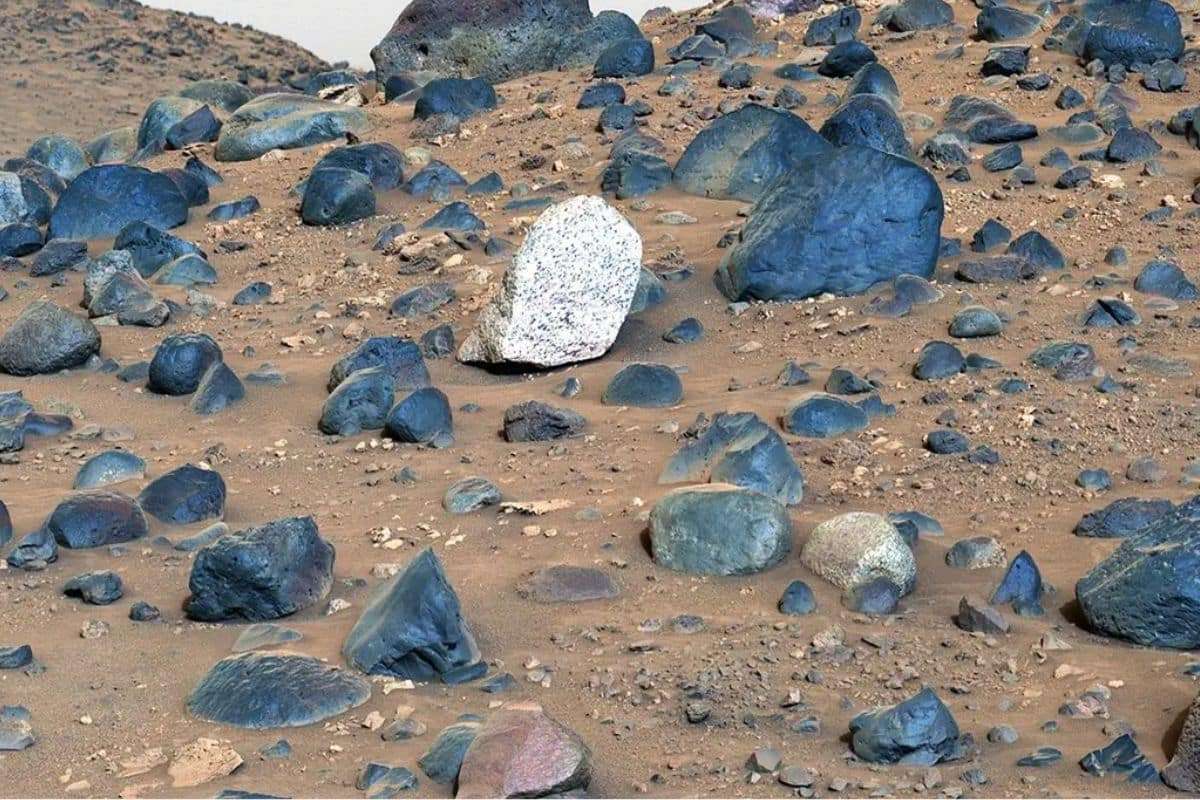
Once thought to be a dry and lifeless world, Mars is revealing surprising evidence that its past environment may have been far more inviting. NASA’s Perseverance rover has uncovered kaolinite, a clay mineral formed in warm, wet settings on Earth, hinting that Mars might have once experienced a climate supportive of life.
A Landmark Discovery in Martian Geology
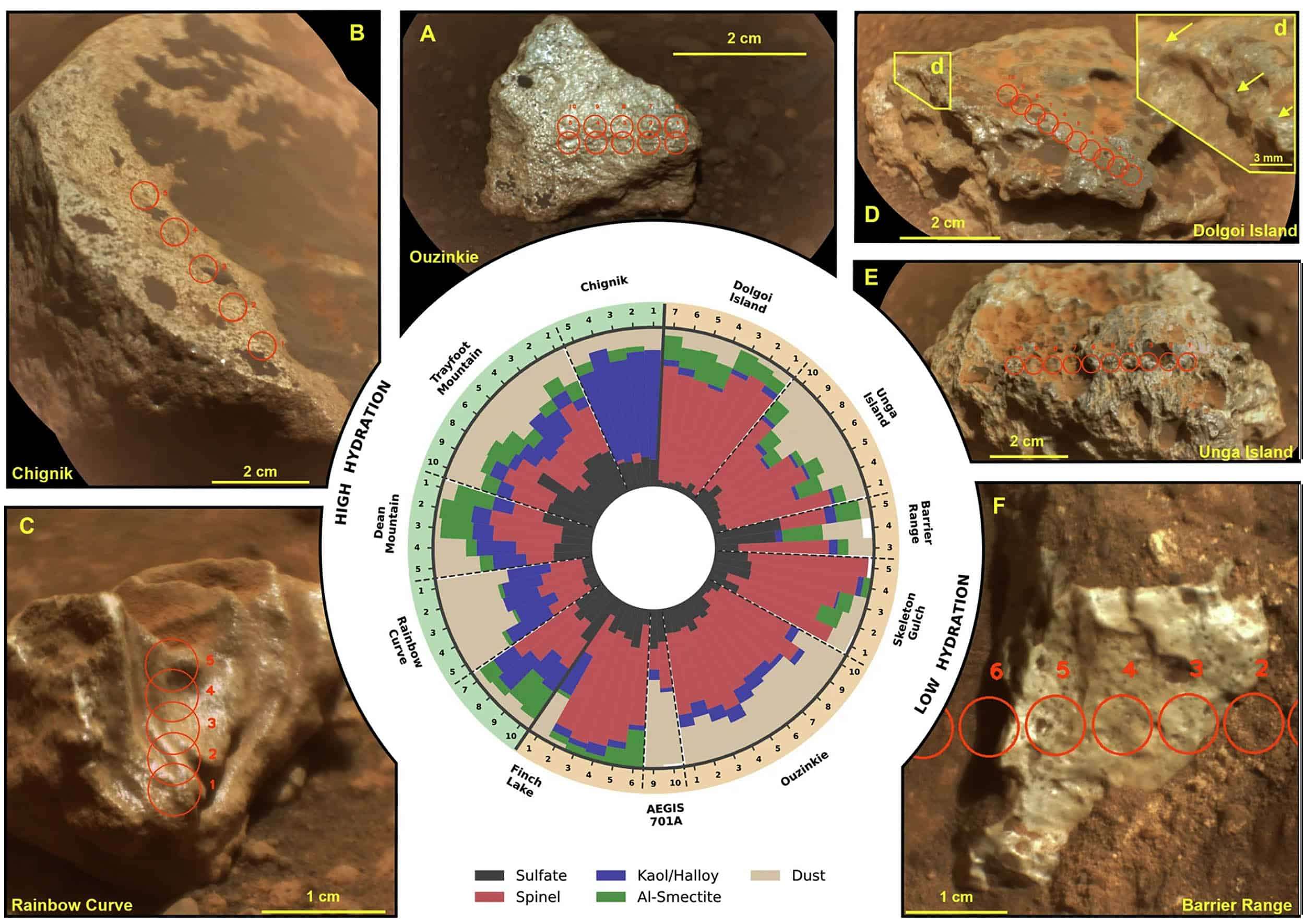
While exploring Jezero Crater, Perseverance targeted some unusually light-colored rocks with its laser, revealing unexpectedly high aluminum content—an indicator of kaolinite. On Earth, this mineral usually forms in environments with abundant rainfall or near hot springs.
Wiens highlighted the significance, stating, “These minerals on Earth develop where there’s sustained rainfall and warmth or in hydrothermal contexts like hot springs, both prime conditions for life.”

This suggests that Mars wasn't just wet historically, but the temperature may also have been warm enough to support life.
Thousands of Enigmatic Rocks Scatter the Martian Landscape
Further investigations by Wiens and his colleagues uncovered over 4,000 similar pale rocks scattered across Mars’ terrain, indicating this phenomenon is widespread. In addition to kaolinite, they detected spinel, a mineral commonly linked with volcanic or metamorphic processes.
This raises intriguing questions about the formation sequence: Did spinel emerge first before interacting with water, or did kaolinite form around the spinel deposits? While unresolved, Wiens emphasizes, “These rocks stand apart from anything previously observed on Mars. They remain mysterious.”
Is Water Still Locked Beneath Mars’ Surface?
Wiens points out that kaolinite naturally contains water molecules within its structure, suggesting that a sizable amount of Mars’ lost water could remain trapped inside minerals instead of having vanished into space.
“The major Mars questions revolve around water quantity and longevity. Mars today is cold and dry, so where did the water go?” Wiens asked.
“As a mineral, kaolinite holds water tightly within its crystal lattice. It’s possible much of Mars’ water still exists in mineral form beneath the surface.”
This insight could transform how future missions, especially human explorers, search for subsurface water on Mars.
Continuing the Quest for Martian Life
Although these peculiar stones have yet to be located in their original geological context, satellite data indicates that kaolinite-rich deposits are present along Jezero Crater’s rim. Finding their source could reveal Mars’ climatic past and possibly evidence of ancient life.
Lead scientist Candice Bedford emphasized the importance of studying these minerals in situ, stating:
“Although we have not seen these rocks ‘in place’ in bedrock with the rover, and we’re not sure where these float rocks came from, from orbiting satellites we know that there are kaolinite-rich rocks in Jezero crater’s rim.”
She also noted the team’s ongoing efforts:
“Investigating these rocks in place will help us test our hypotheses on how the rocks formed, how they relate to the ancient Martian environment and the habitability of the planet in the past. We are keeping our eyes wide open, looking for the source of these rocks now that Perseverance is exploring the crater rim.”










0 comments
Sign in to Comment