
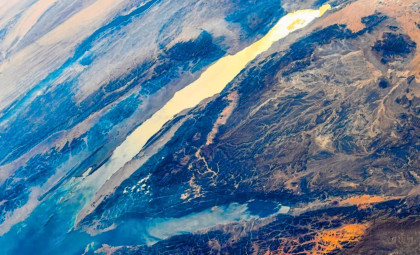
Beneath Ethiopia’s surface, researchers have detected rhythmic surges of molten rock that are gradually causing the African continent to fracture. These pulses rise from the mantle beneath the Afar Depression, marking the initial stages of what may become a new ocean basin.
The Afar area has captivated geologists for years, as it is the junction where three significant rift systems converge: the Main Ethiopian Rift, the Red Sea Rift, and the Gulf of Aden Rift. This region is one of Earth’s most tectonically active zones, with the crust slowly pulling apart as tectonic plates diverge.
A recent paper published in Nature Geoscience by scientists from the University of Southampton reveals that the driving forces behind this activity are not continuous. Instead, molten rock ascends in pulses from deep within the Earth’s mantle, offering new insights into the dynamic processes shaping the continent below.

The Pulsing Mantle Plume Beneath Afar
Scientists uncovered a massive plume of intensely hot mantle rock beneath the Afar region. Surprisingly, this plume doesn’t flow steadily but rises in intermittent surges resembling a slow rhythmic beat. Dr. Emma Watts explained that the mantle’s composition and movement are far from uniform or static, with each upwelling pulse bearing distinct chemical characteristics. She emphasized that:
“These ascending pulses of partially molten mantle are channelled by the rifting plates above. That’s important for how we think about the interaction between Earth’s interior and its surface.”
This discovery highlights a two-way interaction between the Earth’s deep interior and surface tectonics, indicating the mantle’s behavior is influenced by conditions above.
Volcanic Rock Chemistry Reveals Mantle Pulse Patterns
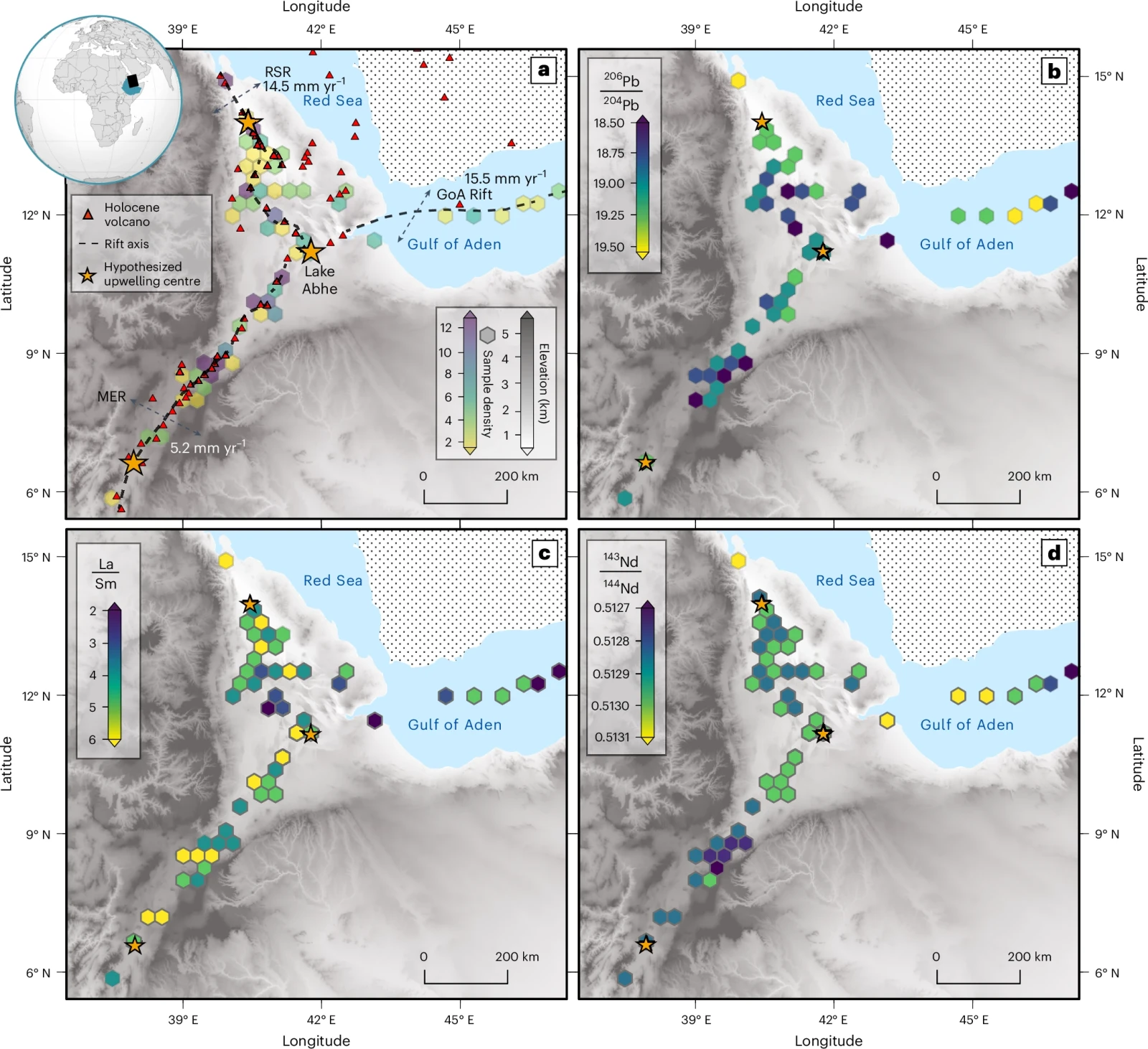
Researchers examined over 130 volcanic rock samples from the area, identifying recurring chemical fingerprints they term “chemical barcodes.”
The details presented in the study suggest these chemical signatures trace each mantle upwelling pulse through time. Variations align with factors like crust thickness and the speed at which tectonic plates drift apart. For example, the pulses exhibit a more regular rhythm in faster-moving sections such as the Red Sea Rift.
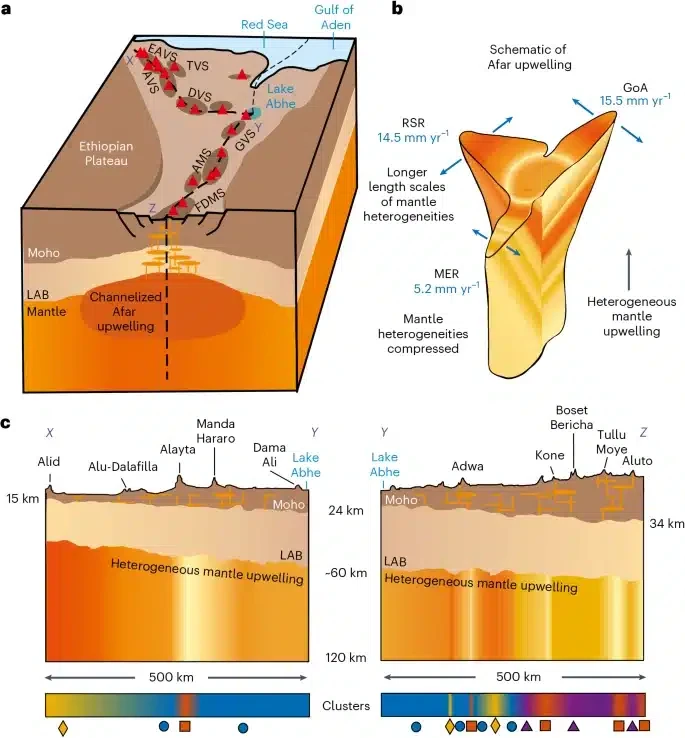
Professor Tom Gernon likened this to flow within a confined passage where movement becomes concentrated, explaining why volcanic eruptions cluster in specific parts of the rift.
Continental Drift: Africa’s Slow Division
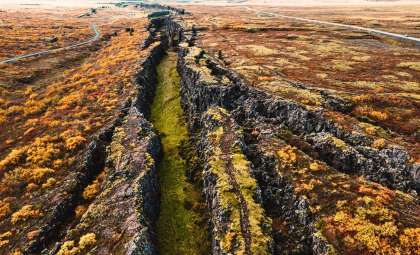
The visible effects of these mantle dynamics are evident at the planet’s surface. Tectonic plates in the Afar region are steadily moving apart, causing the Earth’s crust to stretch, thin, and crack.
Dr. Derek Keir pointed out that mantle flows beneath tectonic plates channel volcanic activity to areas where the crust is weakest. This interplay results in both earthquakes and volcanic eruptions originating from the same underlying mantle processes.
“The work shows that deep mantle upwellings can flow beneath the base of tectonic plates and help to focus volcanic activity to where the tectonic plate is thinnest. Follow-on research includes understanding how and at what rate mantle flow occurs beneath plates,” he concluded.
- Categories:
- Science






0 comments
Sign in to Comment