
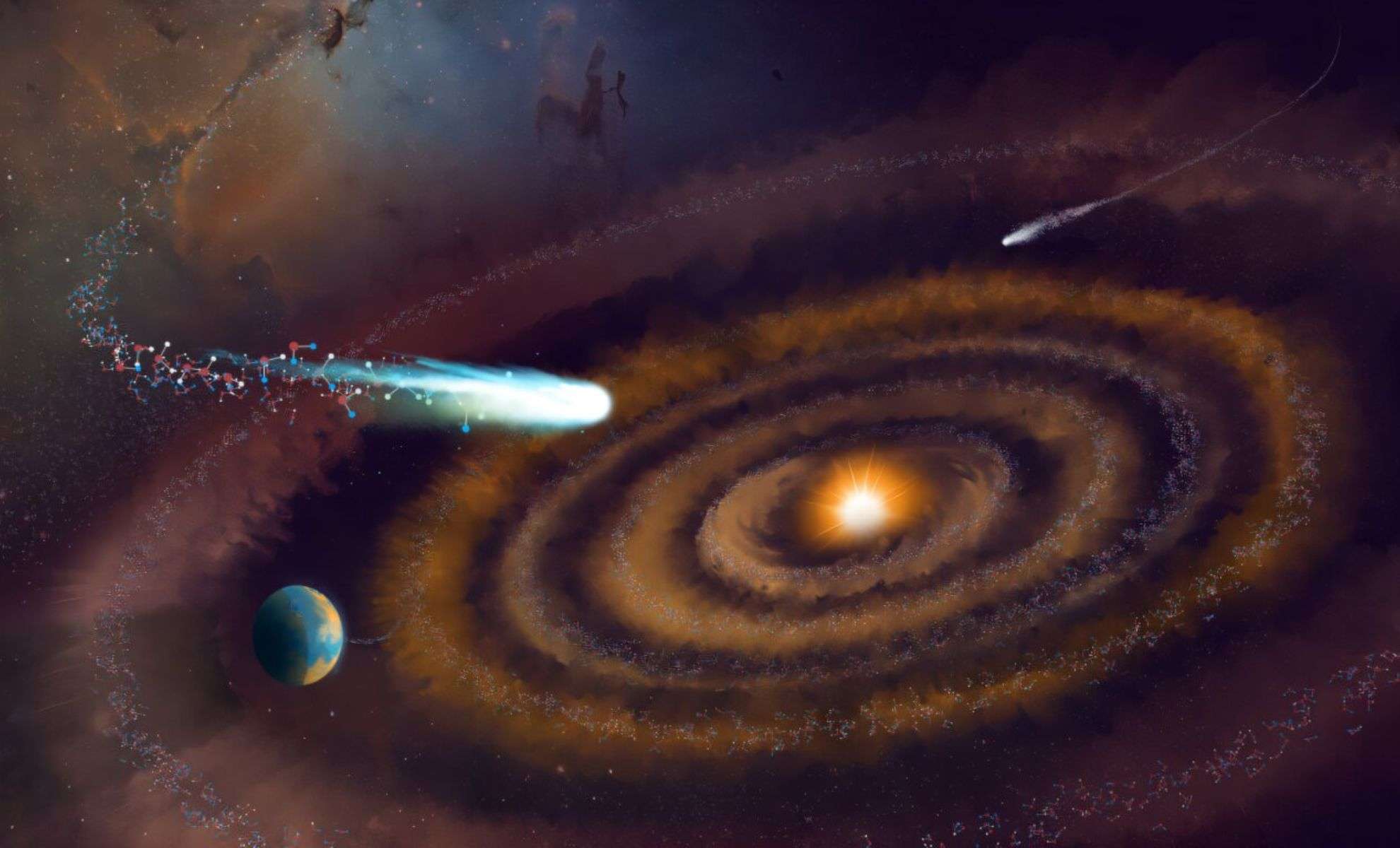
For the first time ever, astronomers have identified heavy water within the circumstellar disk of a nascent star. Remarkably, this water appears to predate the star itself, hinting that it originated from primordial cosmic clouds long before stars and planets formed.
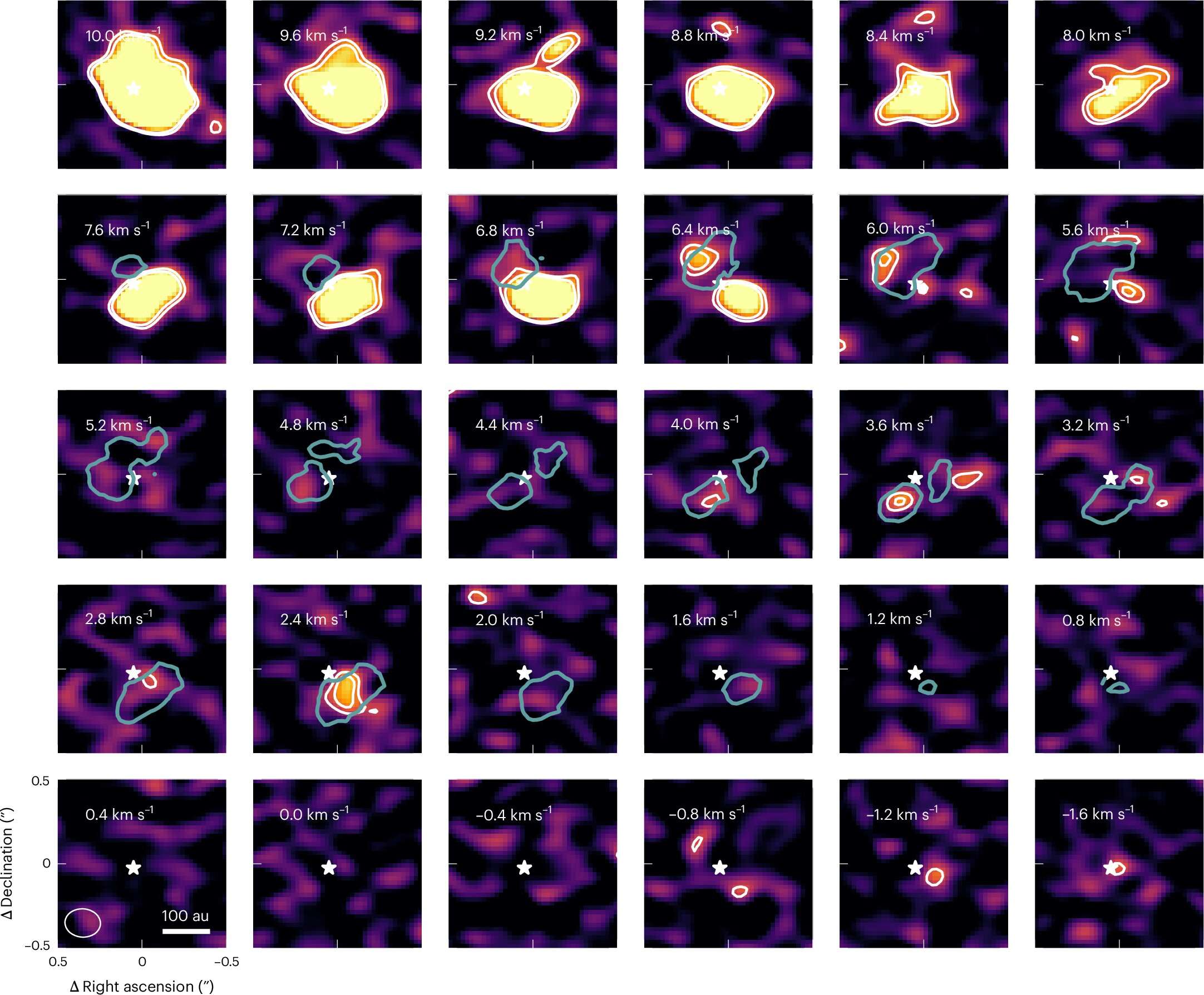
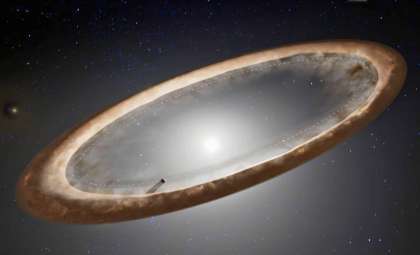
The breakthrough came from meticulous observations of V883 Ori, a young stellar object surrounded by a rotating disk where planets are forming. Utilizing the powerful capabilities of the Atacama Large Millimeter/submillimeter Array (ALMA), scientists detected doubly deuterated water (D₂O), a water molecule variant that only takes shape under the ultra-cold, dark conditions found in deep space.
Published in Nature Astronomy, this study provides the first definitive evidence that water in planetary environments can have origins extending back much further in time than previously verified.

V883 Ori: A Cosmic Reservoir of Ancient Water
ALMA detected specific water isotopes beyond ordinary H₂O — specifically heavy water containing two deuterium atoms. This molecule acts as a cosmic relic, forming only in frigid regions of molecular clouds, and is generally believed unlikely to survive the intense processes involved in star formation. As lead researcher Margot Leemker, a postdoctoral fellow at the University of Milan, stated:
“Our detection indisputably demonstrates that the water seen in this planet-forming disk must be older than the central star.”
This means that some of the water destined for planets around V883 Ori has survived billions of years of cosmic history. The National Radio Astronomy Observatory (NRAO) calls this discovery a significant leap forward in unraveling water’s cosmic journey.
Supporting Evidence from Cometary Water
The question remains: is water found in comets and planets newly formed within young star systems, or inherited from ancient interstellar sources? John Tobin, co-author of the October 15, 2025 study, argues the findings clarify this mystery.
“Until now, we weren’t sure if most of the water in comets and planets formed fresh in young disks… or if it’s ‘pristine,’” he said.
The presence of D₂O in the disk around V883 Ori strongly supports the idea that water observed in these environments is inherited.
This molecular pattern has also been detected in various comets, indicating both the cometary bodies and the protoplanetary disk sourced their water from ancient cold interstellar clouds. This suggests that water present on planets may have been carried across the cosmos for billions of years before finally arriving.
Tracking Water's Unique Chemical Signatures
This finding was made possible through chemical fingerprinting, a technique involving comparison of doubly deuterated water (D₂O) concentrations to regular H₂O. The ratios confirmed that the water formed long before the disk’s creation. Isotopologues like D₂O carry distinctive signals that reveal their formation environment and timescale, in this case pointing back to the cold recesses of ancient interstellar clouds.
As Phys.org detailed, this is a crucial piece in the puzzle of water’s cosmic lifecycle. Water born in icy clouds, enduring through star birth and settling into planet-forming disks, remains largely unaltered. This indicates that planets are assembled from cosmic materials recycled over billions of years.
Consequently, the water on Earth, in comets, or even on far-off exoplanets might share a common origin story, deepening our understanding of our connection to the cosmos.








0 comments
Sign in to Comment