
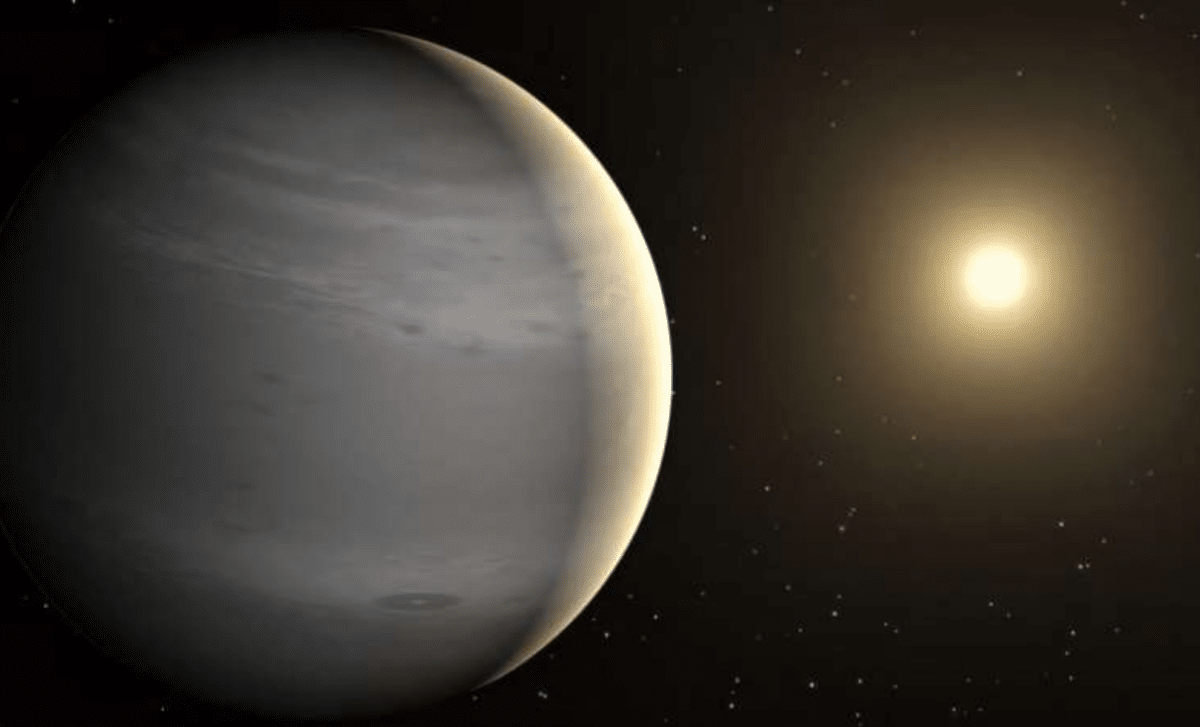
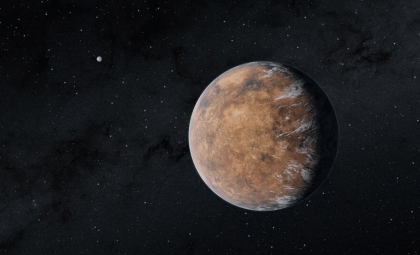
A team of astronomers has identified an exoplanet the size of Saturn with an atmosphere abundant in methane, exhibiting temperatures comparable to those on Earth. This milestone, achieved through observations with NASA’s James Webb Space Telescope (JWST), provides a groundbreaking look at the atmospheric chemistry of temperate gas giants. The findings are detailed in a recent publication in The Astronomical Journal.
Exploring a Unique Class of Exoplanets
The newly found world, labeled TOI-199b, orbits a star located over 330 light-years away, completing one orbit every 100 days. With surface temperatures near 175 degrees Fahrenheit, TOI-199b is significantly cooler than the sizzling “hot Jupiters” but warmer than the icy giants in our own solar system. This rarity places it in the intriguing category of temperate, giant exoplanets, a group that scientists have sought to analyze closely to better understand planetary origins and atmospheres similar to Earth’s.
Using Webb to Decode Alien Atmospheres
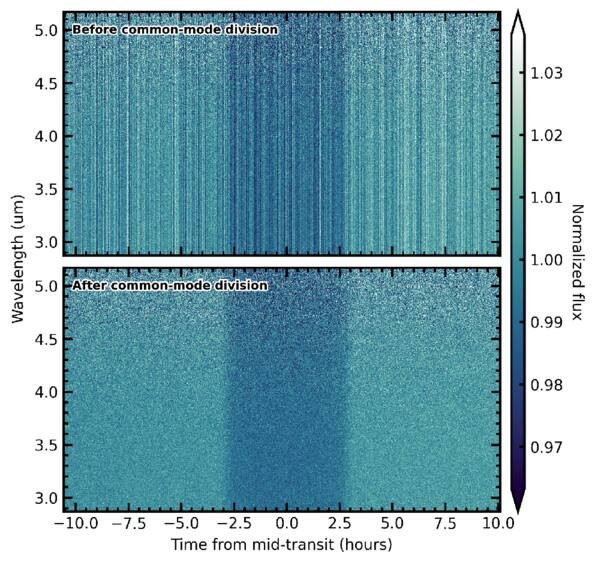
Researchers employed transmission spectroscopy, a method that examines how light from a star changes as it passes through a planet’s atmosphere during transit. “As the planet moves across its star, a portion of the starlight filters through its atmosphere, interacting with various elements and molecules,” said Aaron Bello-Arufe, a postdoc at JPL and lead author of the study published in The Astronomical Journal. “This causes specific wavelengths to be absorbed, creating a spectral fingerprint that JWST can detect, revealing the atmospheric makeup.”

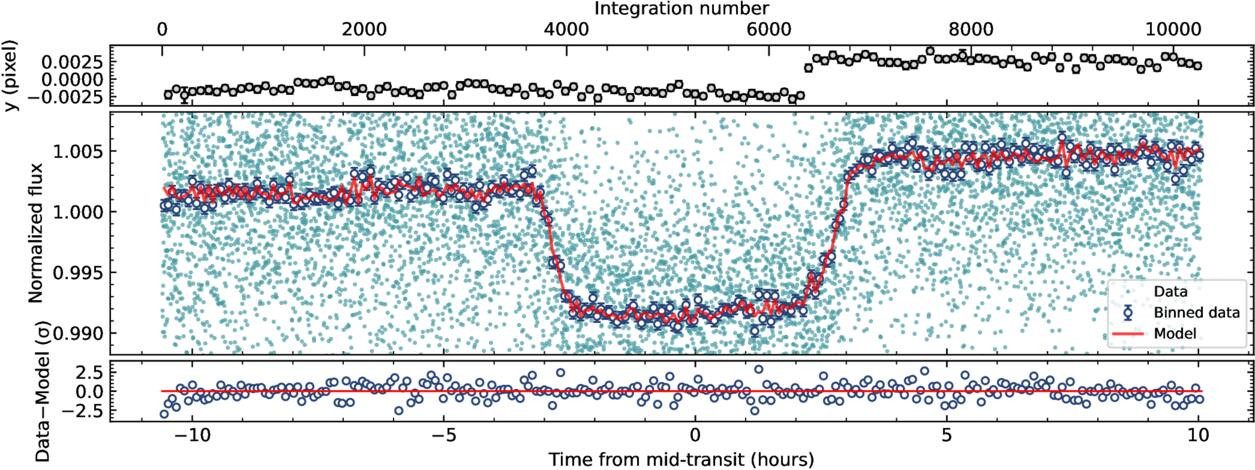
TOI-199b’s transit lasts approximately seven hours, enabling JWST to capture detailed spectral information. The team carefully compared this data with the star’s baseline light measurements taken over 20 continuous hours, allowing them to identify atmospheric molecules with strong accuracy.
Detecting Methane and Other Gases
The spectral data confirmed methane’s presence in TOI-199b’s atmosphere, along with possible signs of ammonia and carbon dioxide. “We observed that during transit, the atmosphere selectively blocked wavelengths absorbed by methane,” Bello-Arufe noted. “This confirms the predictions of atmospheric models for temperate gas giants, validating our theoretical understanding.” This insight offers valuable context for the chemical activities occurring on similar exoplanets.
Impact on Understanding Planet Formation
This discovery holds significant implications for studies of planetary atmospheres. “Studying diverse exoplanets broadens our understanding of planet system development, especially those unlike any in our solar system,” explained Renyu Hu, Penn State associate professor and lead scientist. “Since the initial detection of an exoplanet in 1992, thousands have been found, but very few temperate gas giants. This marks the first detailed atmospheric investigation of such a planet.”
Determining the atmospheric composition of TOI-199b enables scientists to refine theoretical models of planetary chemistry and evolution, potentially shedding light on Earth's atmospheric history. The research team aims to continue monitoring TOI-199b and other temperate giants to ascertain how common methane-dominated atmospheres might be in the universe.
- Categories:
- Astronomy






0 comments
Sign in to Comment