
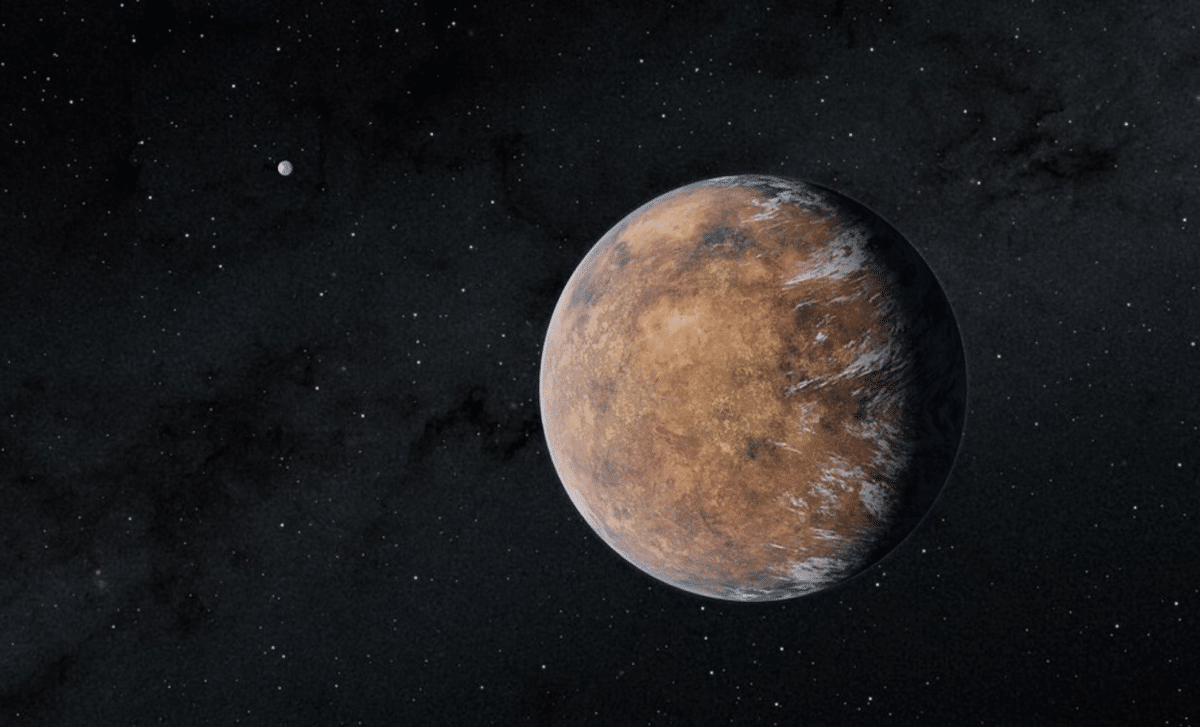
The James Webb Space Telescope (JWST) continues to revolutionize the exploration of planets outside our solar system, yet its recent observations of a nearby planetary system with Earth-sized planets reveal the challenges posed by stellar activity. A fresh study shared on arXiv explores attempts to identify an Earth-like moon orbiting planets in the TOI-700 system, but the star’s own variability has obscured these efforts. The findings highlight both exciting possibilities and the constraints faced: a moon’s presence might already be hidden within the gathered data, out of current reach.
An Ideal Candidate for Detecting Another Earth and Its Moon
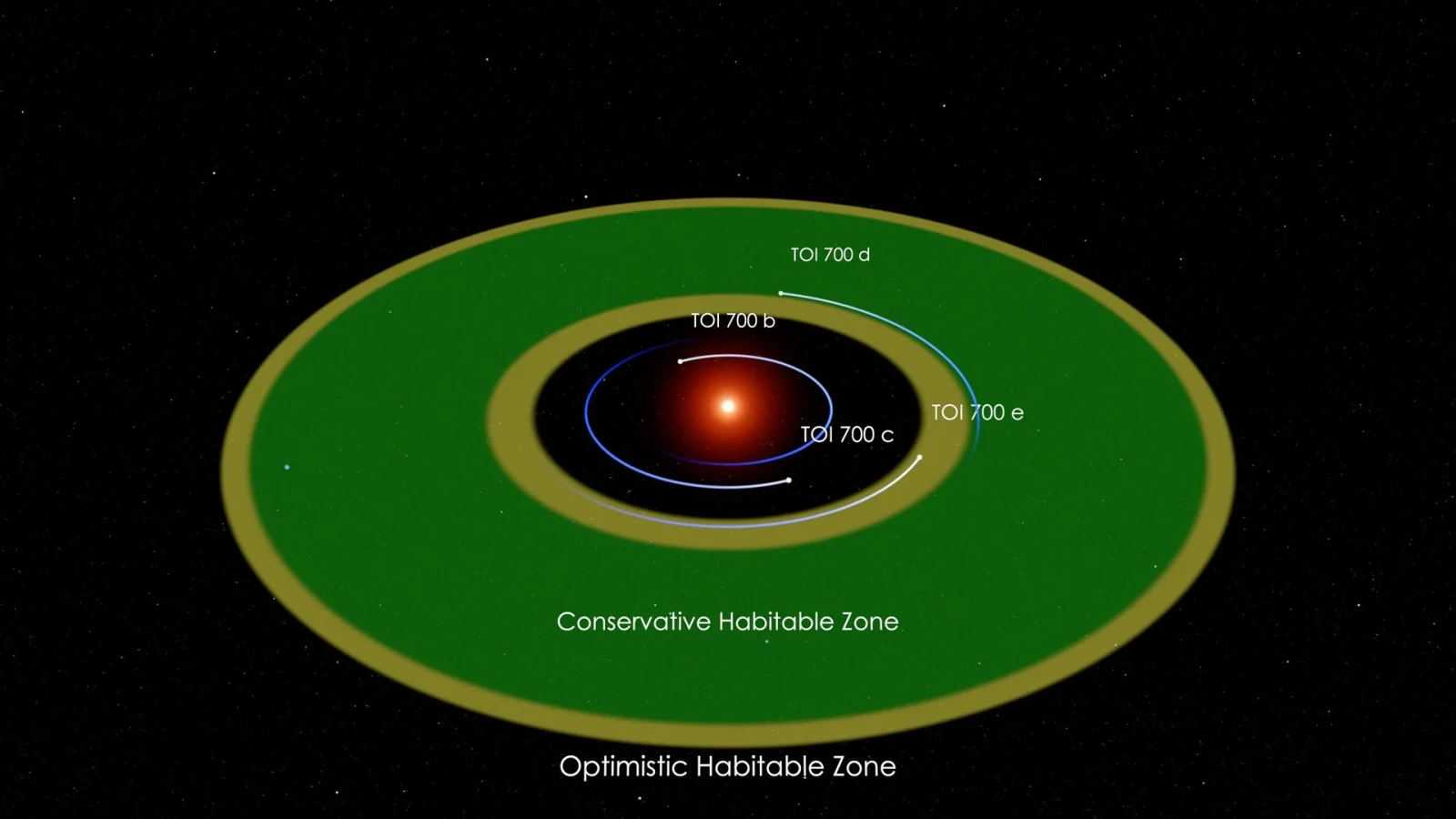
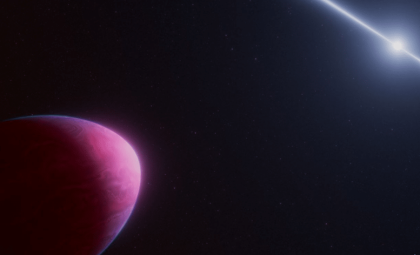
Located about 100 light-years from Earth, the TOI-700 system has drawn considerable attention among exoplanet researchers recently. As reported by Universe Today, this M-dwarf star hosts several exoplanets, including TOI-700 d and TOI-700 e, both situated within the star’s habitable zone, where conditions might permit liquid water. Their sizes, approximately 1.145 and 0.919 times Earth's diameter, respectively, make them promising Earth analogs.
These planets offer a unique opportunity for study. Their stable orbits and gravitational influences make them candidates for hosting moons like our own, which play an important role in maintaining Earth's axial tilt and climate stability. Confirming such a moon would represent a major advancement in assessing the habitability of exoplanets. Thanks to its unparalleled sensitivity, JWST was anticipated to detect the faint signals such moons might emit.

Significant Advancements in Observational Precision
The investigation, involving experts from MIT, Harvard University, and the University of Chicago, and published on arXiv, utilized JWST’s advanced instruments to enhance knowledge about TOI-700’s planets. The telescope significantly refined orbital parameters, improving accuracy by a factor of ten. It also tightened the estimates of planetary sizes, reducing uncertainty by two to three times.
These enhancements are transformative, allowing astronomers to draw more detailed conclusions about distant systems. Accurate orbital timing is essential for exomoon detection since moons can induce subtle variations in a planet’s transit and motion signatures. In theory, JWST can detect brightness changes as faint as 20 parts per million (ppm), the expected signal from a moon akin to Earth’s.
However, despite these advances, no clear signs of a moon emerged. The obstacle stems not from the telescope’s performance but rather from the star's intrinsic activity.
Stellar Activity: An Unseen Barrier
While reviewing the data, scientists detected a recurring pattern labeled red noise, caused by the star’s granulation—plasma turbulence on its surface. This activity produced variations reaching approximately 46 ppm, more than double the anticipated moon signal strength.
This noise oscillated on a cycle of about 16 minutes, effectively concealing any weaker moon signals embedded within the measurements. Practically, this implies that if an Earth-sized moon exists around TOI-700’s planets, its signature would be lost amid the star’s noisy output.
This scenario highlights a paradox in today’s astronomy: instruments like JWST are sensitive enough to capture not only the desired planetary signals but also the intricate and dynamic behavior of stars with remarkable detail. Extracting meaningful signals from this complex background remains a significant challenge.
Possible Hidden Signals Awaiting Discovery
Despite these challenges, the analysis opens an intriguing avenue. The researchers suggest that the current data might already harbor evidence of an exomoon—if techniques can be developed to filter out the stellar noise effectively. Present observations mainly detect moons larger than Ganymede with orbital periods exceeding two days, leaving room for smaller, Earth-sized moons to evade detection.
This shifts the focus from new observations to improved data processing. Sophisticated algorithms designed to remove red noise may reveal hidden exomoon signals within existing datasets. The implication is profound: identifying the first confirmed exomoon might hinge on new analytical tools rather than fresh telescope time.
- Categories:
- Astronomy





0 comments
Sign in to Comment