
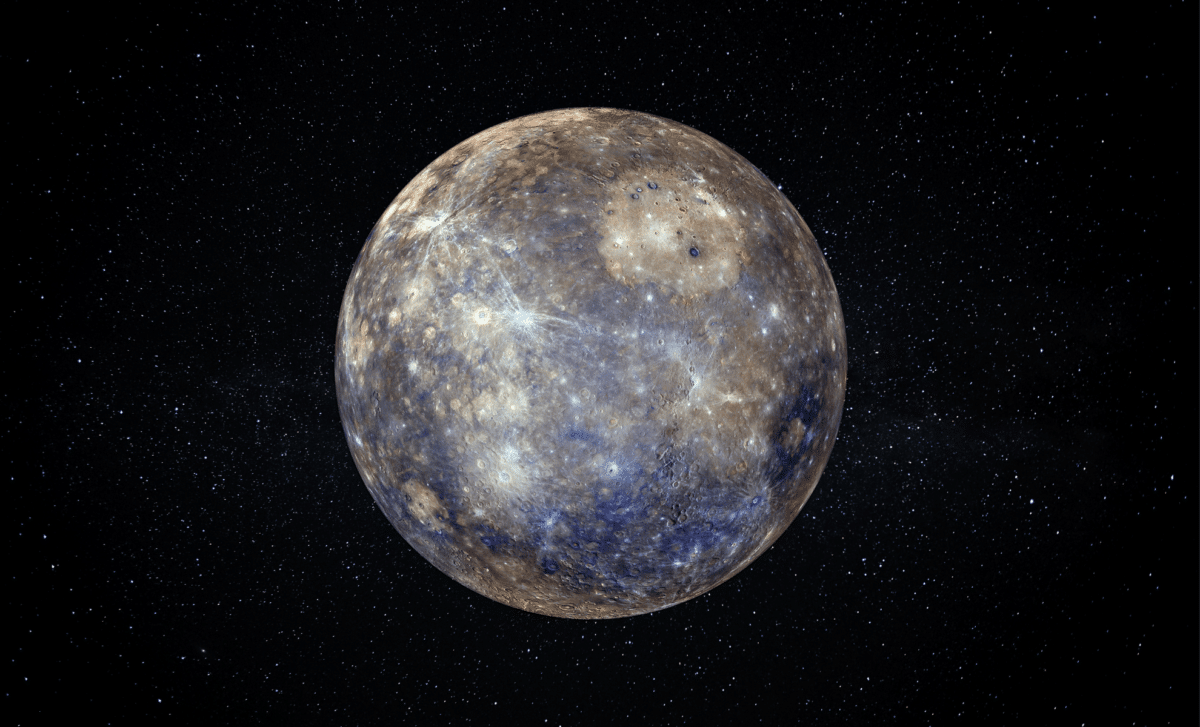
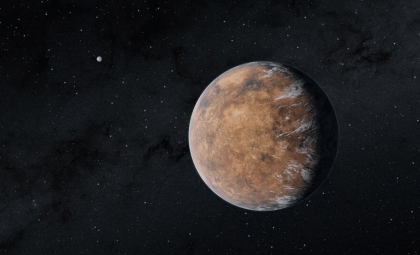
A recently studied rocky exoplanet has provided some of the most detailed insights yet into the surface composition of a planet beyond our solar system. Data gathered by the James Webb Space Telescope (JWST) and published in Nature Astronomy reveal that LHS 3844 b is a dark, atmosphere-free world with a surface similar to that of Mercury or the Moon. This breakthrough marks a significant step forward as researchers expand their focus from atmospheric studies to directly examining the geology of distant planets.
Unveiling an Airless, Shadowed Planet
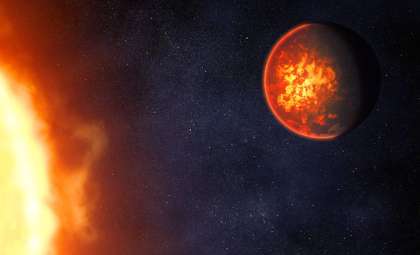
Situated approximately 48.5 light-years away, LHS 3844 b orbits a diminutive red dwarf star at an incredibly close distance, completing one orbit every 11 hours. Tidally locked, one hemisphere of the planet continuously faces its star, enduring scorching temperatures near 1000 Kelvin. Utilizing the Mid-Infrared Instrument (MIRI) aboard the JWST, astronomers isolated the planet’s thermal emission from stellar light, enabling a detailed examination of its surface. As reported in Nature Astronomy, findings show an absence of atmosphere, leaving the surface directly exposed to the space environment’s harsh conditions.
“The exceptional sensitivity of JWST allows us to observe the light emitted directly from the surface of this remote rocky planet. We see a dark, hot, barren landscape completely lacking an atmosphere,” explained Laura Kreidberg from the Max Planck Institute for Astronomy. This discovery opens the door to detailed surface studies of rocky exoplanets, offering pristine data unobscured by atmospheric interference which reveals the planet’s composition and thermal characteristics.

Using Infrared to Decode Surface Composition
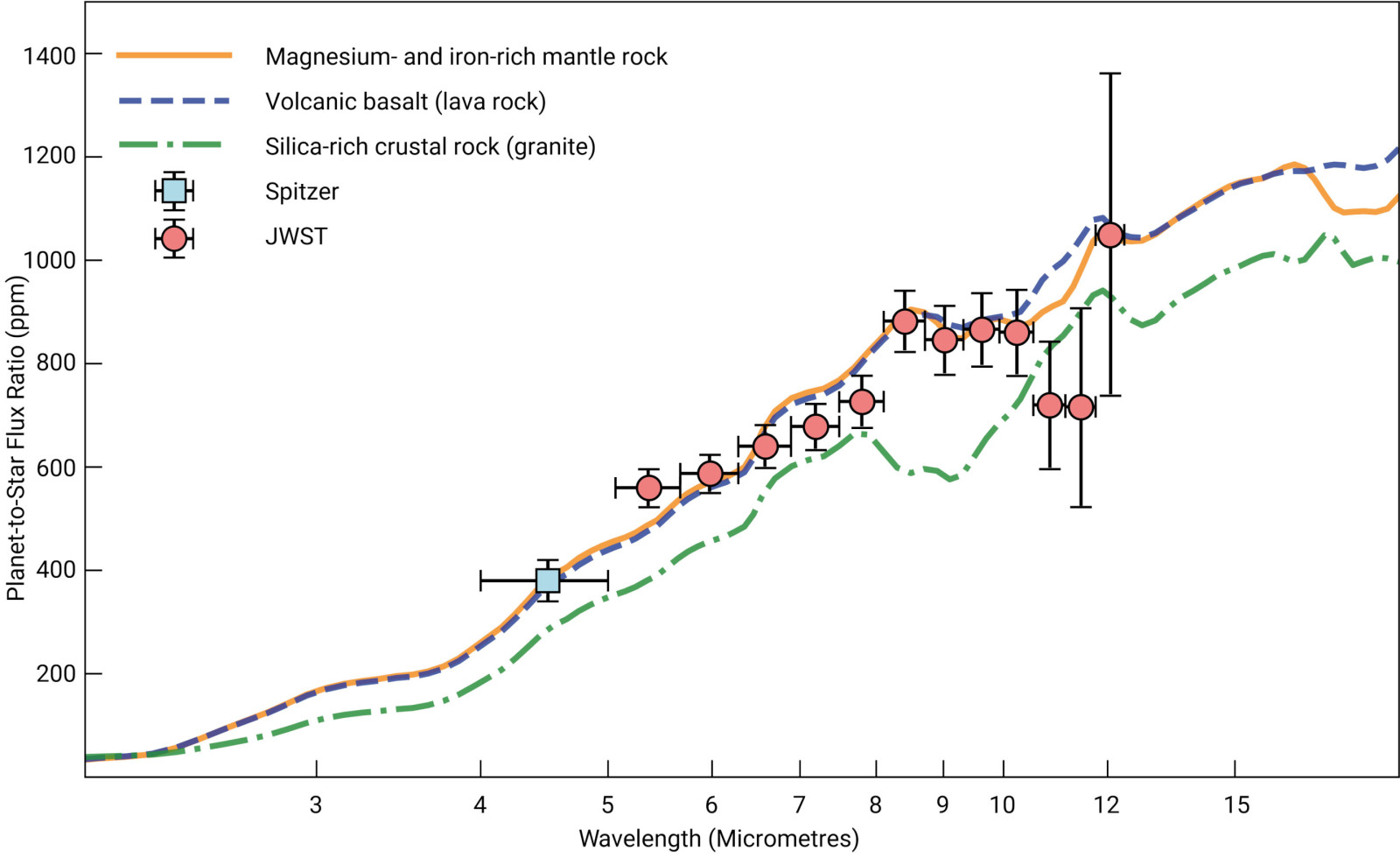
Scientists examined infrared wavelengths between 5 and 12 micrometers to generate a spectral profile uncovering the planet’s surface makeup. By comparing this data to known terrestrial, lunar, and Martian rock spectra, they eliminated the possibility of an Earth-like crust rich in silica and granite. Instead, evidence points to crust dominated by basaltic rocks and mantle materials abundant in iron and magnesium.
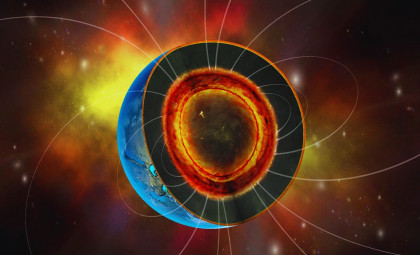
“Given LHS 3844 b lacks an extensive silicate crust, it’s likely that Earth-style plate tectonics either do not occur or are minimal,” noted Sebastian Zieba. “The planet’s water content is probably very low.” This implies geological processes on LHS 3844 b differ markedly from Earth’s, with a lack of plate tectonics or water-driven mechanisms leading to a more uniform, extreme surface environment.
Surface Modification Through Space Weathering
Lacking an atmosphere, LHS 3844 b faces relentless radiation from its star and impacts from cosmic debris. These forces gradually degrade rocks into a fine regolith layer while altering its chemistry. Over time, this process darkens the surface, aligning with the darkness observed by JWST.
“These space weathering effects not only break down solid rock into fine grains comparable to lunar regolith,” Zieba elaborated, “but also enrich the surface with iron and carbon, which darkens it and matches our observational data.” This ongoing transformation explains the planet’s dark appearance despite extreme heat and illustrates how surfaces evolve under severe conditions without the influence of atmosphere or liquid water.
Two Theories on the Planet’s Surface State
Researchers currently propose two possible scenarios for LHS 3844 b’s surface: a relatively young basalt layer from recent volcanic activity consistently renewing the crust, or an ancient, inactive world covered by a thick, darkened regolith produced through prolonged space weathering. These models suggest either active resurfacing or geological stability.
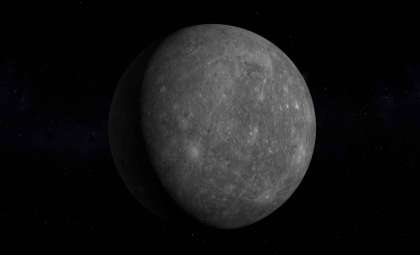
The lack of volcanic gases such as sulfur dioxide tends to support the latter, likening LHS 3844 b to Mercury or the Moon where tectonic activity has mostly ceased. Nevertheless, ongoing geological processes can’t be entirely excluded, so additional observations are necessary to better understand this intriguing planet.
The Dawn of Exoplanet Geological Research
Upcoming JWST studies will focus on how the planet reflects light from various angles to gather more information about its surface texture, distinguishing solid rocks from loose material. This approach, successfully used on objects within our solar system, is now being applied to explore exoplanet surfaces with improved detail.
“We are optimistic that this method will clarify the characteristics of LHS 3844 b’s crust and other rocky exoplanets in the near future,” Kreidberg concluded. These advancements mark the beginning of a new chapter in understanding the geology of remote worlds, with LHS 3844 b exemplifying how scientists can now directly study the rugged reality of rocky planets shaped by extreme space environments.
- Categories:
- Astronomy







0 comments
Sign in to Comment