
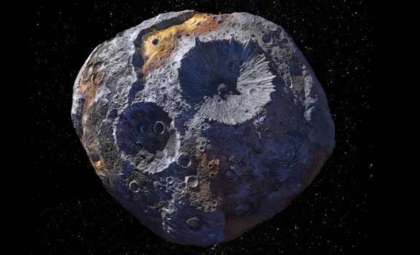
Recent findings have explained the rarity of carbonaceous asteroids among meteorites collected on Earth. Although these primitive space rocks are plentiful in the solar system, they account for barely 4% of meteorites found on our planet. Scientists have now identified that a mix of intense solar heating and atmospheric disintegration is responsible for this scarcity.
Delicate Relics From the Dawn of the Solar System
Known as carbonaceous chondrites, these water-rich and organic matter-bearing asteroids carry clues to planetary formation and possibly the emergence of life.
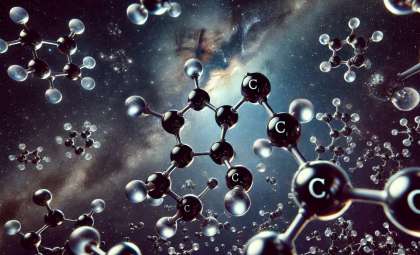
“Meteorites rich in carbon represent some of the most primordial and chemically rich specimens available—they include water, organic compounds, and amino acids,” explains Patrick Shober from the Paris Observatory.

However, their low numbers in meteorite samples have sparked doubts about whether Earth truly reflects the actual variety of space objects.
A Natural Filter at Work
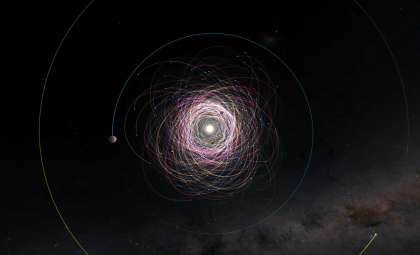
In an article in Nature Astronomy, a team studied almost 8,000 meteoroid impacts and about 540 potential meteor falls recorded across 19 global observation networks. Their analysis suggested many carbonaceous meteoroids break down well before reaching Earth's atmosphere.
Hadrien Devillepoix from the Curtin Institute of Radio Astronomy notes, “It was suspected that fragile carbonaceous fragments wouldn’t survive entering the atmosphere, but this study reveals many disintegrate earlier due to repeated solar heating as they orbit close to the Sun.”
This continual exposure to intense sunlight effectively erodes their fragile structure during cyclical heating and cooling, vaporizing them long before atmospheric entry.
Survivors of a Harsh Journey
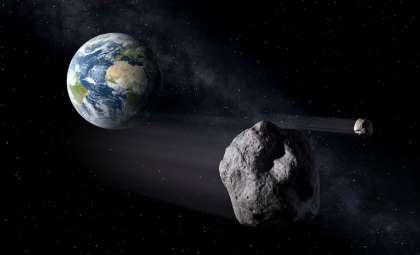
Even when carbonaceous meteoroids approach Earth, the planet’s atmosphere poses a critical challenge. The research indicates fragments originating from tidal disruptions—events where gravitational forces tear asteroids apart during close planetary passes—are particularly fragile.
These broken pieces seldom survive the descent through Earth's atmosphere, meaning the carbon-rich meteorites that do make it to the surface represent only the toughest survivors, thereby skewing our perception of near-Earth objects.
Implications for Our Understanding of Space
Understanding this selective filtering has broad implications. “With so few carbonaceous meteorites in collections, our grasp of the diversity of space materials, and their contributions to Earth’s chemical evolution, may be incomplete,” warns Shober.
Fortunately, missions like Japan's Hayabusa2 and NASA’s OSIRIS-REx have returned pristine carbon-rich asteroid samples, helping scientists study these elusive materials directly in laboratories.
Advancements in meteor tracking and sample-return technology promise to enhance our knowledge of carbonaceous matter and its influence on Earth's primordial chemistry.
- Categories:
- Astronomy





0 comments
Sign in to Comment