
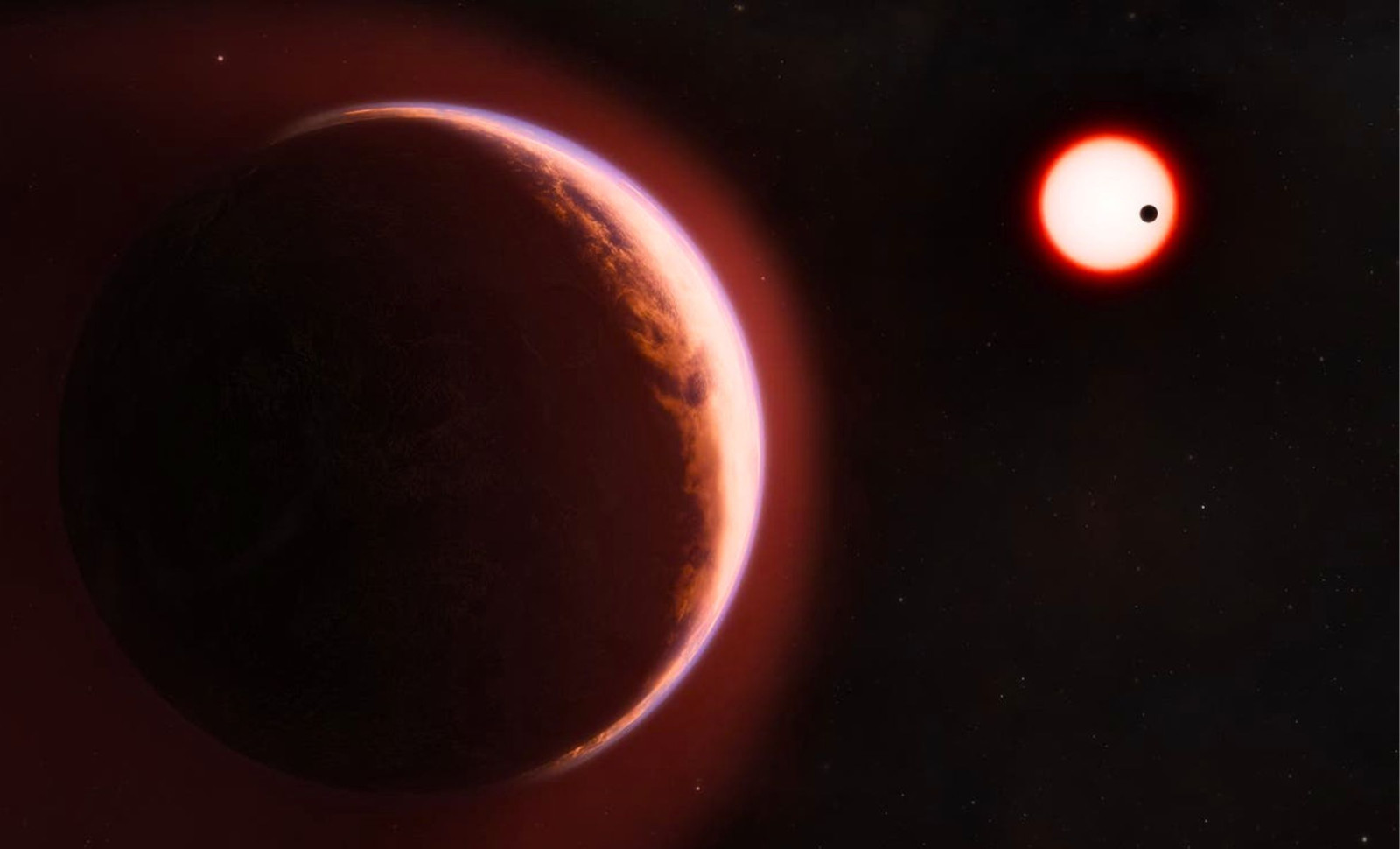
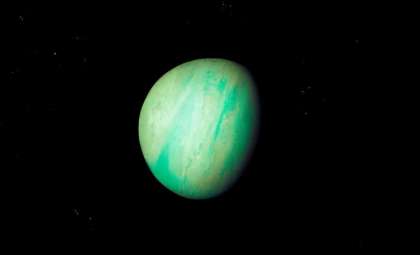
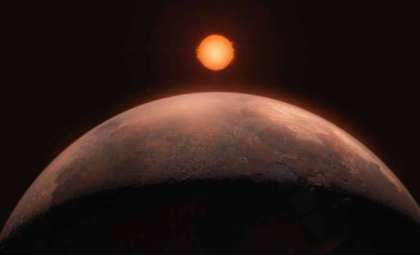
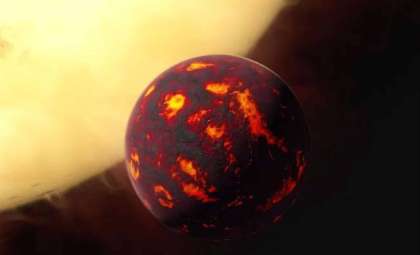
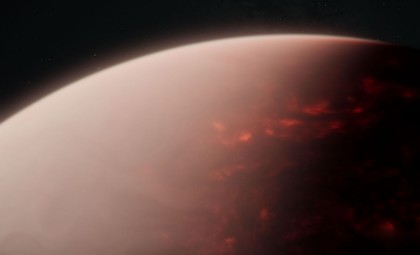
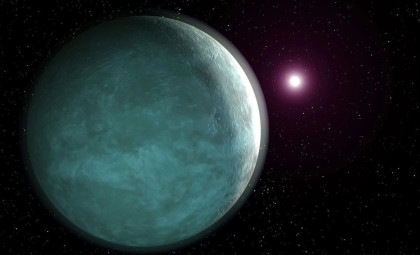
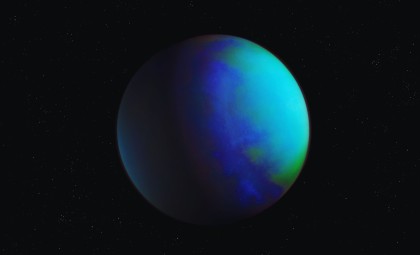
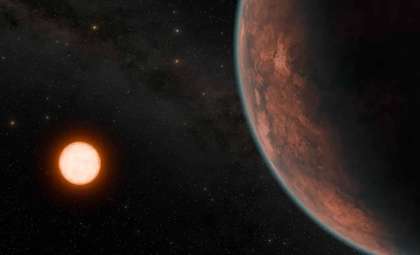
Located just 25 light-years from Earth, the exoplanet GJ 3378b orbits a dim red dwarf star in the constellation Camelopardalis, also known as the Giraffe. Researchers at the University of California, Irvine have revealed that this planet, approximately twice Earth’s size, resides in the habitable zone—where conditions might permit liquid water on its surface. Their study was published in The Astrophysical Journal.
Initially spotted in 2024 by a team of French scientists using the Canada-France-Hawaii Telescope atop Mauna Kea, GJ 3378b’s mass was first estimated at 5.26 times that of Earth, categorizing it as a mini-Neptune, a larger planet with a thick gaseous envelope.
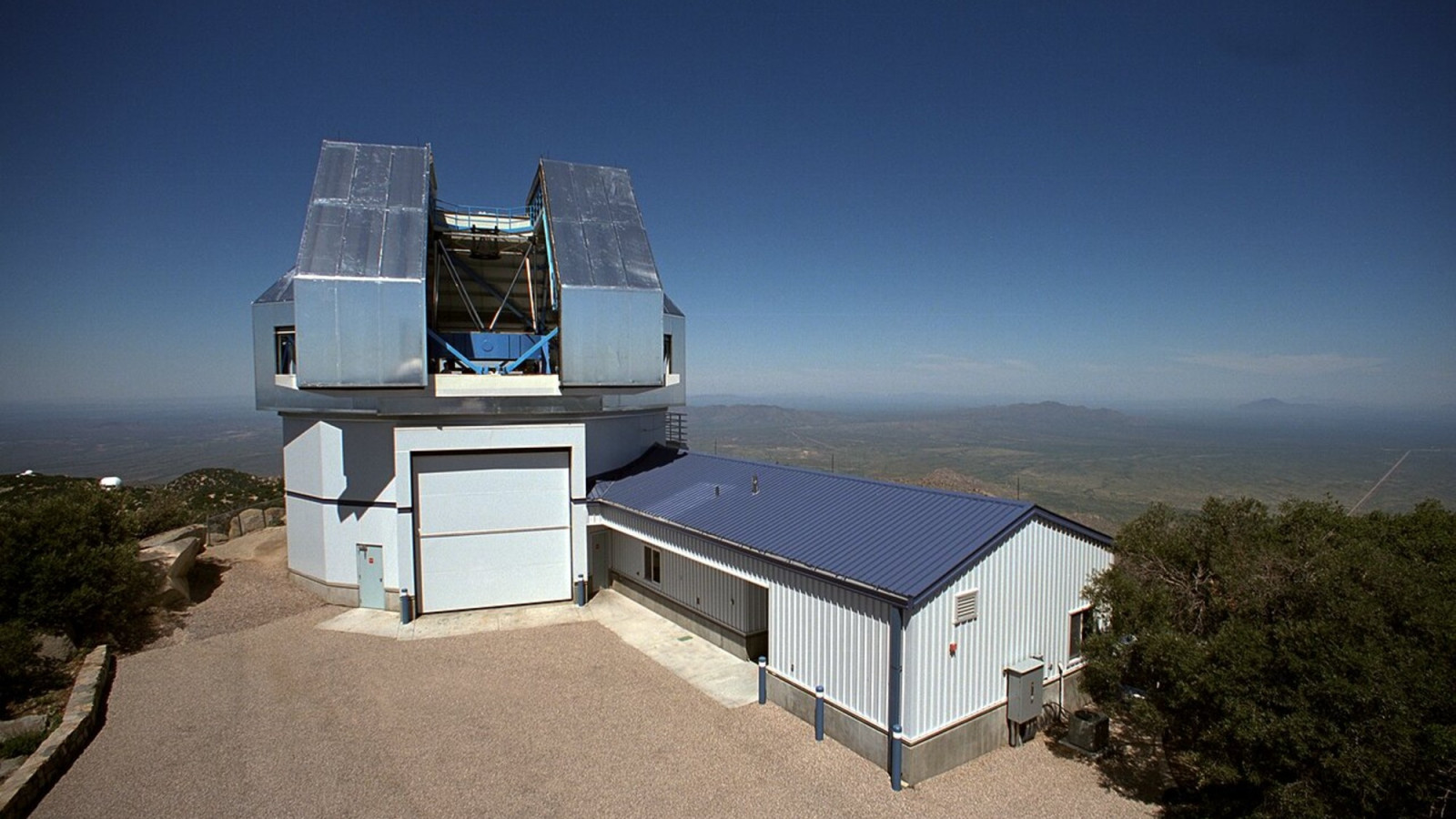
The UC Irvine group revisited this planet with two advanced instruments: the Habitable-zone Planet Finder on the Hobby-Eberly Telescope at McDonald Observatory in Texas, and the NEID Spectrometer on the WIYN Telescope at Kitt Peak National Observatory in Arizona. Their results painted a markedly different picture.

Updated Mass and Orbit Redefine the Planet as a Rocky Super-Earth
The revised data indicates GJ 3378b has a mass of about 2.3 Earth masses, significantly less than prior measurements, placing it firmly in the rocky super-Earth category. Additionally, its orbital period was corrected from 25 to 21 days, which brings it closer to its star and squarely within the habitable zone—an area where surface temperatures could support liquid water if the atmosphere is suitable.
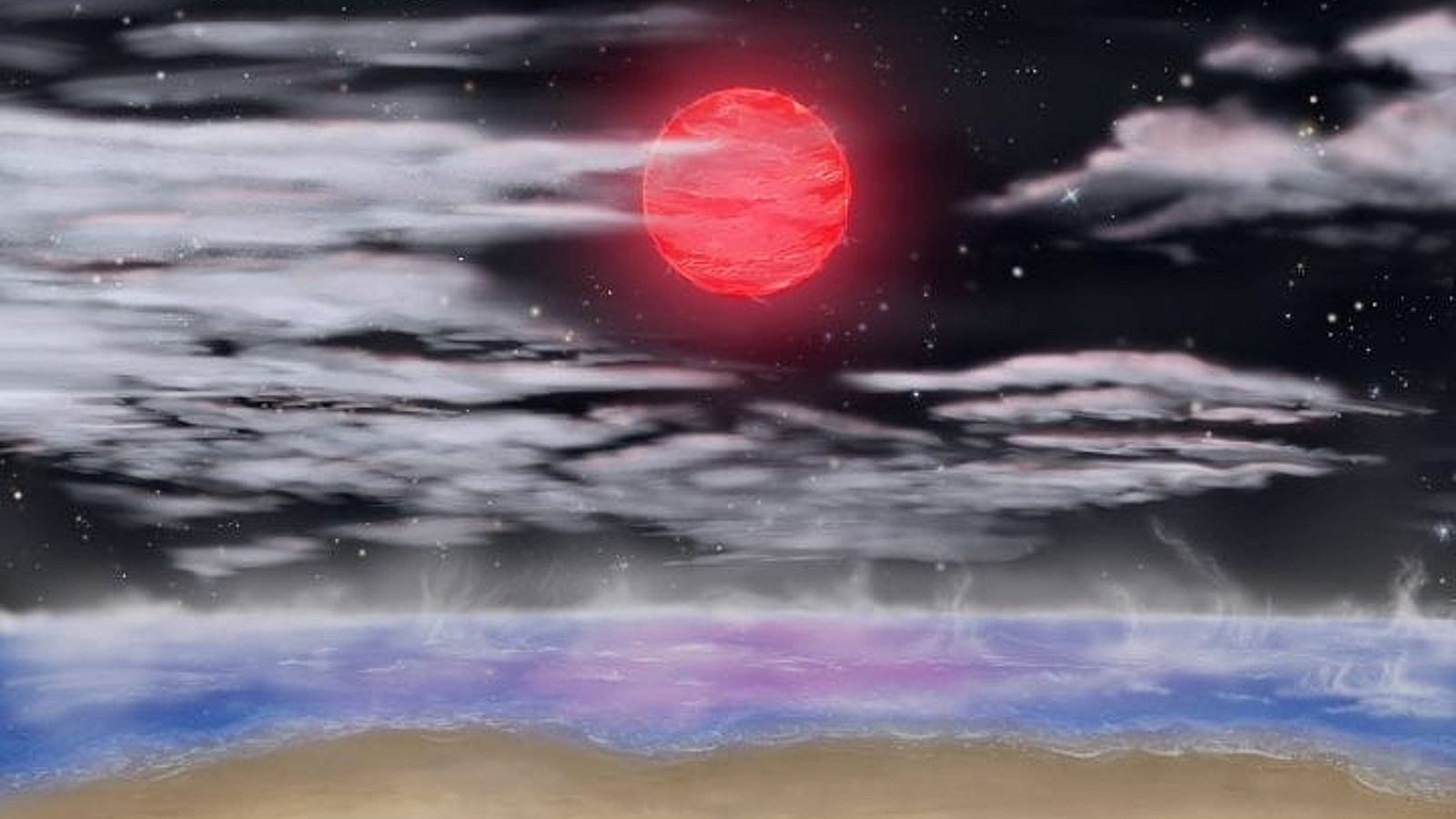
This adjustment from 5.26 to 2.3 Earth masses is critical. A planet with a mass over five times Earth’s typically holds a thick gas layer, resembling ice giants such as Uranus or Neptune. At approximately 2.3 times Earth’s mass, the planet is more likely a dense, rocky world that could sustain Earth-like surface conditions.
Lead researcher Paul Robertson, associate professor of astronomy at UC Irvine, stated, “This super-Earth receives around 90 percent of the stellar radiation that Earth gets from the Sun, placing it in a prime habitable zone.”
Detection Through Radial Velocity Limits Atmospheric Insights
Unlike transiting planets that briefly eclipse their stars, GJ 3378b was found using the radial velocity technique, also known as the wobble method. The planet’s gravitational pull causes its star to move subtly towards and away from our vantage point, detectable through shifts in the star’s light spectrum. This method provides precise measurements of the planet’s mass and orbit, but not its size, density, or atmospheric details.
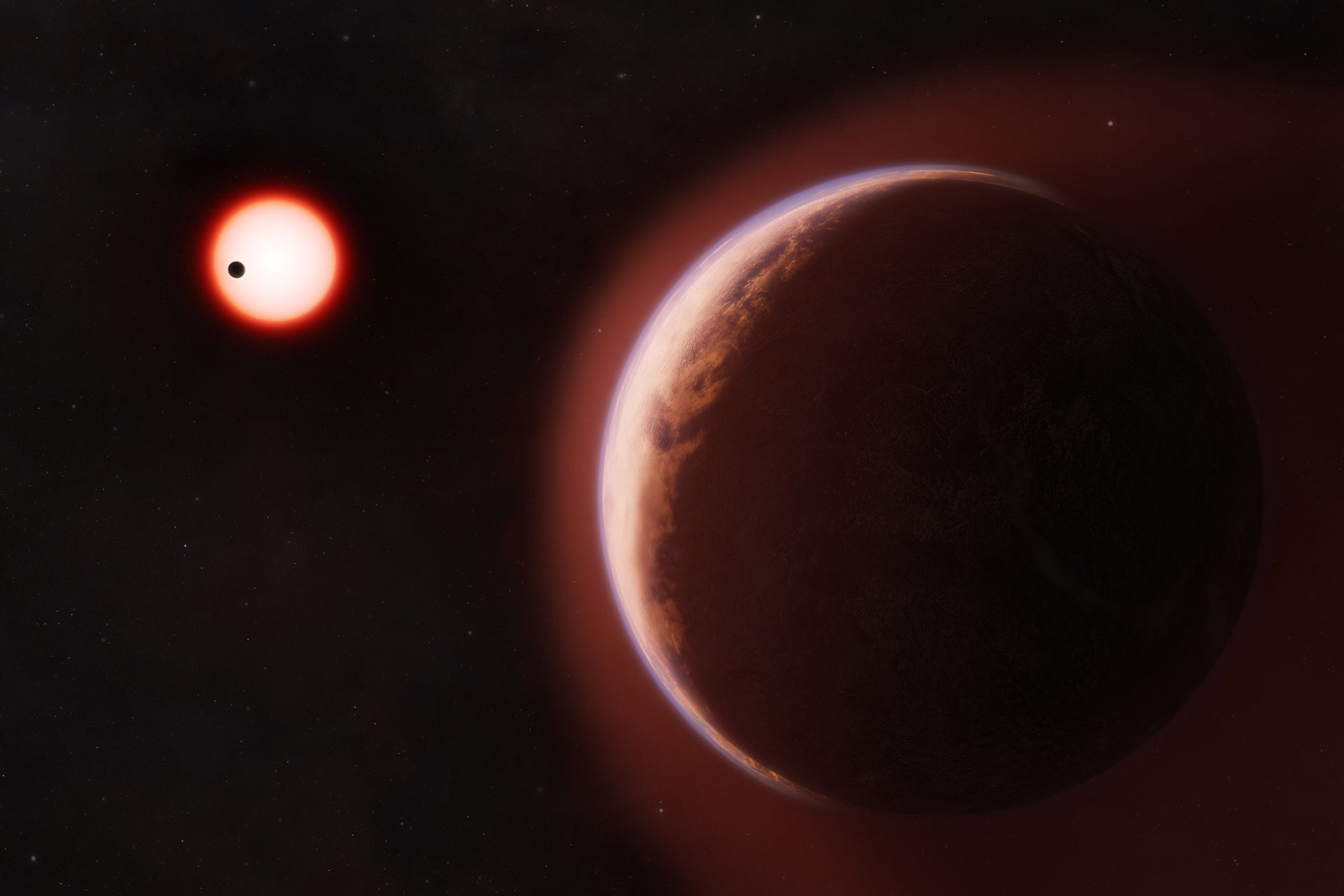
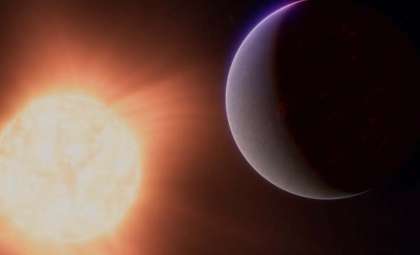
Since GJ 3378b does not transit its star as seen from Earth, astronomers cannot apply transit spectroscopy, like that employed by the James Webb Space Telescope on TRAPPIST-1’s planets. This technique analyzes starlight filtered through a planet’s atmosphere during transit, revealing atmospheric composition. Without a transit event, GJ 3378b’s atmospheric properties remain inaccessible to current observational tools.
Challenges From Host Star’s Radiation and Atmospheric Retention
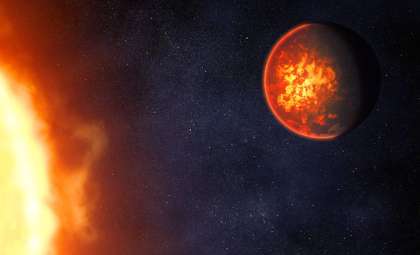
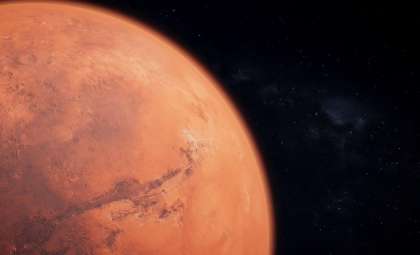
A major unknown revolves around the nature of GJ 3378b’s star, a red dwarf known for emitting intense radiation bursts and strong stellar winds that can gradually erode planetary atmospheres. Mars provides a local analog, once potentially harboring an atmosphere that was stripped away by solar radiation.
Positioned at the threshold known as the cosmic shoreline, beyond which a star’s radiation can remove a planet’s atmosphere, GJ 3378b’s location is critical. If it has managed to hold onto its atmosphere, the radiation levels it experiences, comparable to Earth’s solar input, would make it an excellent candidate for habitability.
Graduate student Gogod James, involved in determining the planet’s characteristics, highlighted that an atmosphere of the right thickness might sustain surface pressures suitable for liquid water and shield the surface from intense stellar radiation. However, current technology cannot confirm the presence or absence of such an atmosphere.
Future Telescopes Could Reveal Atmospheric Details
The most promising instrument for probing GJ 3378b’s atmosphere is NASA’s upcoming Habitable Worlds Observatory, expected to launch in the 2040s. Unlike JWST, this observatory will be tailored to directly image nearby rocky planets, enabling examination of atmospheric chemical signs of life, or biosignatures.
Michael Endl, an astronomer at the University of Texas at Austin and co-author, emphasized the significance of this discovery in the broader context. “Our goal is to answer whether life exists beyond Earth,” he explained. “Currently, we are surveying nearby stars to identify planets that may show biosignatures most easily.”
Robertson reflected on the planet’s proximity: though 25 light-years is distant by human standards, considering the Milky Way’s vast 100,000 light-year span, GJ 3378b is a close neighbor astronomically. Detecting this planet adds to our list of near-Earth worlds ripe for detailed study by future space observatories.
- Categories:
- Space


0 comments
Sign in to Comment