
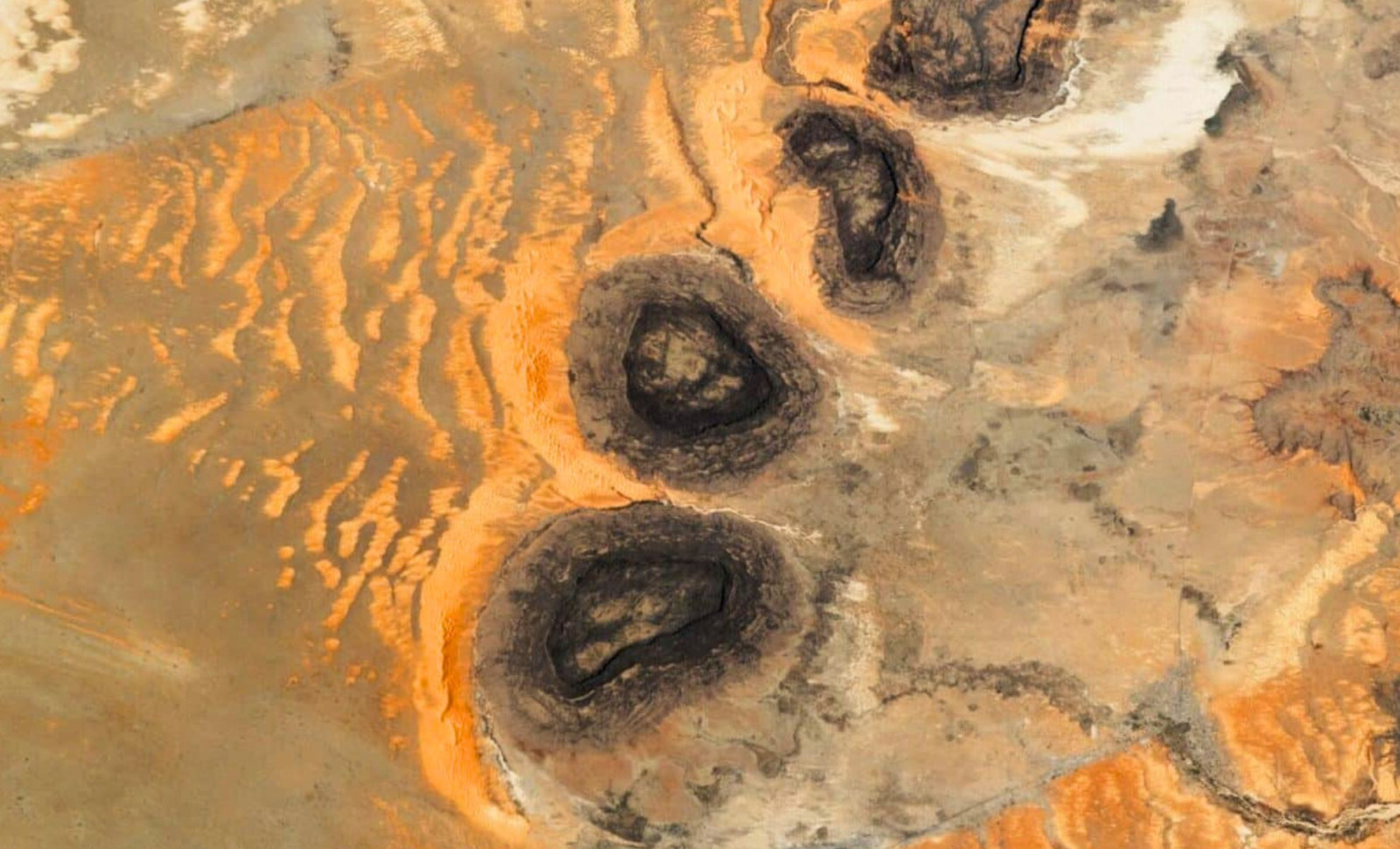
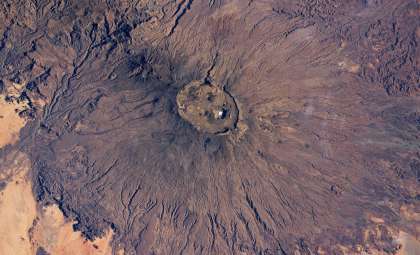
Amid the sprawling deserts of southern Mauritania, three flat-topped mesas rising between 1,000 and 1,300 feet above the sandy terrain grabbed an astronaut’s attention aboard the International Space Station. A photo shared by NASA’s Earth Observatory highlights these dark circular formations about eight miles northwest of Guérou, where rippling orange dunes cover the eastern slopes but give way to barren, windswept ground on the western side.
This sharp contrast results from the interaction between the mesas and prevailing winds, dictating where sand gathers and where it is swept away. These three mesas, remnants of a massive Paleozoic sandstone structure fragmented by erosion over hundreds of millions of years, demonstrate how ancient geologic forces still influence present-day desert landscapes.
Dark Surfaces Caused by Mineral Coating
Unlike the usual tan hues of sandstone, these mesas appear nearly black from orbit due to a layer of rock varnish. This thin, dark coating, rich in manganese and iron oxides, forms over thousands of years in arid settings, according to NASA’s Earth Observatory.

Rather than a simple deposit, ScienceDirect explains that rock varnish builds up in micrometer-thick layers, aided by microbial activity that helps concentrate manganese on the surface. This slow process means the black coating seen in the astronaut’s image reflects prolonged exposure to desert conditions.
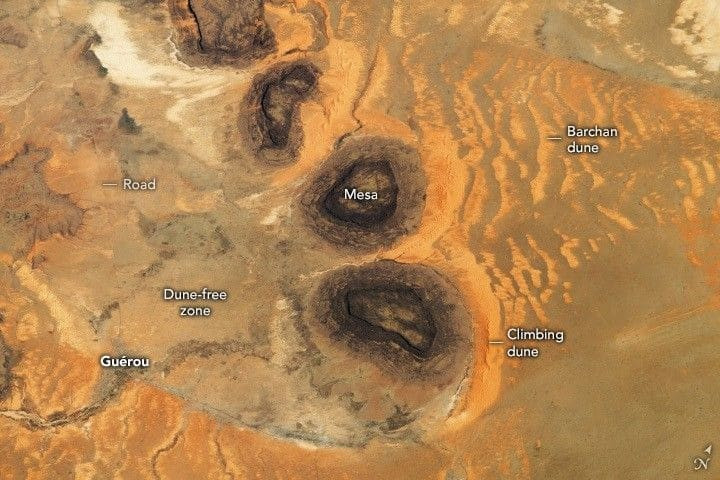
The largest of the mesas extends about six miles across at its broadest point. A fourth mesa lies just north of this group, evident in a wider astronaut photo from 2014 but outside the 2023 image’s frame. During the Paleozoic era—spanning roughly 541 to 252 million years ago—all four were likely joined as part of a vast sandstone formation, Live Science reports. Over many centuries, erosion from water and wind fractured this feature into the isolated mesas visible today.
Distinct Dune Types Shaped by Wind and Terrain
Within the 2023 image, two varieties of sand dunes appear, each shaped by unique interactions between wind and the mesas. Predominant northeastern winds carry sand particles toward the mesas’ western faces. Here, where the wind slows upon encountering the steep slopes, grains settle into sizable ridge-like formations known as climbing dunes, clinging closely to the rock surfaces.
Further downwind, smaller, crescent-shaped barchan dunes form across the open desert. These dunes, more widespread than climbing dunes, stretch in a rippling band for up to 15 kilometers (9 miles) eastward from the mesas, creating a flowing tail of reddish-yellow sand contrasting vividly with the dark rocky panorama in the astronaut photo, as described by NASA’s Earth Observatory.
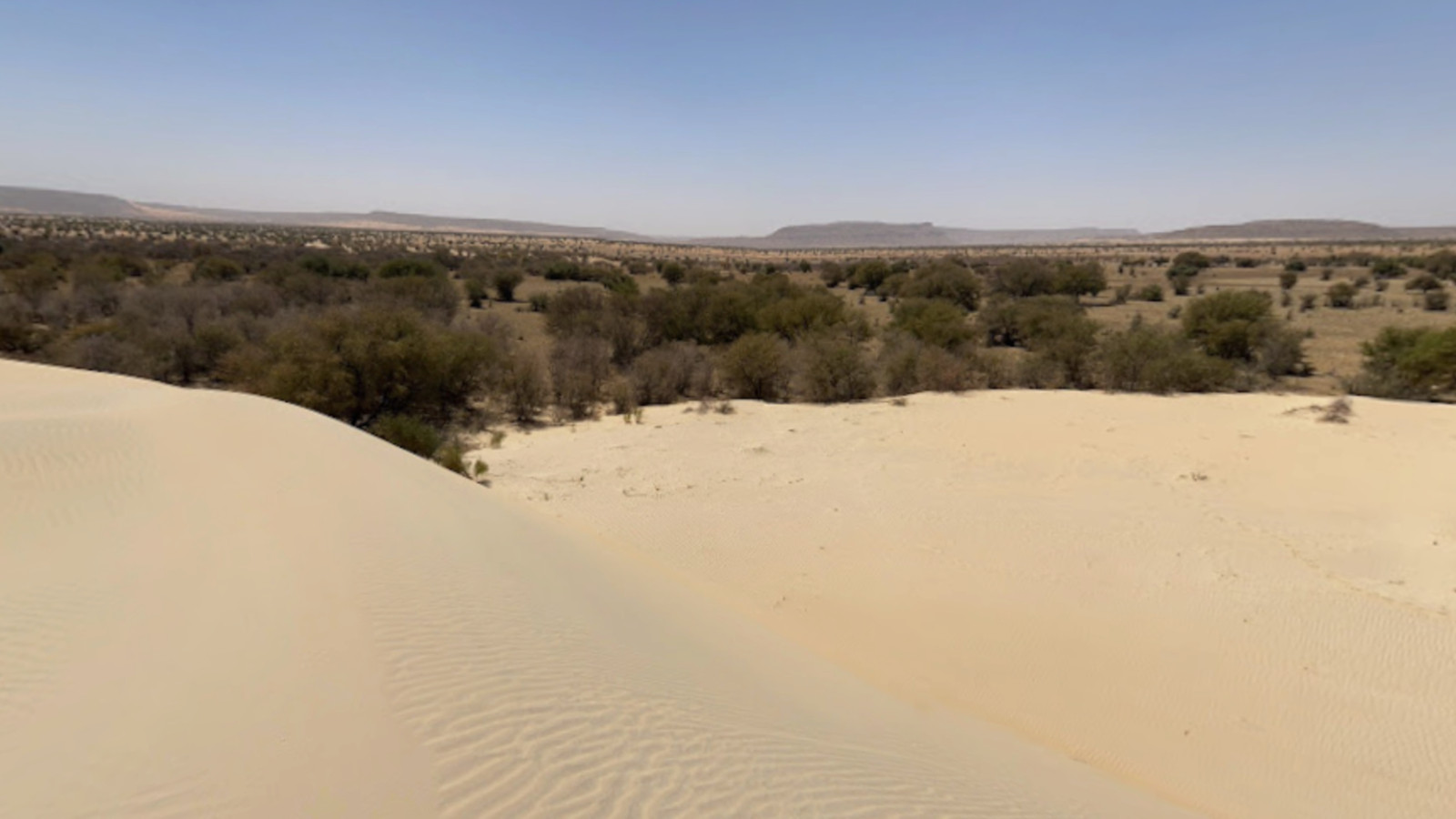
Climbing dunes are less common because they need a steep and stable face where wind-blown sand can accumulate without scattering. The sheer, vertical edges of these mesas provide ideal conditions for their formation. Having both dune types coexisting highlights how the landscape directs sediment transport in desert ecosystems.
Strong Winds Keep Western Ground Sandy-Free
The sandless area west of the mesas is shaped by a process NASA terms wind scour, involving vigorous vortex winds accelerated through narrow gaps between the rock formations. These faster winds prevent sand deposition by eroding and clearing particles from the surface, maintaining the starkly bare land downwind of the mesas.
From space, this effect is unmistakable. The 2023 astronaut image shows a rocky, sand-free plain stretching westward in contrast to the eastern dunes. A 2014 photo covering a larger area reveals this pattern continuing, encompassing a bigger mesa further east and a more expansive barchan dune field confirming the system’s broad extent beyond the 2023 image.
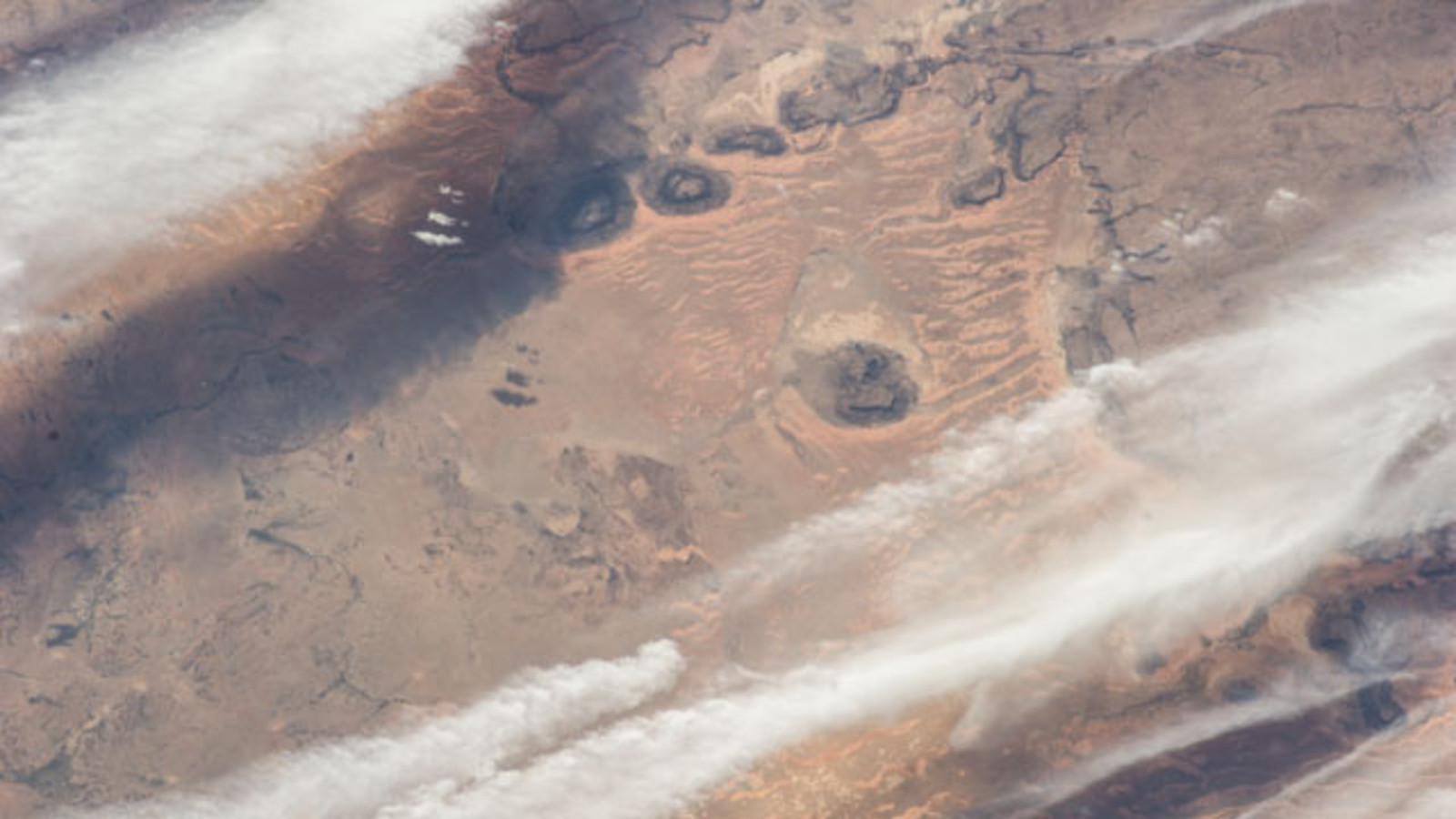
Located near one of the Sahara's most famous landmarks, the Richat Structure—or Eye of the Sahara—about 285 miles north, these black mesas likely resembled similar concentric rock formations before erosion carved them into the isolated hills seen today, according to Live Science.
- Categories:
- News



0 comments
Sign in to Comment