
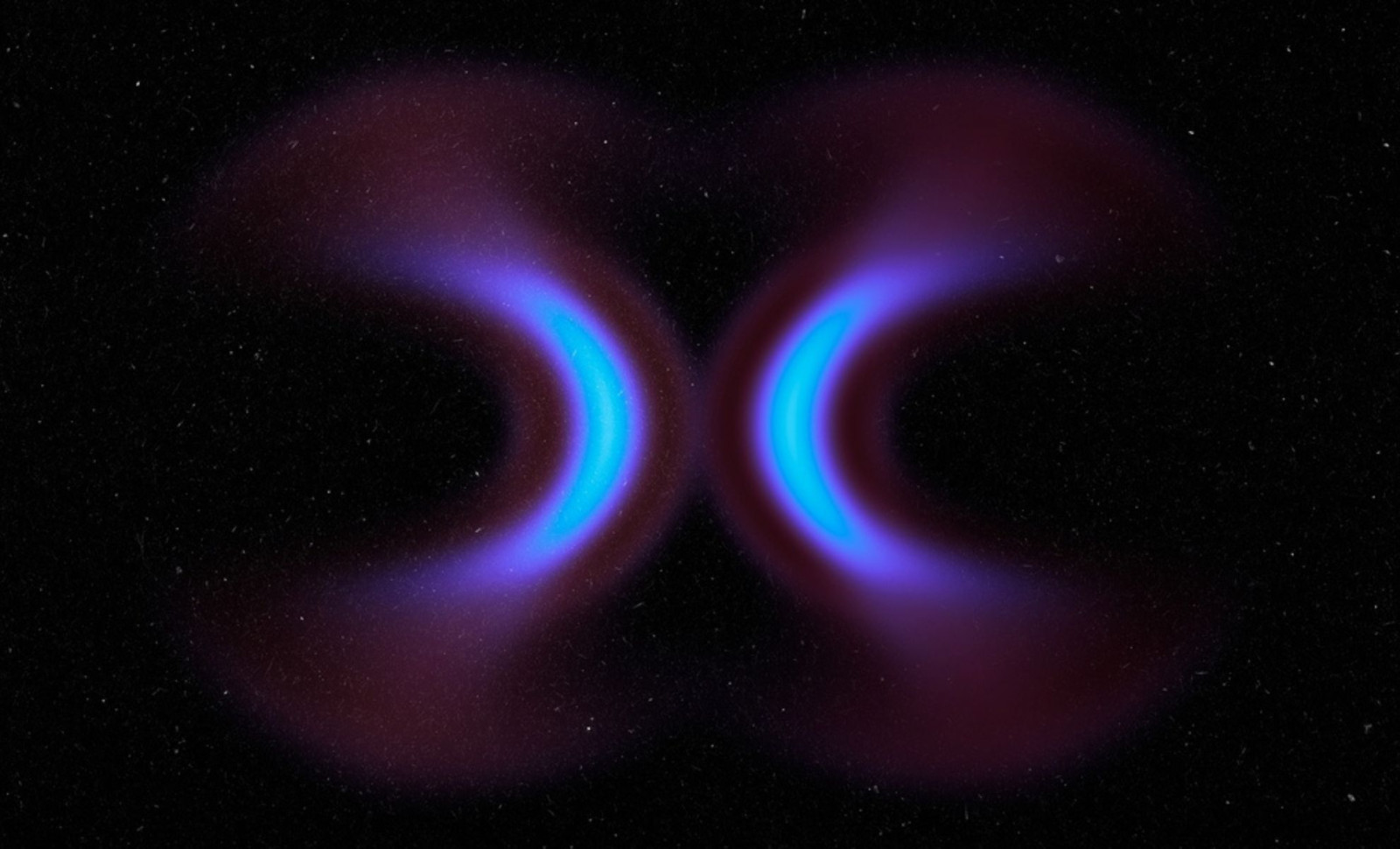
Astronomers have uncovered a vast, starless region spanning 3,200 light years at the core of the distant galaxy Abell 402-BCG. Initially detected in 2018 and believed to be caused by thick cosmic dust, recent studies now attribute this void to the gravitational effects of two close-orbiting ultramassive black holes expelling stars from the area as they spiral inward.
Located within the Abell 402 galaxy cluster around 4 billion light years distant, with estimates ranging up to 4.4 billion light years by Futura-Sciences, the duo’s combined mass is roughly 60 billion times that of the Sun. This figure surpasses the combined mass of any previously known pair of black holes by at least two-fold.
Infrared and Optical Data Disprove Dust Hypothesis
Initially, astronomers suggested that the dark gap was caused by a thick cloud of dust obscuring starlight. Such clouds are common in galaxies’ centers, and no contrary explanation was available at first. As a result, the mystery remained unresolved in the ordinary elliptical galaxy’s otherwise unremarkable core.

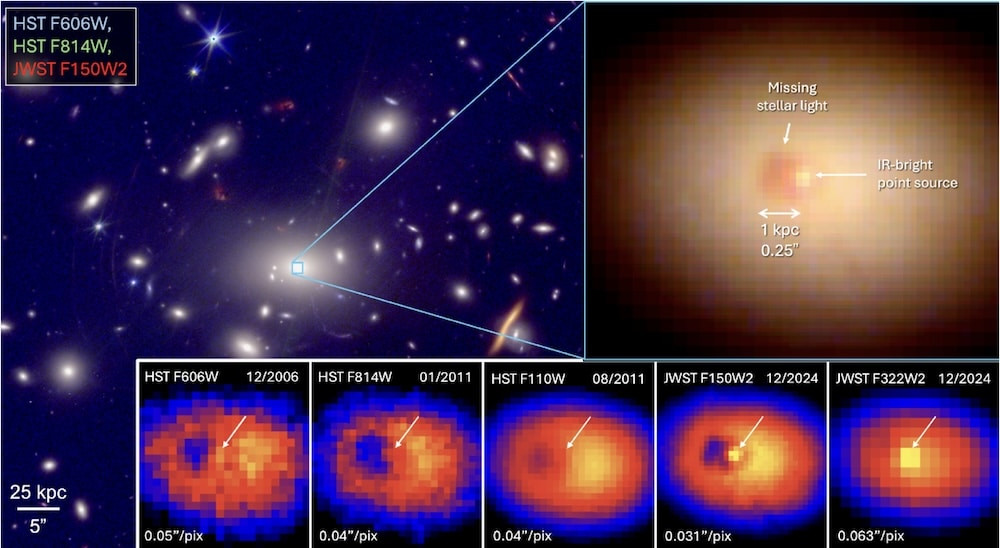
Recently, a team led by MIT astronomer Michael McDonald employed data from the James Webb Space Telescope (JWST) and the Very Large Telescope (VLT) to revisit the question. Their findings, published April 23, 2026, in The Astrophysical Journal Letters, originated from a direct comparison of the darkened area in both infrared (JWST) and optical (Hubble) wavelengths.
If dust had been obscuring stars, the infrared light measured by JWST would have shown less dimming due to dust’s greater transparency at longer wavelengths. Contrary to expectations, the void appeared equally dark across both data sets, an observation inconsistent with dust behavior.
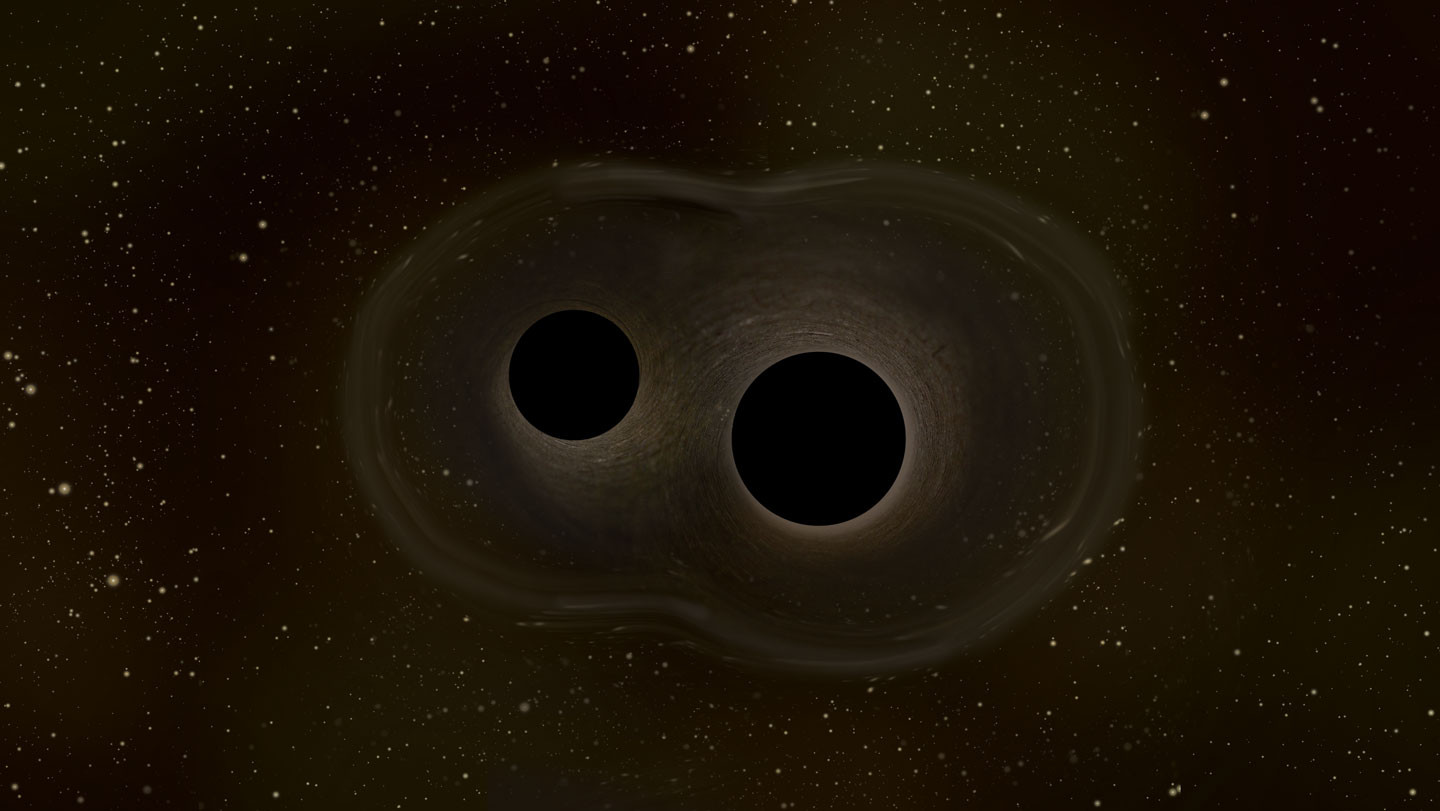
This wavelength uniformity allowed researchers to dismiss dust as the cause and affirm that the hollowed region truly lacks stars. They estimate that approximately 2 billion solar masses worth of stars have been displaced, making up about 1% of the galaxy’s stellar mass—an exceptionally large deficit given the region’s relatively small size.
Binary Black Holes Explain the Starless Gap
With dust ruled out, scientists considered what could forcefully eject such an immense number of stars. JWST detected a bright infrared source on one edge of the cavity, exhibiting the spectral features indicative of an active black hole accreting matter, where gas and dust heat up prior to crossing the event horizon.
Further investigation with the MUSE spectrograph on VLT revealed a second ionized gas source opposite the void, consistent with a second actively feeding black hole. This discovery positions two separate black holes on either side of the void, rather than a single object centered within it.
Reports from Sky & Telescope note the duo exhibits a relative speed of around 370 kilometers per second, suggesting orbital movement around a common center. Additionally, the researchers infer that a broader 6,500-light-year empty core formed earlier, likely sculpted by a colossal black hole weighing approximately 50 billion solar masses from a prior galactic merger.
These stellar evacuations originate from galaxy mergers, which draw central black holes together through gravity. As the pair approach, their gravitational influence ejects nearby stars, creating starless cavities such as the one observed in Abell 402-BCG, according to Futura-Sciences.
McDonald’s group suggests that Abell 402-BCG experienced a past galactic collision, and estimates that the current binary black holes have been orbiting each other for only a few tens of millions of years—a fraction of typical galactic timelines—meaning they represent a newly formed system still in the early stages of spiraling toward merger.
Fate of the Massive Black Hole Duo
Eventually, the pair is expected to fuse into a single black hole of record-breaking proportions. Black holes exceeding 60 billion solar masses have been rarely observed individually, making both the present binary and its anticipated final mass extraordinary even among supermassive black holes.
Science News highlights that while merging supermassive black holes have been theorized, observing them in such a close, advanced stage is extremely rare. The large mass and timing of this observation—midway through merger—make it a unique find compared to previous studies.
According to Sky & Telescope, models indicate only about 0.5% of large galaxies are observed in this evolution stage at any moment. This rarity underscores the significance of detecting Abell 402-BCG’s binary system during this narrow evolutionary window.
The research team plans to use these observations to estimate the frequency of these massive galactic collisions universe-wide and improve models detailing how such mergers impact galaxy structure. Moreover, this discovery provides a guide for identifying analogous starless gaps in other galaxies.
- Categories:
- Science










0 comments
Sign in to Comment