
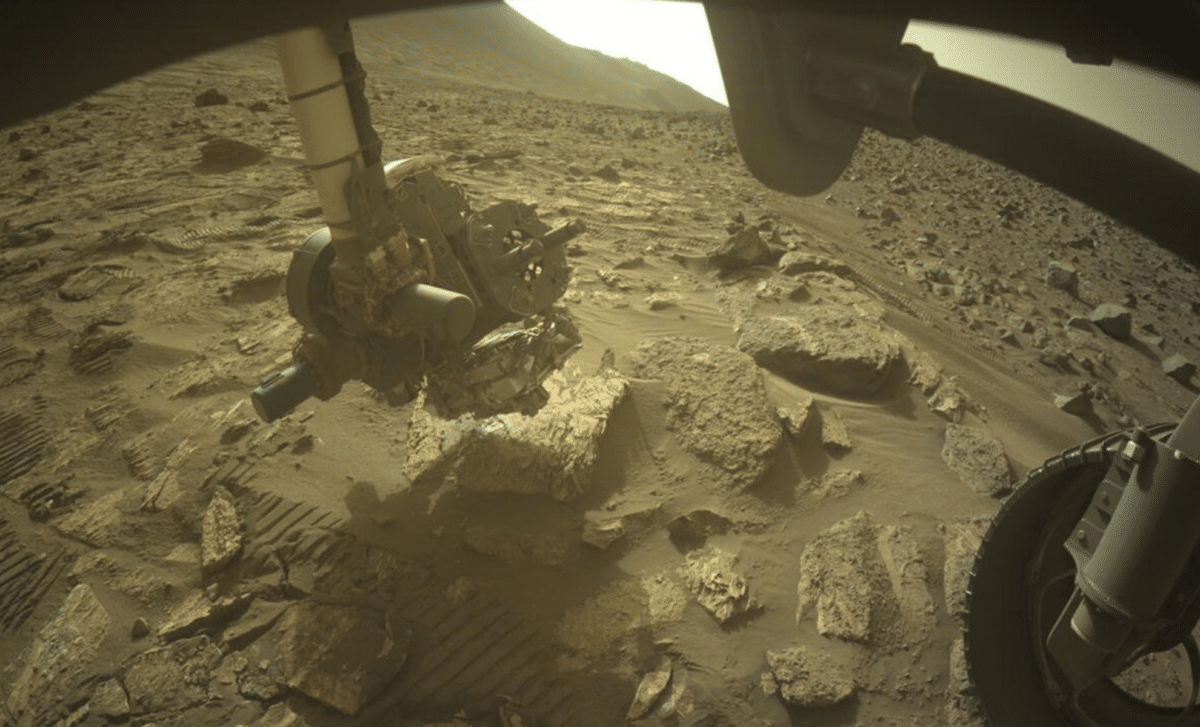
For years, the quest to find evidence of life's essential chemical components on Mars has driven planetary exploration. Now, a distinctive rock situated within an ancient Martian lakebed has captured the interest of researchers worldwide. NASA’s Perseverance rover has detected unusually intricate organic molecules preserved inside this rock, ranking among the most significant chemical findings on Mars to date. Published recently in Science Advances, this discovery does not confirm past life on Mars but reveals that the planet’s ancient environment sustained a far more intricate organic chemistry than previously documented.
Martian Rocks Reveal Unexpectedly Complex Chemical Records
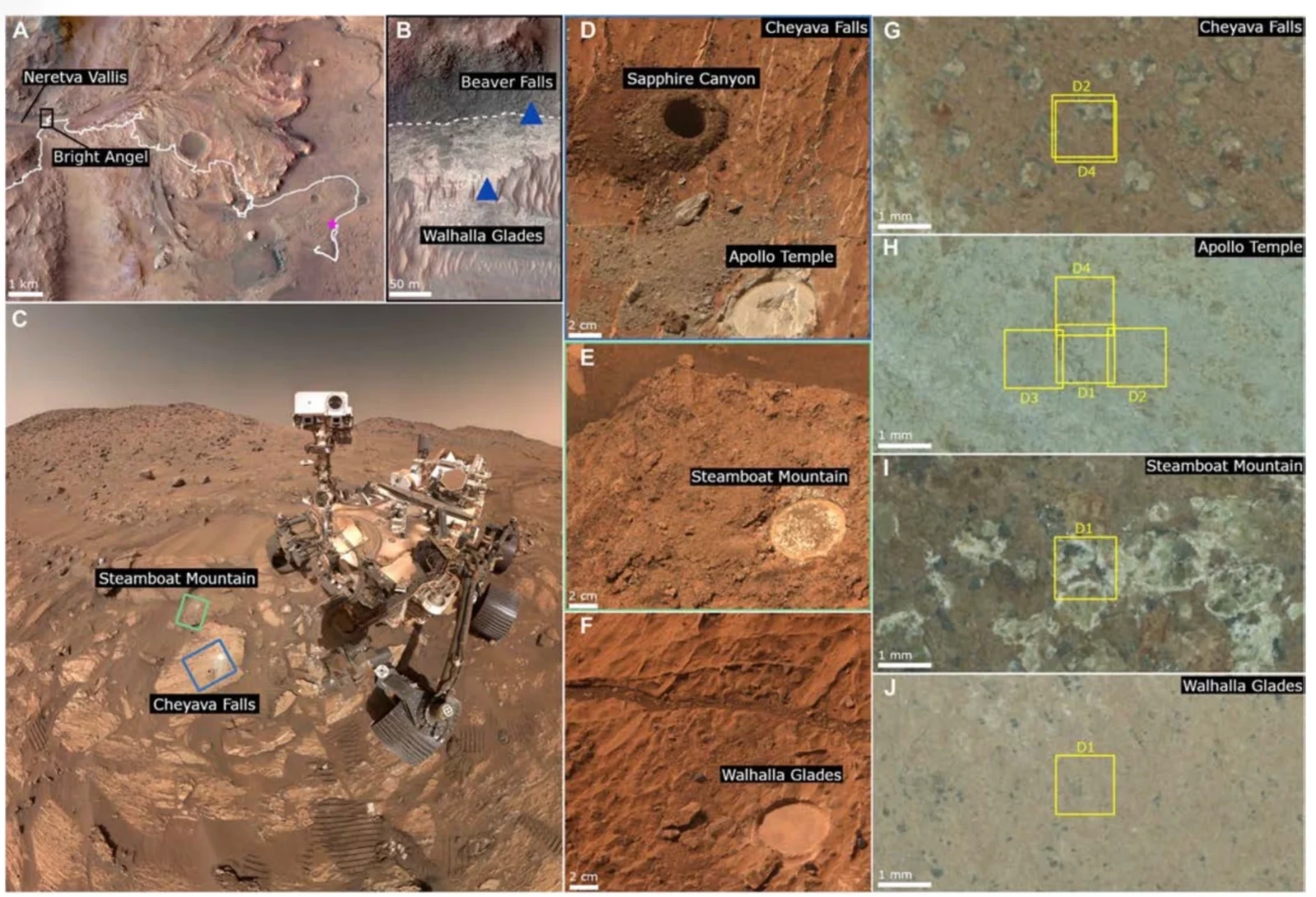
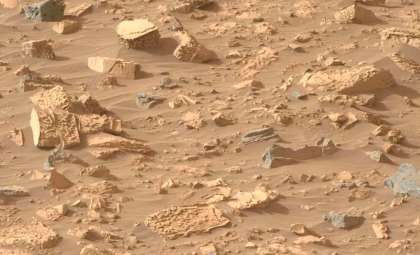
Since touching down in Jezero Crater in 2021, Perseverance has been investigating sediments formed approximately 3.7 billion years ago in a once-lake and delta system. This site was chosen for its potential to retain chemical clues from when Mars was warmer and wetter, potentially able to support habitable environments. The rover’s sophisticated instruments have identified macromolecular carbon within samples from the Bright Angel formation of Neretva Vallis, including the notable Cheyava Falls mudstone, famous for its unusual spotted texture.
The carbon compounds discovered exhibit greater chemical complexity than many organics found elsewhere on Mars, suggesting that ancient Martian sediments may hold a richer archive of organic chemistry than previously assumed. Though organic compounds alone don’t constitute evidence of life—since many non-biological processes can create them—they are essential for life as understood on Earth. This breakthrough broadens scientific insight into the variety of organic substances that have endured Mars’ geological and surface conditions for billions of years.

Surface-Level Organics: A Rare and Valuable Detection
An especially noteworthy aspect of this discovery is that the organic material was found directly on the rock's exposed surface, rather than buried beneath it. This characteristic enhances its importance for future Mars exploration and sample gathering missions. As Kyle Uckert, astrobiologist and NASA Jet Propulsion Laboratory instrument scientist, shared with ScienceAlert, “The detection of macromolecular carbon on the dust-cleared, but otherwise unprepared surface of the ‘Cheyava Falls’ rock represents the shallowest detection of organic matter on the surface of Mars.”
This suggests these organics might have been uncovered relatively recently or protected by minerals that shield against ultraviolet radiation. If mineral layers provided photoprotection over extensive timescales, other similar Martian rocks may hold equally significant organic records. This reinforces the value of examining sedimentary deposits in Jezero Crater and supports ongoing investigations into ancient lacustrine environments as preserved chemical archives.
Raman Spectroscopy Unveils Amorphous Carbon Signatures
The team’s analysis, detailed in Science Advances, utilized the SHERLOC instrument aboard Perseverance, which performs Raman spectroscopy and fluorescence imaging to identify minerals and organics at micro scales. Researchers compared Martian data to Earth-based samples and meteorites to classify the material. Geologist Ashley Murphy from the Planetary Science Institute explained, “Using the MMC’s Raman G-band parameters, we determined that it is amorphous carbon.”
Amorphous carbon originates from diverse processes. On Earth, it’s linked to biological activity like microbial mats and coal, but it also appears in meteorites and rocks altered through volcanic or hydrothermal action. Given overlapping spectral features from different sources, it remains unclear whether the Martian carbon stems from biological or abiotic origins. The data confirm a chemically intricate carbon form but do not clarify its genesis, leaving multiple hypotheses open.
Why Researchers Remain Measured About Life Implications
Despite the excitement surrounding this discovery, experts emphasize there is no direct evidence of ancient Martian life yet. Organics can be introduced to planetary surfaces via meteorite impacts and interplanetary dust or form through volcanic, hydrothermal, or electrochemical mechanisms without biological involvement. Each scenario is scientifically viable.
The key significance lies in demonstrating that Mars maintained complex carbon-based chemistry in rocks dating back billions of years. The coexistence of carbonates, sulfates, phosphates, and macromolecular carbon outlines an ancient environment rich in ingredients for complex chemical evolution. Determining if life ever influenced these processes, however, will require advanced laboratory analysis beyond the rover's current capabilities.
The Promise of Martian Samples Returned to Earth
This newly identified organic content strengthens the case for returning select Martian samples to Earth, where state-of-the-art laboratories can perform detailed isotopic, molecular, and textural studies impossible for remote robotic missions. Several sealed sample tubes from Jezero Crater are already aboard Perseverance, preserving material from one of the most scientifically rich Martian terrains explored so far.
Should these samples reach Earth through forthcoming return missions, researchers could more definitively determine whether the complex carbon resulted from geological activity, extraterrestrial delivery, or unknown processes. Until that milestone, this finding marks a crucial advancement in decoding Mars’ ancient environmental story and its potential to have harbored life-supporting conditions.
- Categories:
- Astronomy










0 comments
Sign in to Comment