
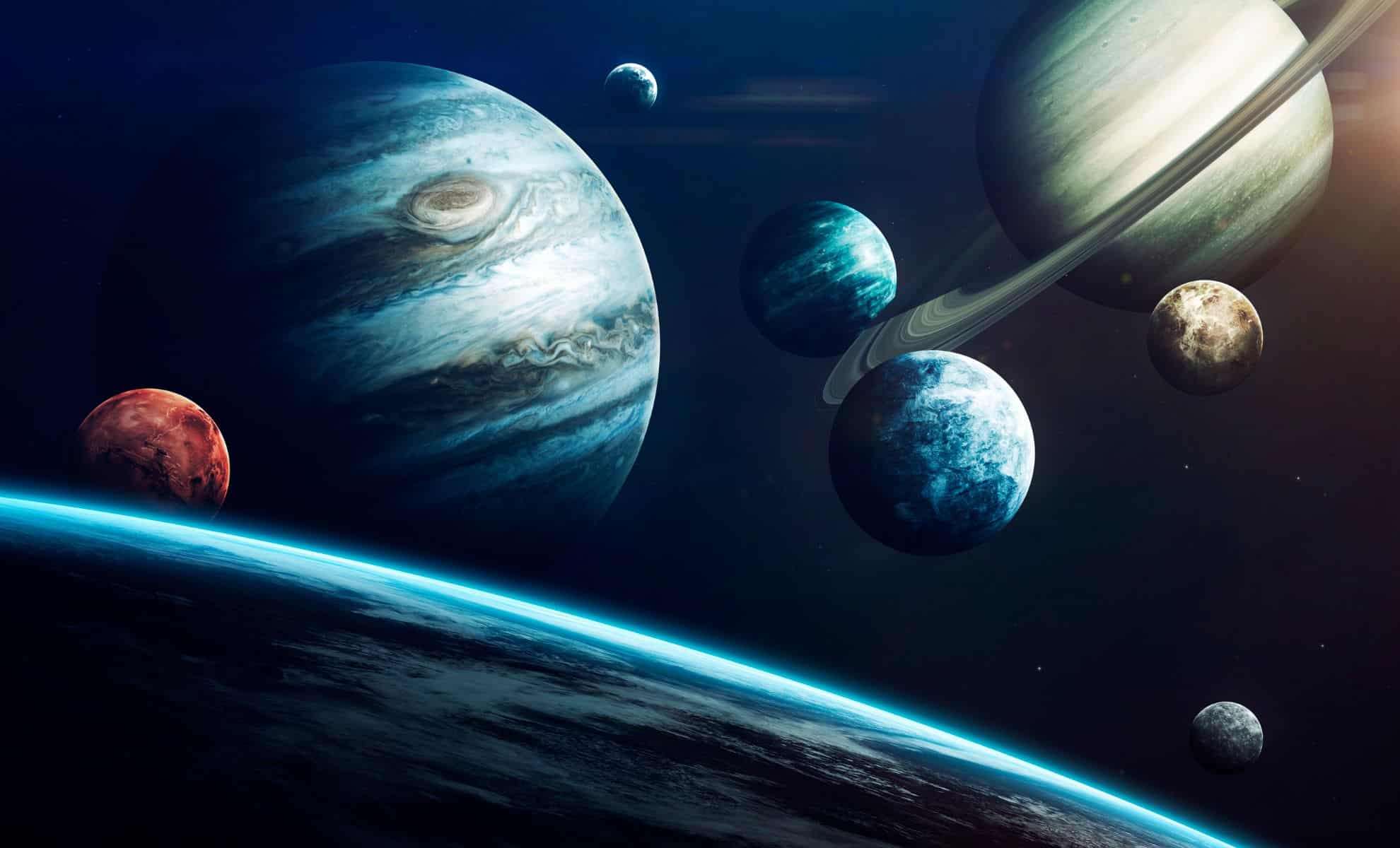
When envisioning the weather on other worlds, many picture harsh extremes—scorching acid rain, methane snowfall, or fierce gusts sweeping barren terrains. However, recent planetary missions and studies reveal a fascinating insight: weather phenomena across many planets in our solar system—and even farther beyond—display surprising parallels to Earth's meteorological patterns.
Whether it's shifting seasons, high-altitude jet streams, sweeping dust storms, or cloud formations, planetary weather systems around the universe obey similar physical principles.
Universal Forces Behind Weather Patterns
Weather fundamentally depends on energy, primarily from a star like the Sun, interacting with a planet’s atmosphere. Differences in temperature, pressure, and rotational speed drive the circulation of air, cloud creation, and storm development. This set of physical laws applies universally, from Earth to Mars to remote gas giants orbiting distant suns. While environmental specifics differ widely, the basic physics remain consistent.
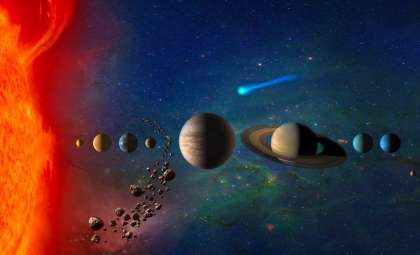
As reported by the Washington Post, planets like Mars, Venus, Jupiter, and Saturn each show distinct weather, yet all arise from the same natural laws governing Earth's climate. Even far-flung exoplanets, though challenging to examine, hint at comparable atmospheric behaviors.

Mars: Dust Storms and Seasonal Cycles
Mars, our crimson neighbor, provides a standout example of Earth-like atmospheric activity within our solar system. Despite having an atmosphere just about 1% as dense as Earth’s, Mars experiences winds, cloud cover, and seasonal shifts. Its axial tilt of roughly 25 degrees drives seasons akin to our own. Martian summers can bring temperatures near a comfortable 20°C (68°F) at the equator, while nights become bitterly cold.
Mars is well known for colossal dust storms that can begin as small whirlwind phenomena and expand to engulf the entire planet for weeks. NASA’s rovers have captured striking images of dust devils, miniature tornadoes resembling those formed in Earth's deserts.
Venus: Extreme Heat with Familiar Atmospheric Traits
Often called Earth’s “evil twin” due to its size and composition, Venus presents vastly different surface conditions but retains some weather patterns reminiscent of our planet. Its thick, toxic carbon dioxide atmosphere is enveloped by sulfuric acid clouds. Surface temperatures exceed 460°C (860°F), hot enough to melt lead, accompanied by crushing atmospheric pressures.
Despite the harsh environment, Venus hosts jet streams—rapid winds circling its upper atmosphere—that resemble Earth’s, though they outpace Venus’s own slow rotation. The planet’s high-altitude clouds move in massive bands, analogous to Earth’s jet streams driving weather systems.
Lightning flashes have also been detected within Venus’s acid clouds, linking its weather dynamics to familiar terrestrial phenomena. Japan’s Akatsuki spacecraft has observed complex processes like convection and cloud formation that strikingly parallel Earth’s meteorology.
Massive Storms on Gas Giants
Jupiter and Saturn, the dominant gas giants in our solar system, display some of the most powerful weather, yet these too emerge from the same physical forces shaping Earth's atmosphere. Though lacking solid surfaces, their thick gaseous envelopes nurture vast storms that persist for centuries.
Jupiter’s Great Red Spot—a storm bigger than Earth—has raged for over 350 years. Operating like a colossal hurricane, this vortex centers on a low-pressure zone similar to Earth’s tropical cyclones. Likewise, Saturn hosts intense storms, fast equatorial winds, and seasonally driven atmospheric changes. Its iconic polygonal storm at the North Pole may appear unusual, but it still obeys fluid dynamics well understood by Earth scientists.
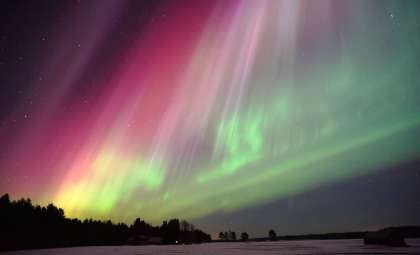
Both Jupiter and Saturn experience lightning, auroras, and atmospheric wave patterns—phenomena that create another bridge connecting their weather to ours. These giant planetary systems exemplify the universal nature of atmospheric behavior.
- Categories:
- News



0 comments
Sign in to Comment