
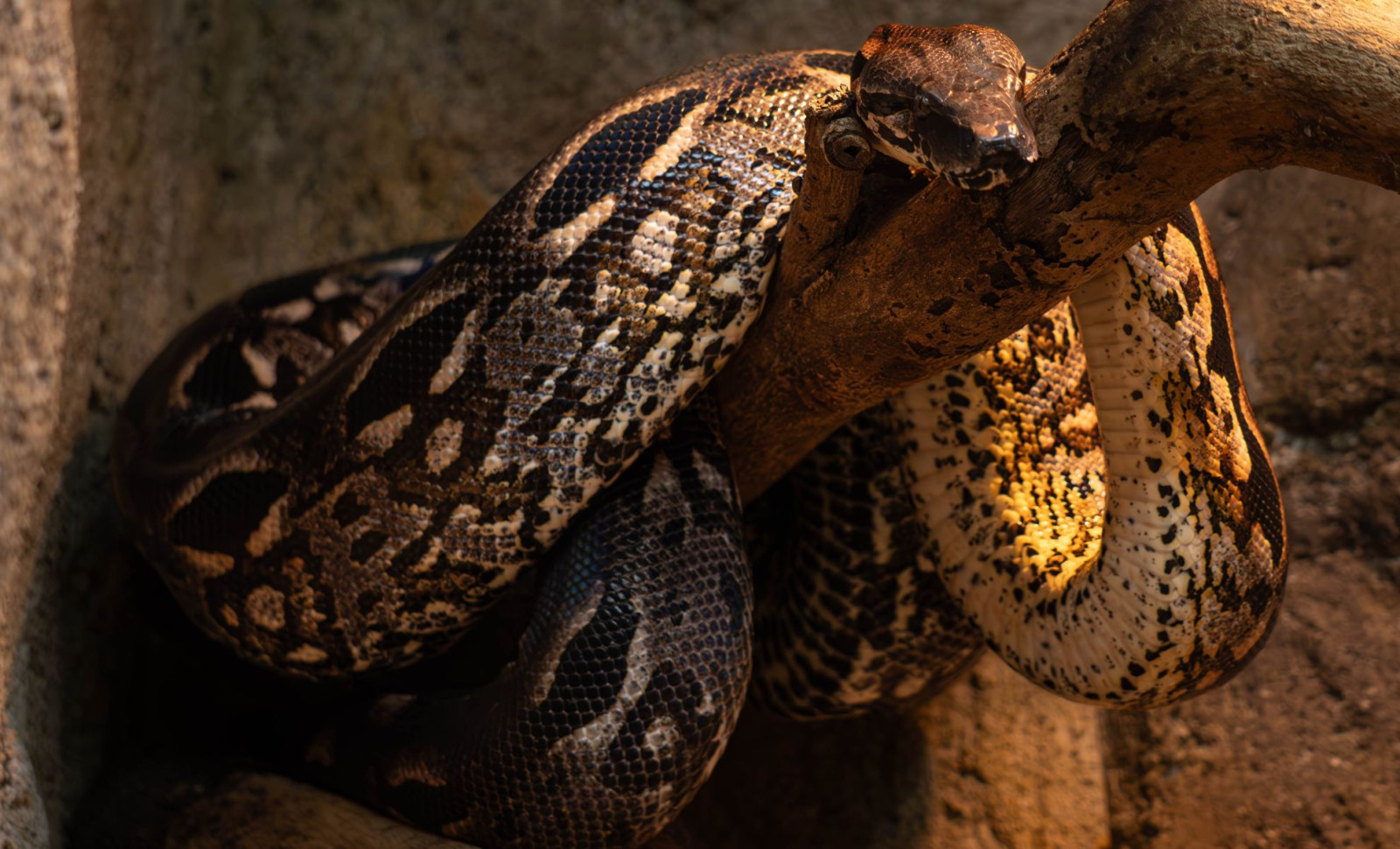
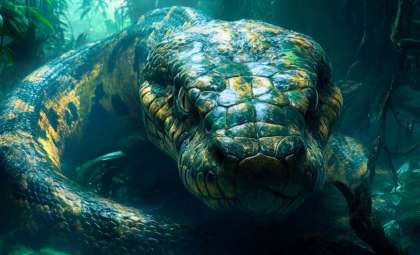
Researchers have revealed the fossil remains of a gigantic ancient snake that could rival or even surpass the famed Titanoboa, historically regarded as the largest snake on record. This newfound species, called Vasuki indicus, was a formidable constrictor living approximately 56 million years ago in wetland environments that now form part of western India.
For more than ten years, Titanoboa—measuring around 13 meters long and tipping the scales at over a ton—has been the iconic giant among prehistoric snakes. However, the discovery of Vasuki indicus, which might have grown to an impressive 15 meters in length, challenges this dominance. Excavated from a lignite mine in Gujarat, this fossil adds to the growing knowledge about giant reptiles that thrived after the age of dinosaurs.
Unearthing a New Gigantic Serpent
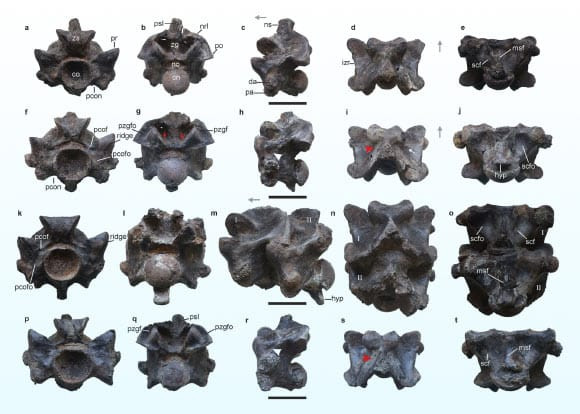
The fossilized remains of Vasuki indicus were uncovered in the Panandhro lignite mine region in Gujarat, India. Scientists recovered 27 vertebrae, some still found in their natural alignment. Findings published in Scientific Reports, indicate that this snake possibly measured up to 15 meters long and weighed as much as one tonne. Such measurements position Vasuki as a serious contender against Titanoboa, formerly recognized as the largest snake ever discovered.

“This is comparable in size to the longest known snake to have ever lived, the extinct Titanoboa,” the authors said.
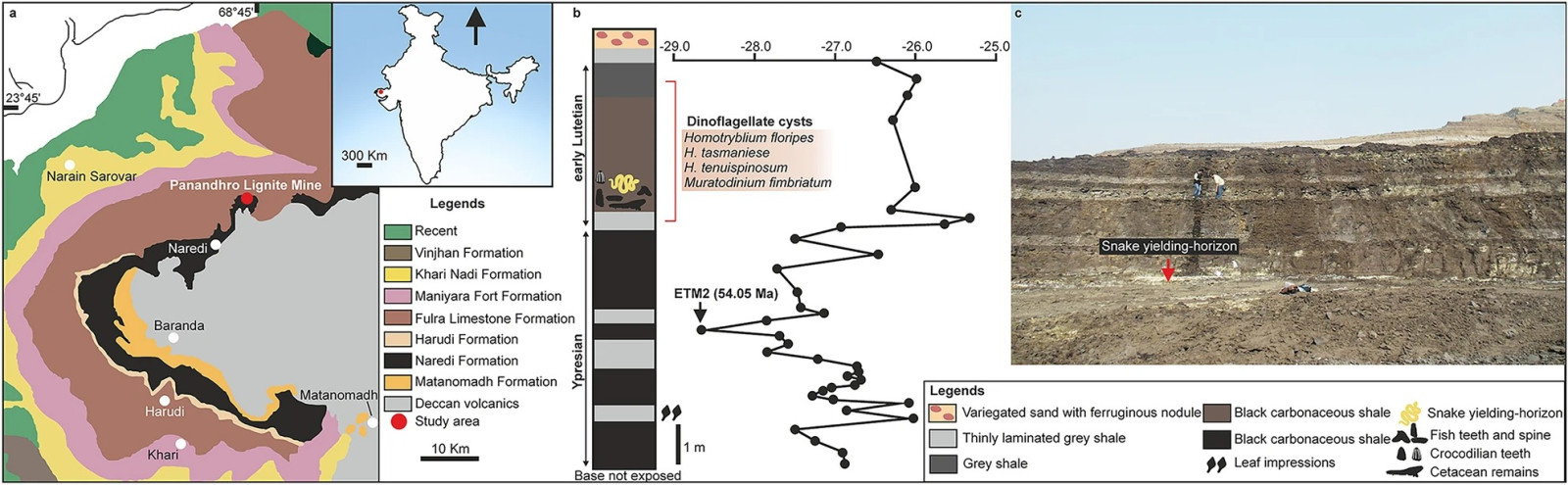
This find holds significance beyond size alone, challenging earlier views of the fauna that inhabited the Paleocene epoch, a period after dinosaurs vanished. The fossil’s discovery in India—far from South America where Titanoboa was located—suggests that giant snakes inhabited multiple ancient ecosystems worldwide.
Ambush Predator with Massive Strength
Whereas Titanoboa is believed to have lived partly in water and was known for its huge size, Vasuki indicus likely shared a similar hunting strategy. Lead author and postdoctoral researcher Debajit Datta from the Indian Institute of Technology Roorkee explains:
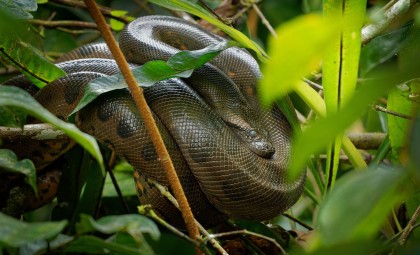
“Considering its large size, Vasuki was a slow-moving ambush predator that would subdue its prey through constriction like anacondas and pythons,” adding that, “this snake lived in a marshy swamp near the coast at a time when global temperatures were higher than today.”
This implies that despite its enormous dimensions, the snake was probably not swift or nimble. The fossilized vertebrae measure up to 11 cm across, indicating a thick, cylindrical body possibly as wide as 44 cm—robust enough to fell small trees or wedge between rocks. Unfortunately, no skull has been found, limiting definitive insights into its behavior.
Scientists infer that Vasuki was a non-venomous constrictor relying on its immense girth and strength to suffocate prey slowly.
A New Challenger to Titanoboa’s Reign
Titanoboa has reigned as the largest snake known since its discovery in a Colombian coal mine in 2009, estimated at 13 meters long and over a tonne in weight. However, Vasuki indicus could have matched or even exceeded Titanoboa’s length, complicating the simple narrative of the largest snake ever found. It remains unclear if Vasuki was bulkier or more slender compared to Titanoboa, keeping scientific debate open.
The presence of such a giant snake in India also broadens perspectives on how these monstrous constrictors were distributed globally during prehistoric times.
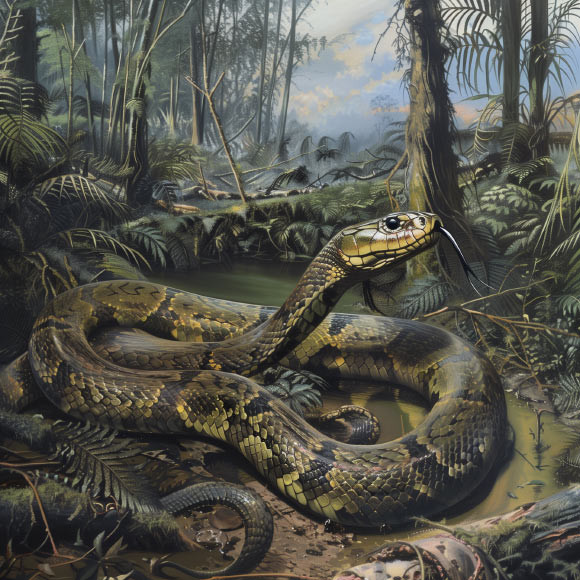
Sunil Bajpai, a paleontologist at IIT Roorkee and co-author of the study, emphasizes the comparison:
“The estimated body length of Vasuki is comparable to that of Titanoboa, although the vertebrae of Titanoboa are slightly larger than those of Vasuki. However, at this point, we cannot say if Vasuki was more massive or slender compared to Titanoboa.”
This discovery hints that gigantic constrictor snakes were potentially widespread across several continents, expanding our understanding of prehistoric reptile diversity.
- Categories:
- Science




0 comments
Sign in to Comment