
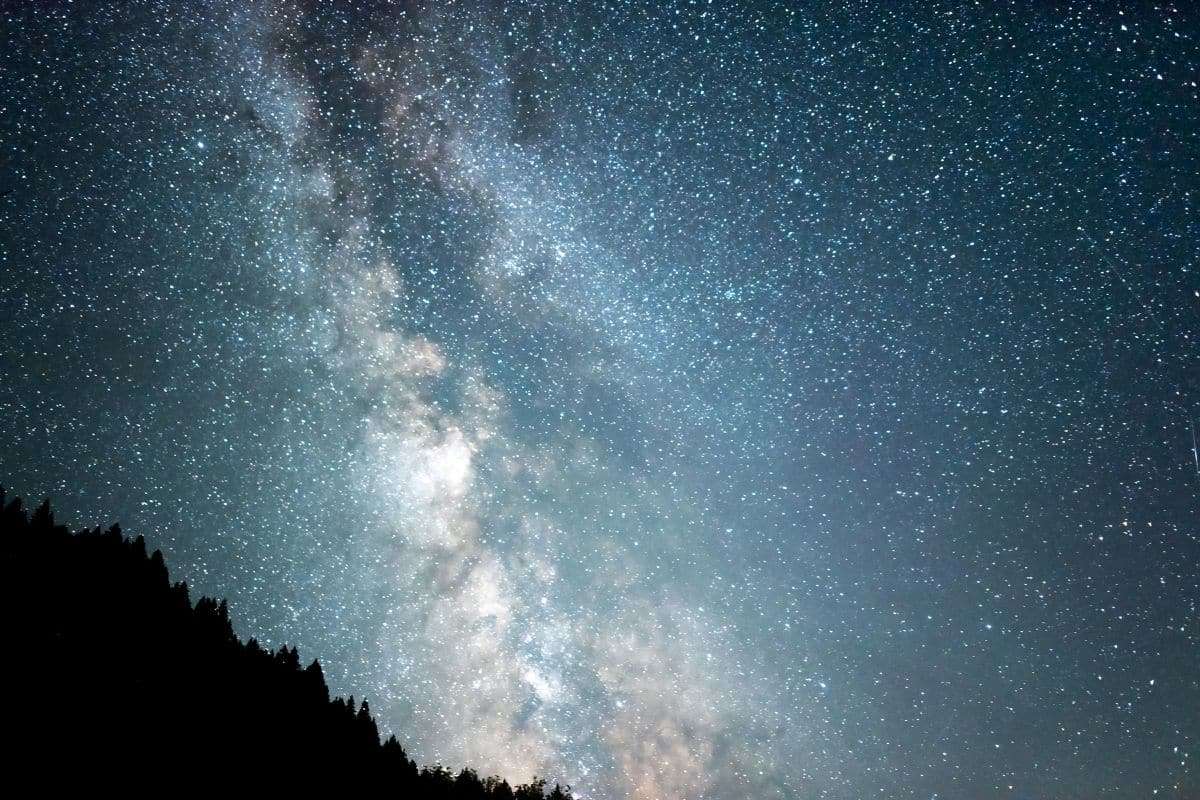
Researchers have identified a gigantic disk galaxy dating back to the early universe, a structure so immense and developed that it calls current galaxy formation theories into question. Named the Big Wheel, this impressive galaxy was observed with the James Webb Space Telescope (JWST), its light journeying over 12 billion years to reach Earth.
A Galactic Colossus From the Universe’s Youth
Appearing just 1.7 billion years after the Big Bang—when the cosmos was roughly 15% of its present age—the Big Wheel is an extraordinary find. While galaxies at this epoch were predicted to be small, chaotic, and incomplete, this galaxy instead exhibits a mature, spiral disk structure, reminiscent of our own Milky Way but significantly larger than other galaxies from the same period.
The speed at which the Big Wheel came together astonished astronomers. Conventional galaxy growth models describe disk galaxies as slowly emerging over billions of years, usually by absorbing gas or merging with smaller neighbors. Contradicting these ideas, the Big Wheel formed rapidly and maintained its ordered shape, rather than becoming chaotic from frequent mergers.

Larger and More Dynamic Than Anticipated
The Big Wheel defies expectations not only in scale but also in rotation. Observations from the JWST showed that this galaxy’s size is three times that of typical galaxies at that time. Furthermore, it adheres to the Tully-Fisher relation, a well-known correlation connecting a galaxy’s mass with how rapidly it spins.
Positioned at the upper extreme of this relationship, the Big Wheel reveals it had already gathered a vast quantity of stars, gas, and dark matter very early in cosmic history.
Interestingly, despite its enormous mass, the galaxy’s rate of star formation matches that of other galaxies from the same era. This indicates that although the Big Wheel is immense, its stellar growth proceeded steadily and efficiently rather than explosively.
A Uncommon Find in a Dense Cosmic Locale
The Big Wheel’s swift development may be linked to its environment. It exists in a region where galaxies are clustered at densities ten times higher than average, providing fertile conditions for such a massive galaxy to form.
Science Alert notes that instead of violent, disruptive collisions, the Big Wheel likely benefitted from gentle exchanges with neighboring galaxies, allowing its spiral form to remain intact. Additionally, the inflowing gas fueling its growth was probably aligned with the galaxy’s rotation, enabling smooth mass accumulation without turbulent disruption.
A Remarkable and Rare Discovery
Locating a galaxy like the Big Wheel was an exceptional occurrence. According to existing galaxy formation theories, astronomers had under a 2% likelihood of detecting such a massive disk galaxy during their survey. This finding suggests a need for significant revisions in our comprehension of early galaxy development.
Are there other gigantic galaxies hidden within the early universe? Do we need to fundamentally reevaluate how disk galaxies form? This discovery opens new avenues and raises profound questions about cosmic history.
- Categories:
- Space





0 comments
Sign in to Comment