
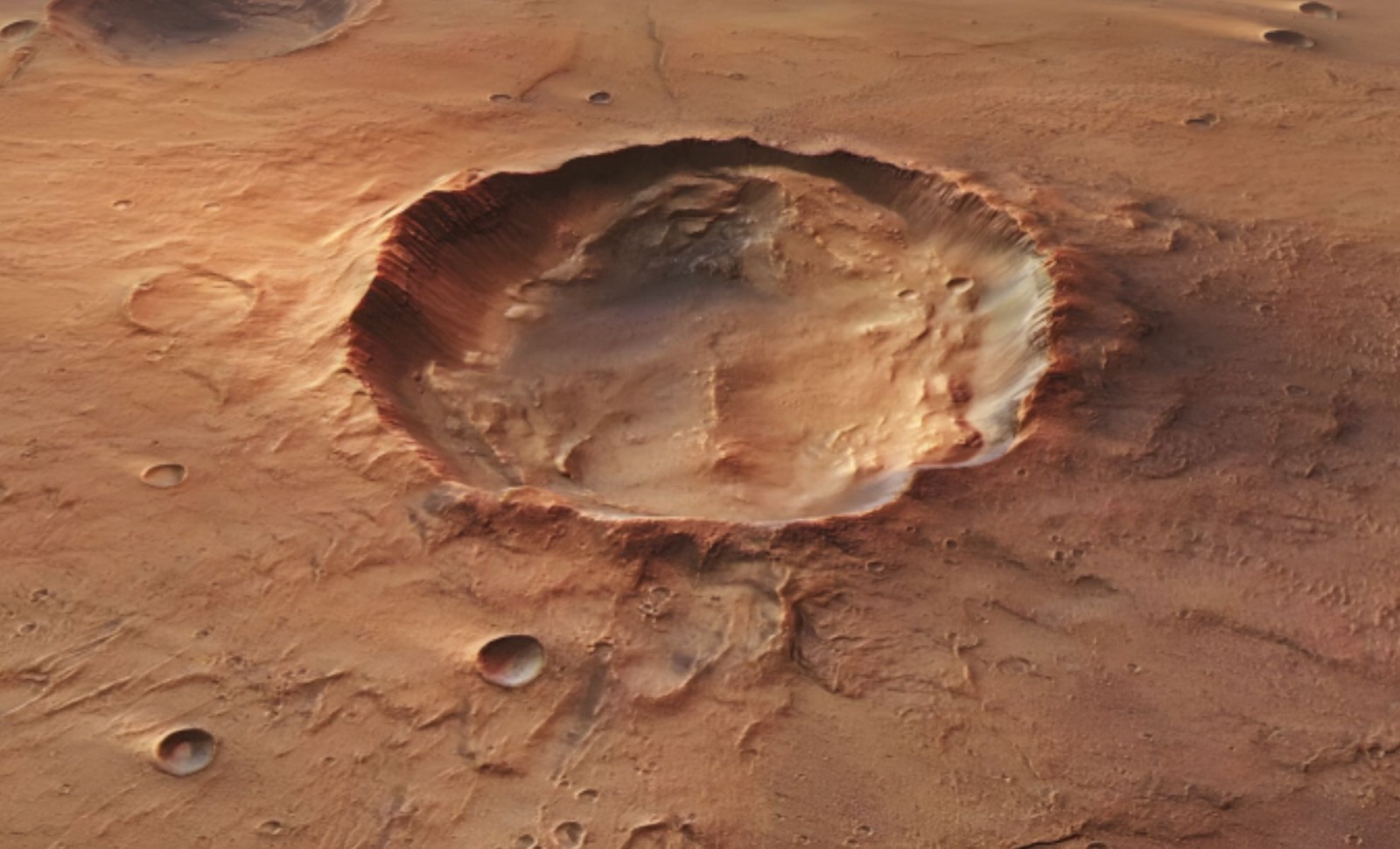
The European Space Agency’s Mars Express spacecraft has revealed a remarkable geological feature on Mars: an enormous crater shaped strikingly like a butterfly. Located in the Idaeus Fossae area, this “Martian butterfly” formation resulted from an impact event where debris was launched outward in two distinct lobes, resembling wings. The findings were shared in a report by ESA on December 3, 2025, highlighting that this shape is a unique product of Martian surface processes rather than any biological entity.
A Unique Impact Event
The butterfly-like shape of the crater arose when a meteorite struck Mars at a shallow angle, ejecting surface material unevenly. Unlike typical craters that spread debris symmetrically around the impact site, this collision sent fragments flying predominantly in two directions, forming the features that look like wings. According to ESA’s Mars Express team, such asymmetric ejecta blankets are uncommon and provide new insights into impact dynamics.
This extraordinary crater spans about 20 kilometers across and stretches 15 kilometers long, nestled in Mars’ northern lowlands within the Idaeus Fossae region. Its sheer size implies that the meteorite responsible was notably large.

Signs of Water Interaction
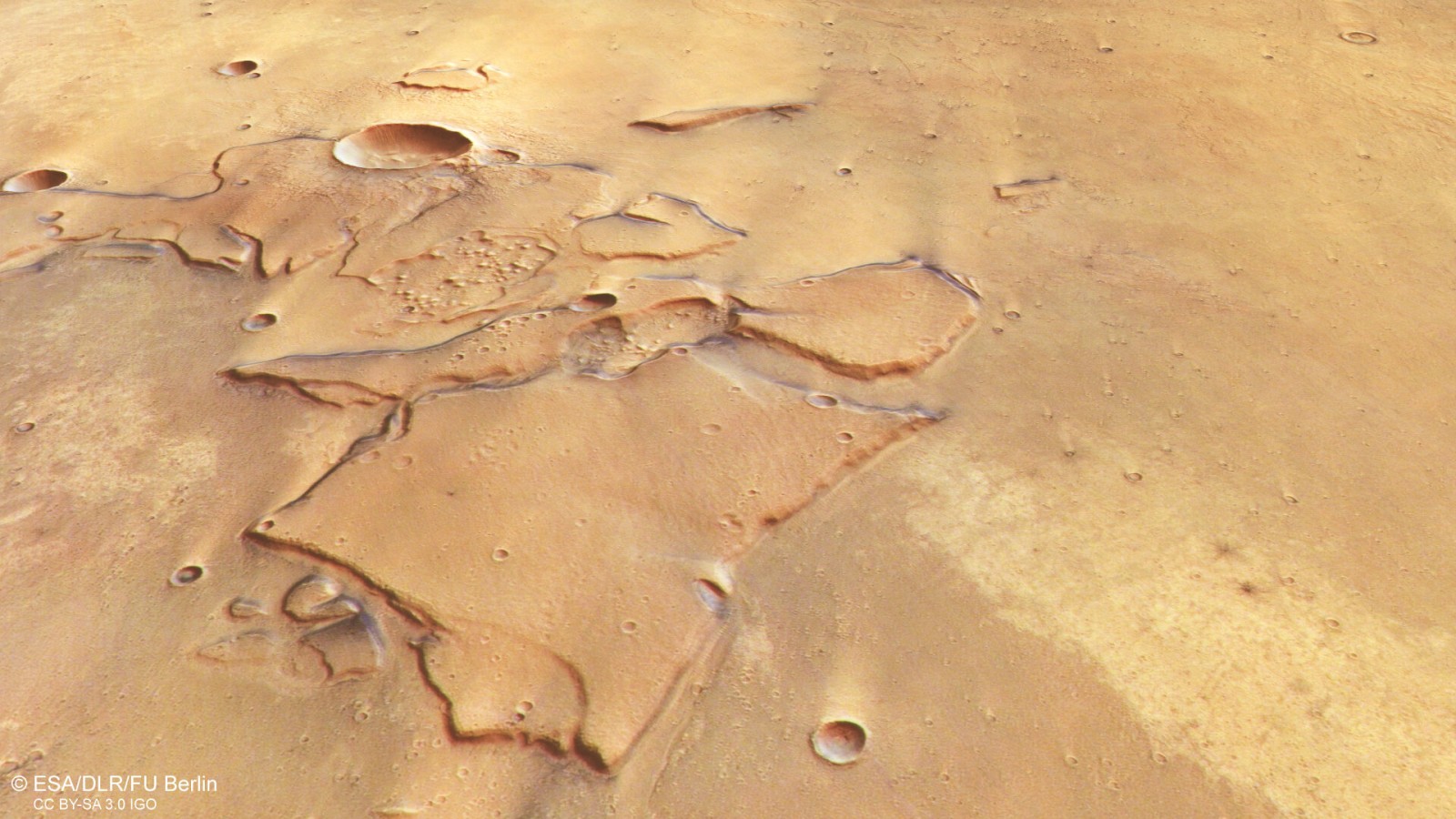
An intriguing aspect of the butterfly crater is the presence of what researchers describe as “fluidised” materials, possibly formed by interactions between ejecta and subsurface ice or water.
“Some of the debris forming the wings (mostly seen just above the crater, and labelled in the image below – which is annotated if you click on it) also appears smoother and more rounded, almost reminiscent of a mudslide.”
The ESA report explains that the impact likely melted underground ice, allowing part of the ejecta to flow like a slurry. This observation enriches our understanding of Martian surface processes and how water—current or past—may have influenced crater formation.
The implication that liquid water contributed to this geological feature is important, as it supports theories of Mars having once had conditions that could potentially sustain life. The question of water’s presence remains central to ongoing exploration, motivating scientists to probe Mars’ habitability further.
Volcanic Evidence Around the Crater
Besides the striking crater, the surrounding terrain features prominent steep-sided mesas formed from volcanic processes. These flat-topped hills display layers of dark volcanic rock, hinting at episodes of intense lava flows and ash deposition.
“This region likely saw quite a bit of volcanism in the past, with lava and ash deposits building up over time and being buried by other material through the years.”
The presence of these geological structures, along with wrinkle ridges caused by contracting lava flows, points to Mars’ once active volcanism. These features deepen our understanding of how volcanic activity shaped the Martian landscape through its history.
By studying the region around the butterfly crater, researchers gain valuable clues about how Mars transitioned from a volatile, geologically active planet to its more dormant modern state.
Operating since 2003, Mars Express has provided incredibly detailed views of Mars’ surface, opening doors to discoveries like this “butterfly” crater and enriching our knowledge of the Red Planet’s evolution.
- Categories:
- News







0 comments
Sign in to Comment