

Scientists are increasingly concerned about the potential abrupt failure of the Atlantic Meridional Overturning Circulation (AMOC), a key ocean current that plays a major role in regulating Europe's climate.
A fresh investigation published in Science Advances indicates that this crucial circulation could break down sooner than many experts had anticipated. The research, led by international teams at the University of Copenhagen and the University of Exeter, utilized comprehensive climate models to assess the stability of the AMOC over the next two millennia.
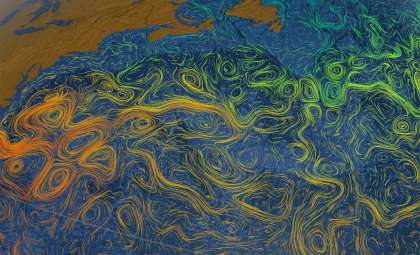
Employing sophisticated climate simulation techniques, the team analyzed factors like ocean temperature, salt concentration, and water flow to project the dynamics of the AMOC over 2,200 years.

The results suggest a worrying outcome: instead of a slow decline, the AMOC might experience a sudden collapse after approximately 1,750 years as climate change progresses.
Understanding the AMOC and Its Climate Significance
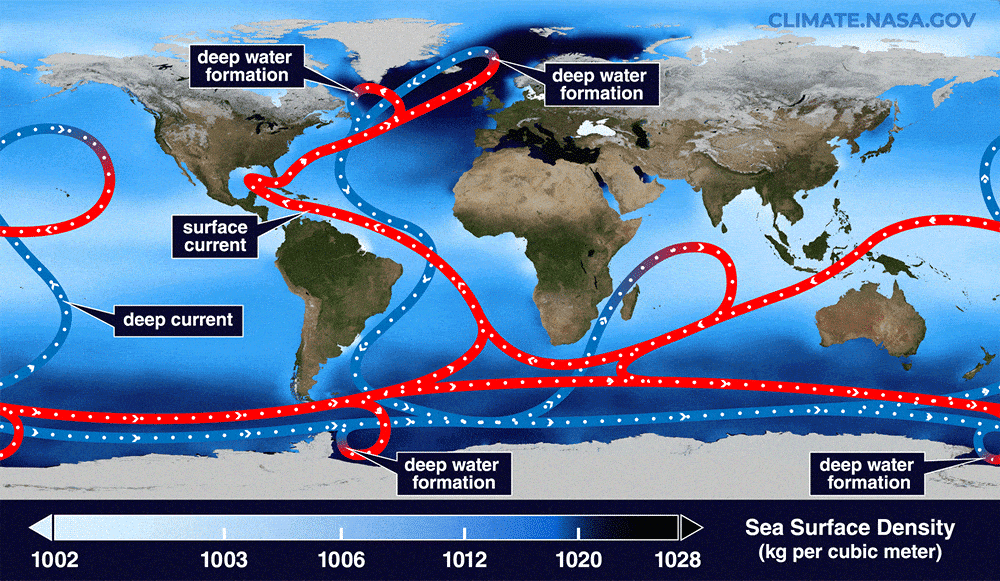
The AMOC functions as a massive oceanic conveyor belt transporting warm, salty waters from tropical regions toward the poles, while denser, colder waters sink and return at depth. This process is essential for redistributing heat globally and stabilizing regional weather patterns.
Starting in the tropical Atlantic, water warms, increases in salinity, and travels north, where it cools and sinks near the high latitude zones, sustaining the current cycle that regulates climates across Europe, North America, and beyond.
This ocean circulation helps Europe maintain its comparatively temperate weather by delivering warmth northward.
The Danger of a Rapid Breakdown
Using extensive computational models that integrated critical variables such as temperature, salinity, and water movement, researchers projected AMOC behavior over more than two millennia. Their analysis unveiled a startling potential: an abrupt collapse after around 1,750 years, rather than a gradual weakening process.
This points to a tipping point in the AMOC’s stability—once crossed, the system might fail swiftly without chance of self-recovery. Such a breakdown would trigger profound and wide-reaching disruptions to global climate and weather systems.
Although these simulations don’t provide exact predictions, they are valuable in highlighting the climate risks and drastic shifts that a collapse could provoke.
Climate Change’s Impact on the AMOC
The leading driver threatening the AMOC’s stability is human-induced climate change, which has accelerated the melting of the Greenland ice sheet. This meltwater influx reduces the salinity and density of North Atlantic waters.
Lower salinity disrupts the density-driven currents that power the AMOC because freshwater is less dense and hinders the sinking of cold, saltier water necessary for maintaining circulation.
These processes are particularly troubling given that the AMOC has already weakened under current climate trends, making a collapse scenario more plausible.
Consequences of an AMOC Breakdown
A significant failure of the AMOC would have dramatic repercussions worldwide. Europe, in particular, could face a sharp decrease in temperatures, possibly ushering in a localized mini-ice age with colder winters and expanded Arctic ice coverage.
Changes in rainfall distribution are also expected, producing heavier precipitation in some zones and drought in others.
The marine ecosystem would suffer, especially in areas dependent on nutrient transport by the AMOC, leading to widespread impacts on biodiversity, fisheries, and food resources.
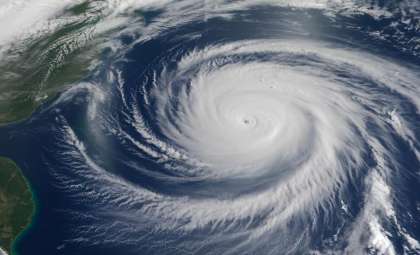
Moreover, an AMOC collapse could intensify climate challenges such as rising sea levels and an increase in extreme weather events, including intensified storms in the northeastern United States.
- Categories:
- Climate change









0 comments
Sign in to Comment