
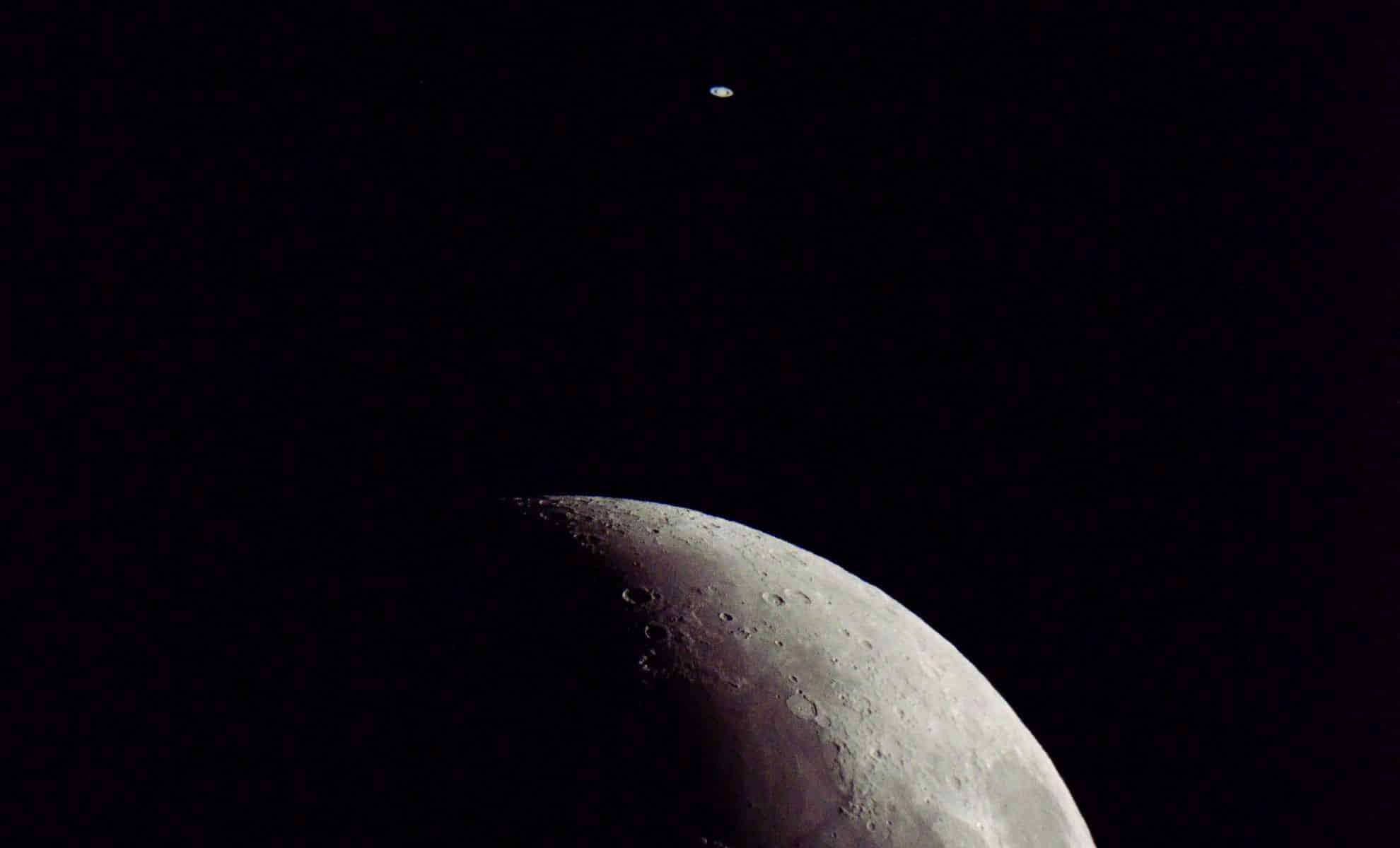
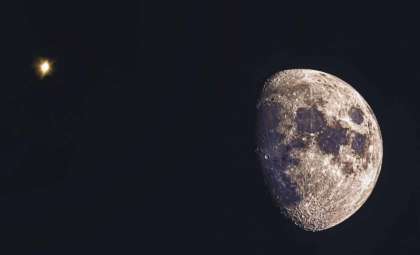
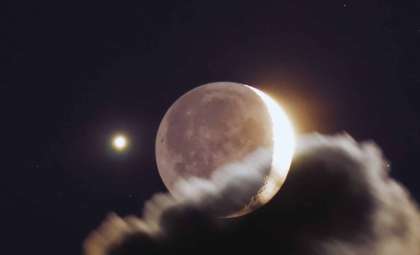
On the night of August 11, 2025, skywatchers worldwide will be treated to a beautiful astronomical sight. According to EarthSky, as the moon approaches its full phase, it will shine brightly close to Saturn, renowned for its dazzling ring system. This conjunction offers an excellent chance for both seasoned astronomers and casual observers to admire one of the solar system’s most stunning planets. The moon’s position makes spotting this pairing straightforward, but using a telescope will greatly enhance the view of Saturn’s iconic rings.
Enhance Your View of Saturn Using a Telescope
While Saturn can be seen without optical aids, its captivating rings become apparent only through a telescope. For those looking to get a detailed glimpse, a telescope providing at least 30x magnification is ideal. Smaller instruments, such as those with 3- or 6-inch apertures, offer good views of the planet and clearly show the ring structure at moderate magnifications. Larger telescopes, like 10-inch models, reveal even more features but be cautious not to increase magnification excessively to avoid image distortion caused by atmospheric conditions.
Optimal viewing occurs around 12:30 a.m. local time when Saturn ascends higher in the sky, minimizing atmospheric distortion and giving a sharper image. Make sure your telescope’s focus is adjusted carefully to enjoy the finest details of this majestic planet.

Apparent Closeness Masks the Vast Distance Between Moon and Saturn
One captivating aspect of this event is that the moon and Saturn appear close together from Earth’s vantage point, creating a striking visual. However, they are actually separated by immense distances: the moon orbits approximately 230,000 miles (370,000 km) away, while Saturn lies roughly 816 million miles (1.31 billion km) distant, more than 3,500 times farther.
This stark contrast in distance emphasizes the enormous scale of our solar system and provides perspective on how astronomical alignments can be illusions created by line-of-sight observations. Appreciating this helps deepen understanding and enjoyment of such celestial phenomena.
Helpful Hints for Enjoying the Sky Event
To fully enjoy the August 11 spectacle, plan for an unobstructed sightline towards the eastern horizon, where the moon and Saturn will rise near 10:30 p.m. local time. To avoid interference from urban lighting, seek out a dark location removed from city lights, which will greatly improve visibility.
Bringing binoculars or a telescope will enhance your observation, especially for viewing Saturn’s rings in detail. For newcomers to stargazing, reviewing a sky chart for that evening can help in locating Saturn and the moon with ease, making the experience more rewarding.
- Categories:
- News



0 comments
Sign in to Comment