
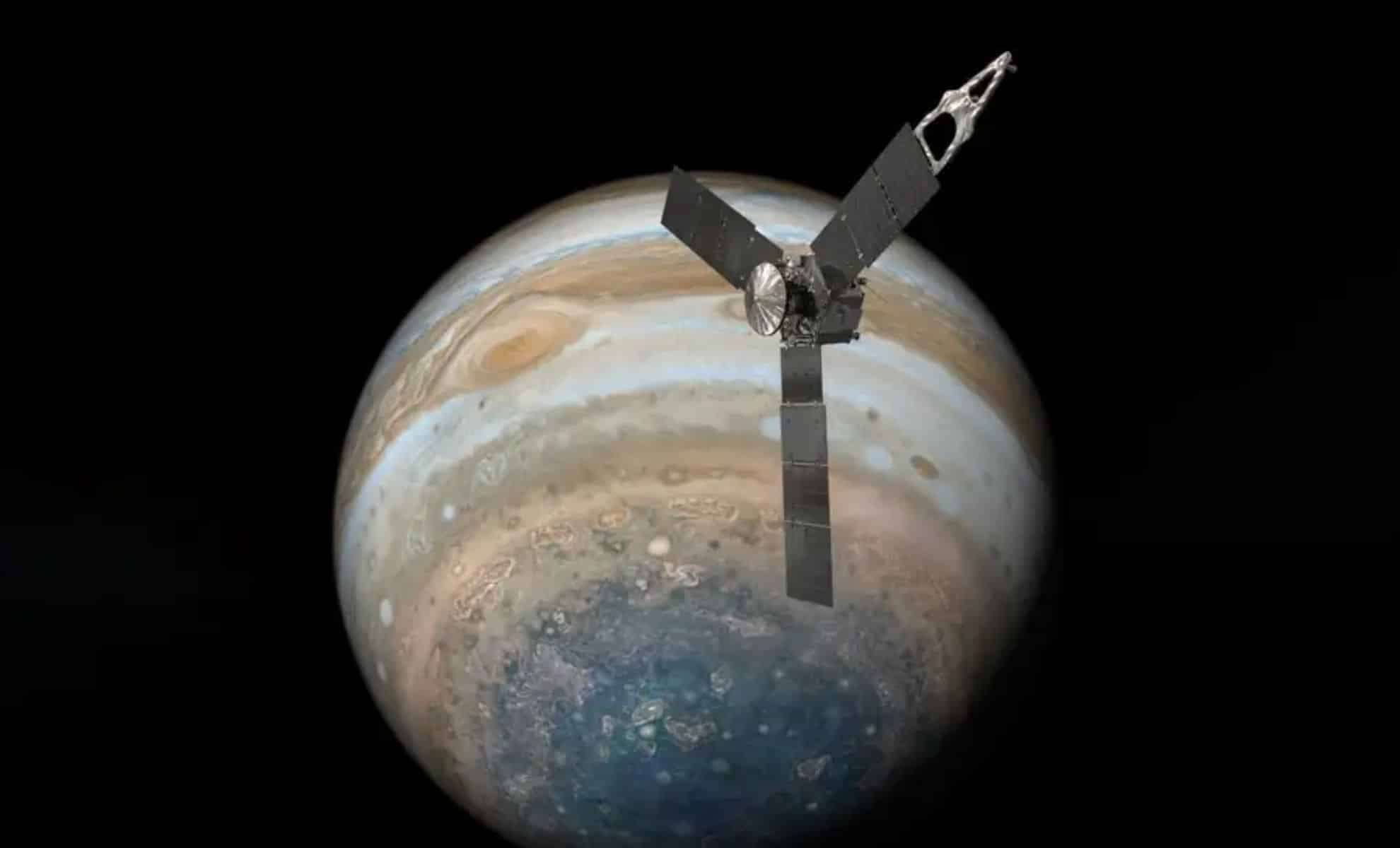
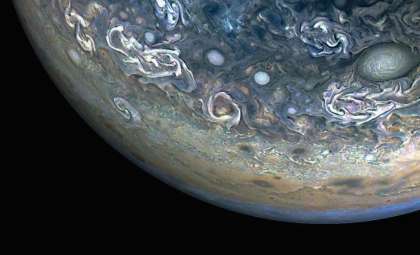
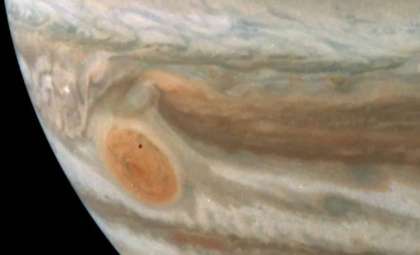
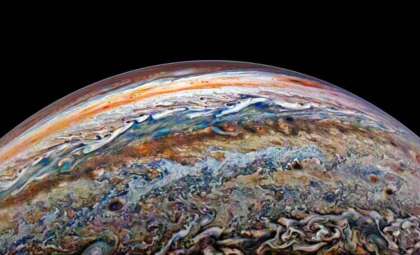
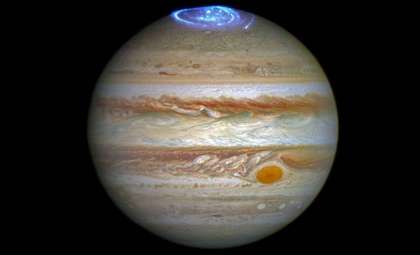
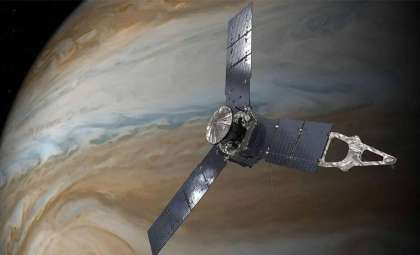
Recent data has shown that Jupiter — the solar system’s biggest planet — is actually smaller in diameter and more compressed at its poles than scientists assumed for many years. According to New Scientist, these conclusions come from NASA’s Juno spacecraft, marking the most precise measurement of the gas giant's size in over four decades.
Juno Unveils New Insights About Jupiter
Unlike Earth, Jupiter lacks a solid surface, complicating efforts to define its shape clearly. Researchers typically identify the planet's outer boundary at a fixed atmospheric pressure level—the 1-bar mark—corresponding roughly to Earth’s sea level pressure. This consistent pressure surface is used to estimate the planet’s “surface” for gas giants.
Earlier estimates of this atmospheric boundary were gathered by the Voyager and Pioneer missions in the late 1970s and early 1980s. These missions employed radio occultation, sending radio signals through Jupiter's atmosphere and analyzing their bending to determine pressure layers, though those techniques had limitations.

Finding a Narrower and More Flattened Jupiter
Juno’s measurements indicate that Jupiter’s diameter at the 1-bar level is roughly 8 kilometers less than previous estimates. Although modest on a human scale, this is significant when thinking about planetary dimensions. Additionally, this gas giant exhibits marginally greater polar flattening than once believed.
This squashed shape results predominantly from Jupiter’s rapid rotation. Spinning at a pace of around 9 hours and 56 minutes per rotation—one of the quickest days in the solar system—causes the planet to bulge at the equator and flatten towards the poles. While this phenomenon has long been recognized, Juno’s precise data reveals the distortion is slightly more pronounced than previously measured.
The Importance of Minor Size Adjustments in Planetary Research
Refining Jupiter’s dimensions and shape matters beyond mere curiosity. These factors influence our understanding of atmospheric dynamics, the planet’s magnetic environment, and how tidal forces exerted by moons like Io's volcanoes and Europa’s icy shell affect Jupiter.
Moreover, this knowledge enhances models of gas giant formation and development both within our solar system and around distant stars. Since Jupiter often serves as a benchmark for exoplanet studies, any corrections to its size and shape can ripple through wider scientific theories.
Precise spacecraft navigation also depends on these measurements. Although an 8-kilometer difference may seem minor, it can impact the navigation calculations for spacecraft flybys and orbital insertions around Jupiter, influencing future mission designs.
Juno’s Extended Exploration of Jupiter
NASA’s Juno spacecraft has been orbiting Jupiter since 2016, continuously gathering data on its atmosphere, magnetic field, auroras, and inner structure. Initially planned to conclude in 2021, the mission has been extended through 2025, with potential for further continuation.
With each orbit bringing it closer to Jupiter, Juno deepens scientists’ insight into the planet’s complex nature. These revelations confirm that Jupiter is less massive and less perfectly spherical than previously thought, reshaping our understanding of the gas giant.
- Categories:
- News



0 comments
Sign in to Comment