
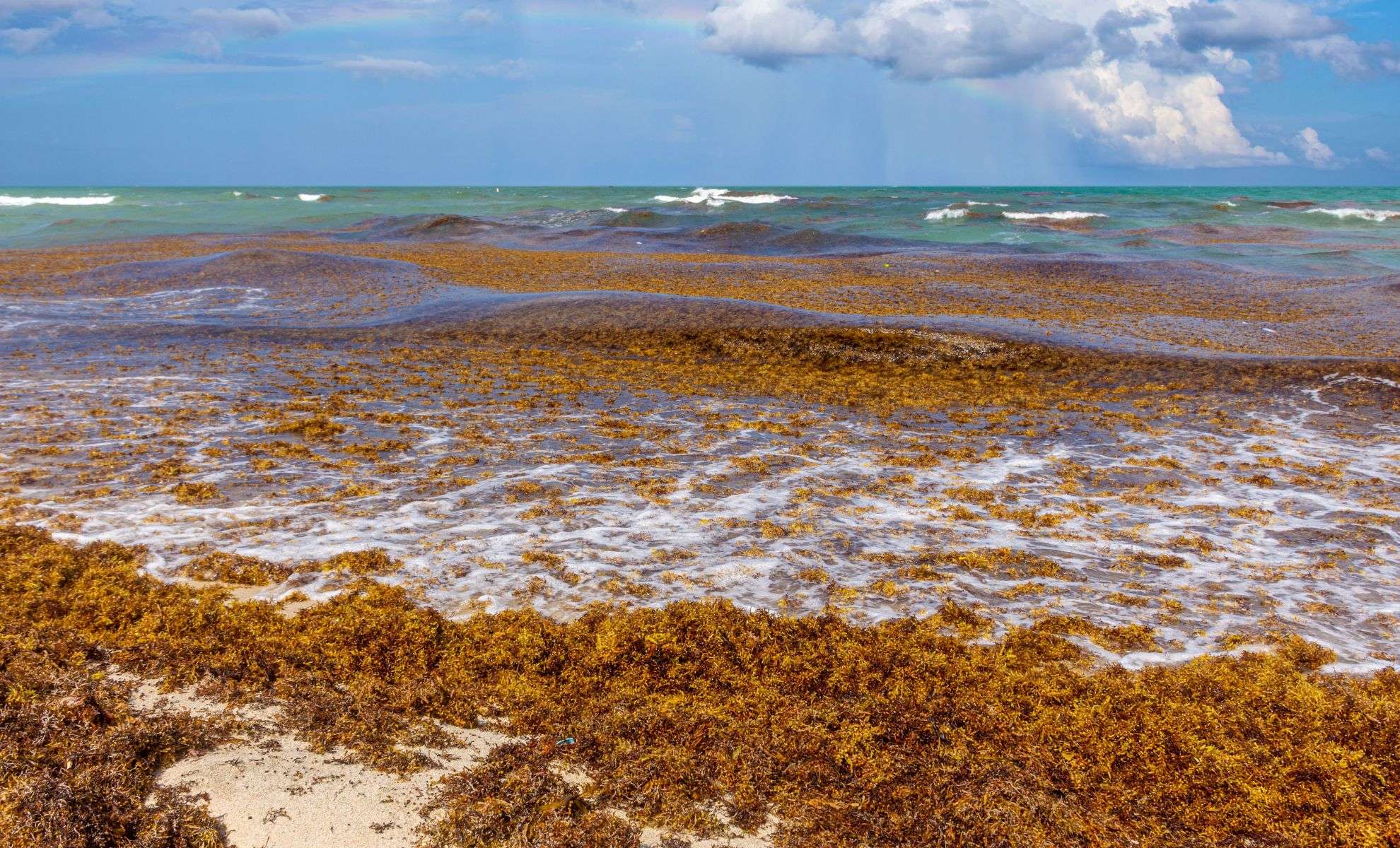
Situated deep within the North Atlantic, isolated from continents and islands, lies a distinctive oceanic region known as the Sargasso Sea. This remarkable area is characterized by floating Sargassum seaweed covering its waters, and unlike other seas, it is defined entirely by the movement of ocean currents rather than land borders.
The Sargasso Sea is enclosed by four significant currents—the North Atlantic Current, Canary Current, North Atlantic Equatorial Current, and Antilles Current—which create a rotating oceanic gyre that contains this vast, landless expanse of water.
An Oceanic Floating Forest
Although sometimes noted for its strong seaweed odor, the Sargasso Sea plays an essential role in marine ecosystems. The floating Sargassum forms extensive mats that serve as habitat and food sources for a variety of marine species, from young sea turtles to rare sharks like the porbeagle.

Marine expert Dr. Sylvia Earle has described this area as a “golden floating rainforest,” highlighting its importance as a biodiversity hub crucial to maintaining the broader North Atlantic environment. The Sargasso Sea Commission works to safeguard this irreplaceable habitat that supports many vulnerable aquatic species.
Myth and Maritime History
The Sargasso Sea has a rich place in nautical history and legend. It was first recorded by Christopher Columbus in 1492, who noted the crew's unease as they journeyed through its dense seaweed and eerily calm waters. Sailors feared getting trapped in the thick floating vegetation or becalmed in the windless area.
Over centuries, these mysterious conditions have fueled myths, especially since the sea overlaps with the Bermuda Triangle—a notorious zone between Bermuda, Florida, and Puerto Rico associated with mysterious ship and aircraft disappearances.
Facing Environmental Challenges
Despite its ecological and cultural significance, the Sargasso Sea is increasingly threatened by human influences. Because it is enclosed by circulating currents, floating pollution tends to accumulate, creating the North Atlantic Garbage Patch. This vast collection of debris can contain up to 200,000 pieces of trash per square kilometer.
However, pollution at the surface is only part of the problem. Underwater disturbances like noise pollution, chemical contaminants, overfishing, and damage to Sargassum habitats due to maritime traffic are all contributing factors. Additionally, climate change is intensifying these stresses.
A recent study released in December highlights that the Sargasso Sea has become warmer, saltier, and more acidic than any point recorded since scientific observations began in 1954.
Lead researcher and chemical oceanographer Nicholas Bates states the ocean is now “at its warmest in millions of years.” He warns this trend could disrupt global climate patterns, potentially changing rainfall distribution worldwide. Interviewed by LiveScience, Bates suggested that climate change may have passed a critical tipping point.
Changing Currents and Expanding Shores
The effects of these shifts extend beyond the Sargasso Sea itself. Increasingly large masses of Sargassum are washing onto beaches across North America and the Caribbean, causing concern among coastal populations. Rising sea temperatures and altering currents mean this drifting seaweed might become a more frequent and widespread presence.
Once seen as an oceanic oddity, the Sargasso Sea is now emerging as a vital indicator of global ocean health. Its unique characteristics, often described as a “lake within the ocean,” are undergoing significant changes with wide-reaching implications.
- Categories:
- News









0 comments
Sign in to Comment