
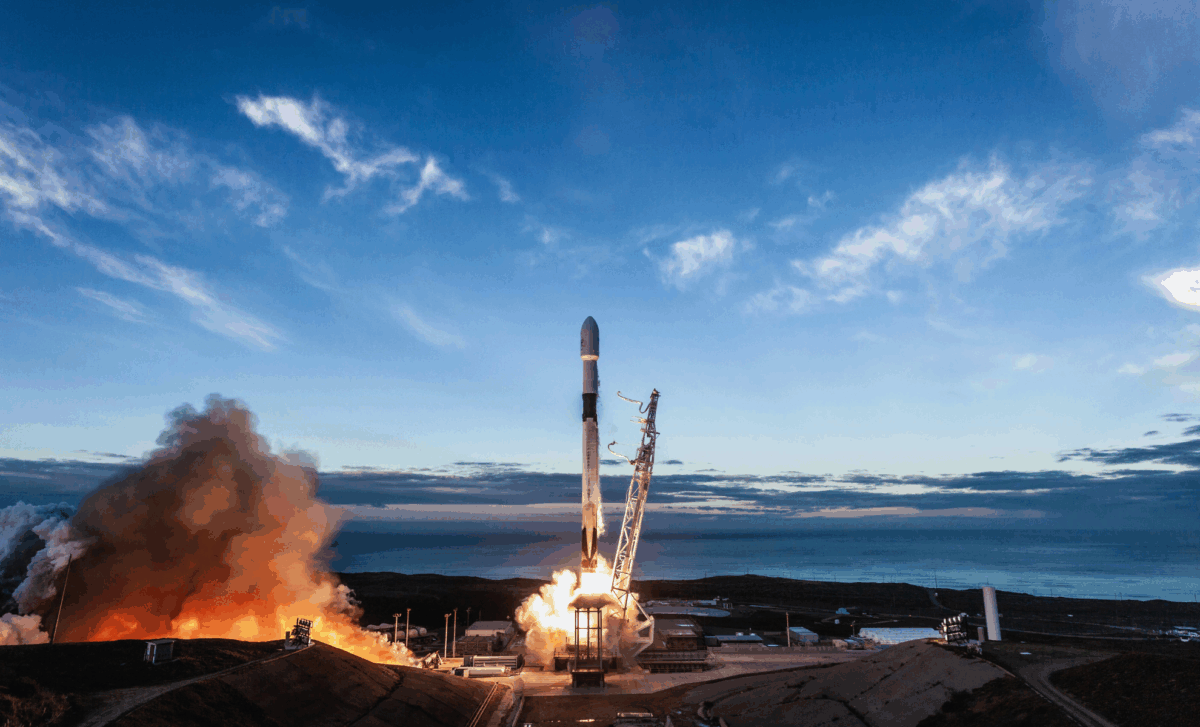
Following a period of uncertainty triggered by the recent U.S. government shutdown, the Federal Aviation Administration (FAA) has officially ended its temporary ban on daytime rocket launches. This pause, which had halted numerous commercial and scientific missions, is now lifted, enabling both private enterprises and government agencies to proceed with their scheduled launches. This move represents a crucial moment for the U.S. space industry, eager to recover lost progress.
Daytime Launches Resume With FAA’s Approval
The FAA’s decision to revoke the restriction marks a gradual restoration of full functionality throughout the National Airspace System (NAS). The agency, which imposed the ban due to reduced staffing levels during the shutdown, has confirmed sufficient personnel are back in place. Resuming daytime launch activities is vital for proper visibility, telemetry monitoring, and ensuring safety standards are met.
“Today’s decision to rescind the order reflects the steady decline in staffing concerns across the NAS and allows us to return to normal operations,” FAA Administrator Bryan Bedford said in the statement.
Add Cosmo Herald as a Preferred Source

This announcement boosts confidence among key launch participants such as SpaceX, Blue Origin, and multiple smaller aerospace firms, all dependent on daylight launch windows for critical mission success.
For the spaceflight sector, the reinstatement of daytime launches means recovering momentum after mission delays caused by the ban. Launches postponed, including scientific payloads and commercial satellites, are now being rescheduled. Industry experts highlight that disruptions, even brief ones, can ripple through operations, affecting insurance, logistics, and contracts. These events emphasize how essential federal regulation and private industry collaboration are to a healthy launch environment.
Consequences Behind The Temporary Launch Standstill
The short-lived daytime launch restriction caused a series of setbacks across launch sites in Florida, California, and Texas. Operators like SpaceX, which rely on precise scheduling, faced rearrangements of global mission timetables. Several high-profile missions, including Earth-monitoring satellites and cargo resupply flights, endured delays awaiting FAA clearance.
Beyond disrupted launch timings, the shutdown hindered technical teams, delayed certification procedures, and slowed safety evaluations. An FAA representative told Space.com that recovering from the shutdown is “a controlled but complex recovery effort.” As operations normalize, the FAA is prioritizing coordination to maintain airspace safety and integrity.
Although the immediate restrictions are lifted, experts warn future shutdowns might reveal similar weaknesses. Launch providers are exploring backup plans to reduce dependence on federal authorizations, though true independence remains challenging given the FAA’s pivotal regulatory role.
Renewed Assurance For The Launch Community
Removing the daytime launch ban goes beyond policy changes; it renews industry confidence. Space companies are intent on quickly regaining momentum to meet soaring worldwide demand for orbital services. Spaceports at Cape Canaveral, Vandenberg, and Wallops Island are again abuzz with preparations.
Analysts note that the FAA’s consistent communication and transparency have been vital in restoring confidence. The agency’s structured updates reassure commercial players that regulations are steadfast, even amidst political challenges. For mission teams, predictable governance is as crucial as clear skies — both essential for launch success.
This episode underscores that modern spaceflight relies not only on technological innovation but also on resilient administration. With daytime launches resuming, the U.S. space industry is regaining its operational pace and renewed spirit, showcasing the importance of government-private sector cooperation in sustaining American space efforts.
- Categories:
- News










0 comments
Sign in to Comment