
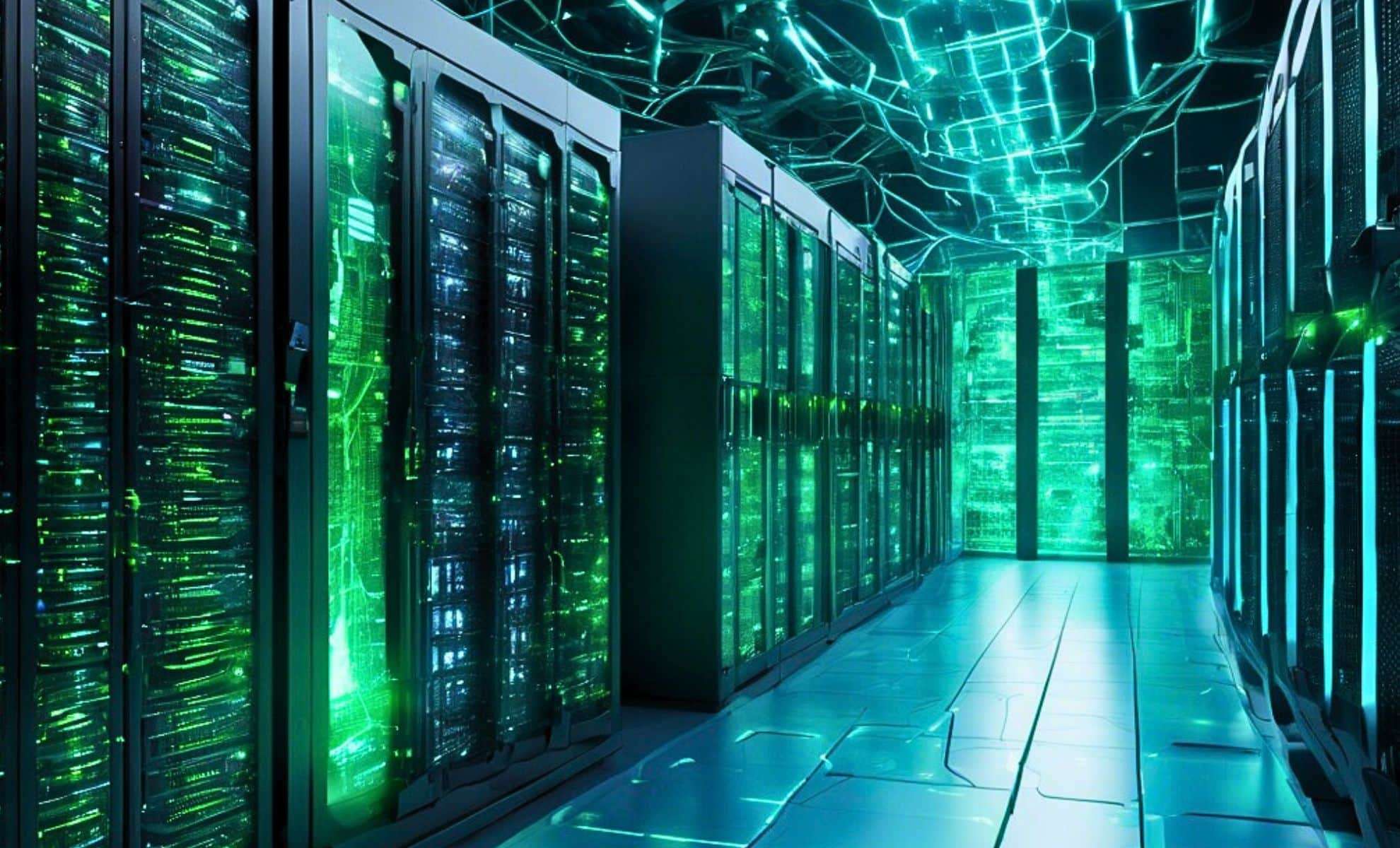
France is poised to make a significant advancement in the pursuit of global artificial intelligence leadership. Supported by President Macron’s government, the UK-based firm Fluidstack has unveiled plans to develop a high-performance AI supercomputer fueled by French nuclear energy. Scheduled for completion in 2026, this initiative aims to elevate France’s position in the AI landscape, challenging technological giants like the United States and China.
With a Stunning €10 Billion Budget, Aiming for Unmatched Computing Strength
Fluidstack intends to invest a massive €10 billion into creating a next-level computing system equipped with 500,000 AI processors. The goal is to reach an astounding 1 gigawatt of computing power by 2028, potentially positioning France as a leading force in AI innovation and research.
Officially introduced during the AI Action Summit in Paris, the project has secured robust backing from the French government, with President Emmanuel Macron’s direct endorsement. This venture supports France’s broader commitment reflected in a €109 billion AI investment plan, focused on solidifying the nation’s technological independence.

Utilizing nuclear power to operate the supercomputer guarantees a consistent, eco-friendly energy supply — essential given AI’s enormous electricity demands. To further mitigate environmental impacts, an innovative heat recovery mechanism will be deployed to maximize energy conservation.
Why France? Strategic Advantages Behind the Location
The choice to establish this cutting-edge supercomputing center in France is strategic. The country benefits from a stable and robust energy infrastructure, vital for powering energy-intensive activities, alongside a thriving AI development scene. Prominent companies such as Mistral AI and Character.AI have already helped cement France’s status as an emerging European hub for AI, attracting skilled professionals and significant investments.
This project also signifies a shift in the global AI ecosystem. Historically, powerhouse supercomputing has been dominated by the US and China, with Europe largely dependent on foreign technologies. Fluidstack’s decision to invest in France represents a strong endorsement of European AI autonomy.
Driving Technological Innovation and Economic Growth Across Europe
The ripple effects of this endeavor are expected to be profound, spurring economic growth and technological advancement. It will generate thousands of specialized jobs across sectors such as research, computing, and engineering. France’s AI landscape is expected to flourish, attracting startups, investors, and major tech firms eager to collaborate on state-of-the-art AI solutions.
Beyond corporate benefits, the supercomputer is a key pillar in France's strive for digital sovereignty, helping reduce dependence on American cloud service providers. A partnership with Réseau de Transport d’Électricité (RTE) will ensure the integration of such massive computational power with the national grid occurs smoothly and efficiently.
France’s Next-Generation Tool in the AI Landscape
France already boasts significant high-performance computing resources with Jean Zay, one of Europe’s leading supercomputers, which has supported AI research since 2019.
This forthcoming nuclear-powered AI supercomputer will amplify those capabilities further, positioning France to rival industry powerhouses including Google, OpenAI, and China’s government-funded AI centers.
The expanded computing abilities will propel revolutionary advances across numerous fields. In healthcare research, it will enable rapid simulations of molecular interactions critical for new drug discoveries.
Environmental scientists will benefit from improved models capable of forecasting natural catastrophe scenarios. In addition, cyber defense will see AI-enhanced threat detection capabilities, while industrial automation stands to gain through AI-optimized supply chain systems.
A Bold Move in the Worldwide AI Competition
As competition for AI dominance intensifies, France is making an audacious push to stake its claim. While the US and China currently dominate the field, this new supercomputer could thrust France from an observer to a key innovator in AI.
With clean nuclear energy powering the infrastructure, a thriving research ecosystem, and widespread support from government and industry leaders, France is preparing to play a pivotal role in shaping AI’s future. Whether this significant commitment will alter the global power balance remains an exciting question.
This article has been published in Clubic
- Categories:
- Tech













0 comments
Sign in to Comment