
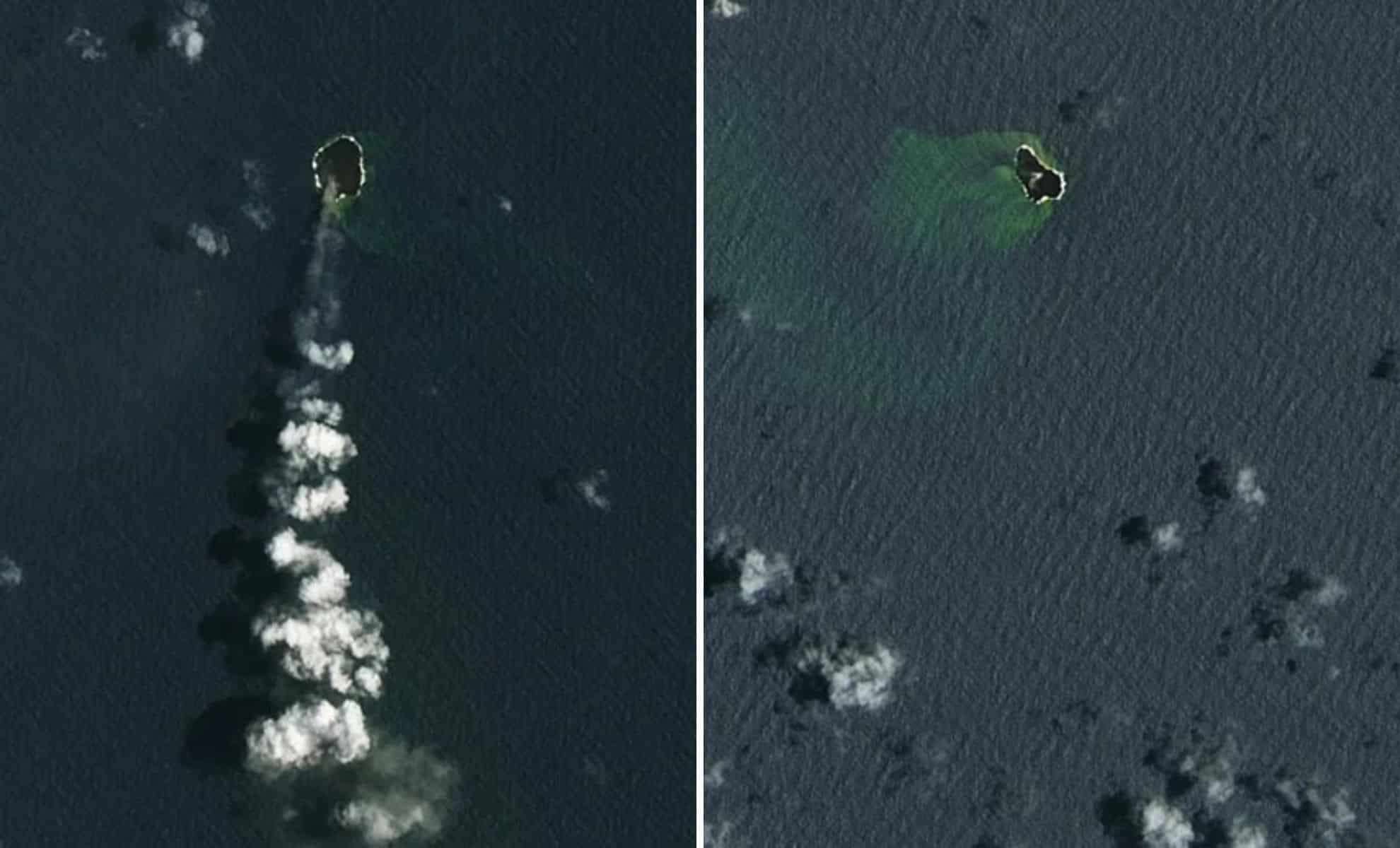
An extraordinary geological event is unfolding in the South Pacific where a newly formed volcanic island is emerging from beneath the waves. Situated at Tonga’s Home Reef, this landmass is created by ongoing submarine eruptions that have gradually added new terrain. First appearing above sea level in 2022, the island has expanded through 2023 and 2024, continuing to grow into early 2025. This ongoing development has captivated scientists eager to study its persistence and future evolution.
High-resolution satellite images have documented the island’s remarkable growth, highlighting lava flows cooling into solid bedrock. With eruptions still reshaping the landscape, researchers have a unique opportunity to witness the creation of new land. Unlike earlier volcanic islands in the region which often eroded quickly, this island shows signs of greater durability.
Swift Growth of a New Landmass
As reported by SciTechDaily, the island’s surface area has dramatically increased since it first appeared. Surfacing in 2022, repeated eruptions in September 2023, January 2024, and June 2024 contributed to its continuous growth. The most recent volcanic activity from December 2024 to January 2025 added an extra 3.7 hectares (9.1 acres), making the island larger than 15 hectares (37 acres) overall.

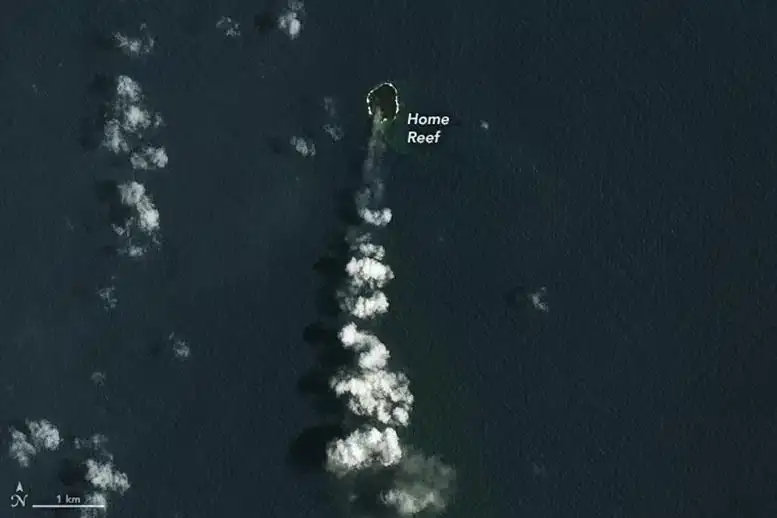
NASA’s Landsat 8 and 9 satellites have captured detailed imagery, showcasing how fresh lava deposits have altered the shoreline and expanded the island’s footprint. Waters surrounding the island display discoloration, signifying ongoing volcanic processes beneath the surface.
“The greenish color of the plumes likely results from yellow sulfur mixing with ocean water,” explained Cornel de Ronde, a geologist at GNS Science and co-author of a recent paper in Geochemistry, Geophysics, Geosystems. The presence of sulfur-rich water confirms continued emission of volcanic gases, indicating that the island’s formation remains active.
Dynamic Volcanism in the Pacific Region
The Home Reef volcanic complex forms part of the Tonga-Kermadec subduction zone, one of Earth's most seismically and volcanically lively areas. Here, the interaction of three tectonic plates triggers some of the most powerful volcanic events known. For instance, the 2022 eruption of Hunga Tonga-Hunga Ha‘apai caused a devastating tsunami and wide-reaching ash dispersal, showcasing the region's immense energy.
While the Home Reef volcano exhibits far less intense eruptions than Hunga Tonga, it remains under close observation. Scientists are particularly interested in its ecological impact. Volcanic eruptions can disrupt marine habitats but can also promote growth by releasing iron-rich minerals that nourish microscopic oceanic life. On the other hand, extreme heat and acidity pose risks to fish and other marine organisms, so the net effects remain uncertain.
Will the Island Endure?
A central question is whether this new island will withstand erosion or vanish like previous ones. Historically, islands born from Home Reef’s eruptions lasted only months or a few years before wave action dismantled them. However, experts now think this island has a stronger chance of lasting longer.
“Earlier eruptions produced explosive material that was easily worn away,” said Simon Plank from the German Aerospace Center (DLR). “This eruption, however, delivered lava flows that solidify into tougher rock, enhancing the island’s durability for years to come.”
Unlike prior islands primarily composed of loose volcanic ash, this landmass consists of hardened lava, making it far more resistant to wave erosion. If the island keeps growing, it could develop a stable terrain suitable for early colonizers such as bacteria, algae, and seabirds, eventually fostering a unique ecosystem.
Tracking the Formation of New Continents
Volcanic islands offer invaluable insights into how new geological features form and how ecosystems establish themselves from the ground up. They also act as natural observatories for studying tectonic processes and provide early signals of possible future volcanic eruptions.
The advent of satellite monitoring has transformed volcano observation. Rather than relying solely on sporadic fieldwork, scientists can now continuously track volcanic events remotely, ensuring more precise and timely updates on island development.
Currently, the Home Reef island continues to expand, with researchers vigilantly observing whether this newborn landform will become a lasting part of the Pacific landscape or fade beneath the sea once again.
- Categories:
- News








0 comments
Sign in to Comment