
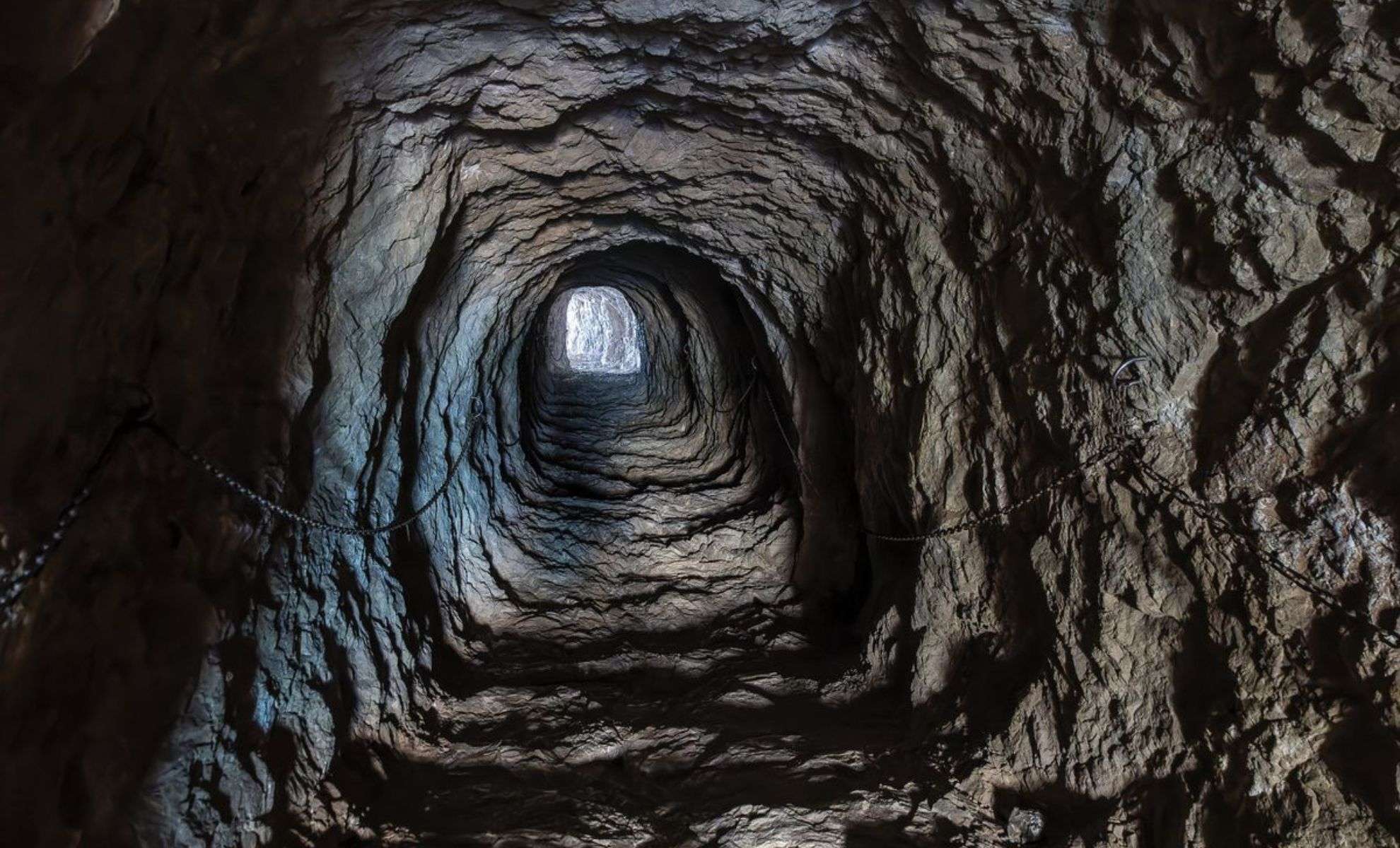
A centuries-old drawing by Leonardo da Vinci has sparked the incredible unearthing of concealed tunnels beneath the historic Sforza Castle in Milan, Italy. This find validates that da Vinci’s meticulous architectural plans were more than imaginative ideas—they were precise designs for an elaborate underground network built many centuries ago.
First erected in the 15th century, Sforza Castle served as a crucial defensive stronghold under the leadership of Ludovico Sforza, one of Leonardo’s key patrons. While in Milan, da Vinci engaged in projects related to engineering, military fortifications, and architecture, producing drawings that suggested the presence of subterranean passages beneath the fortress. Until recently, the existence of these tunnels had yet to be verified, hidden beneath layers of history.
Through the use of advanced imaging tools and a careful review of da Vinci’s original sketches, archaeologists have now confirmed the presence of these secret underground corridors, offering fresh insights into Renaissance defense mechanisms and da Vinci’s extraordinary engineering skills.

Unlocking an Archaeological Milestone Through Da Vinci’s Designs
For many years, experts and historians believed that Sforza Castle housed concealed structures, yet no conclusive proof was available. This changed when researchers combined da Vinci’s sketches with modern ground-penetrating radar (GPR) and 3D scanning technologies to explore the base of the castle.
“Ground-penetrating radar provided additional layers of data to the 3D model, revealing both known and hidden spaces. It illuminated unknown corridors and inspired further explorations of these secret tunnels,” stated Francesca Biolo, a scholar at the Polytechnic University of Milan.
The technology uncovered a network of subterranean routes, emergency escapes, and supply tunnels, some of which had been buried for hundreds of years. This evidence indicates that Sforza Castle’s fortifications were more complex than previously understood, designed for military maneuvers, defenses, and possibly covert retreats.
Though certain tunnels remain blocked by sediment deposits, this finding proves that Leonardo da Vinci’s intricate designs transcended sketches to become functional components of military defense.
Creating a ‘Digital Twin’ to Chart the Hidden Labyrinth
The discovery goes beyond simply locating old tunnels—scientists are building a detailed digital replica of the castle’s underground system. By merging historical documentation, architectural analysis, and 3D mapping, they aim to generate an immersive, interactive model illustrating both the castle’s current structure and its concealed elements.
“Our mission is to develop a digital twin of Sforza Castle—a comprehensive virtual representation that reflects the castle’s actual state and also lets users traverse historical features no longer physically accessible,” explained Franco Guzzetti, geomatics professor at the Polytechnic University of Milan.
This digital twin will offer scholars, architects, and visitors a chance to virtually navigate the hidden corridors, enhancing knowledge of Renaissance military architecture. Furthermore, it promises to expand educational programs, preservation efforts, and public engagement by enabling VR experiences of the castle’s underground realm.
Significant Highlights from the Tunnel Findings
Enhancing Our Understanding of Leonardo da Vinci’s Legacy
Leonardo da Vinci is celebrated as one of history’s greatest polymaths, recognized for his achievements in art, anatomy, physics, and engineering. Yet, his work in military architecture and fortress design has often been overshadowed by pieces like The Last Supper and Mona Lisa.
Finding the underground network beneath Sforza Castle affirms that da Vinci was not only a master artist but also an inventive military engineer. His collaborations with Ludovico Sforza involved planning fortifications, waterways, and even early armored vehicle concepts, demonstrating his exceptional grasp of structural and strategic design.
The revelation of the tunnels exemplifies Leonardo’s architectural brilliance, showing how his drawings directly influenced functional construction. This deepens our appreciation for his multifaceted talents and extends recognition of his impact beyond the arts.
Looking Ahead: Expanded Excavations and New Historical Discoveries
Following this extraordinary find, archaeologists plan additional digs to fully chart the tunnel network and to uncover further archaeological artifacts. Upcoming efforts will prioritize:
- Mapping the complete underground layout
- Locating any hidden chambers or rooms
- Reviewing historical documents to clarify how these tunnels were utilized in warfare
- Examining connections between this project and da Vinci’s other fortress designs
This breakthrough also paves the way for public exhibitions where visitors could soon explore 3D tunnel reconstructions and discover Leonardo da Vinci’s secret military contributions.
As work progresses, it’s plausible that other Renaissance castles in Italy may also conceal undiscovered passageways—potentially designed by da Vinci himself. The blend of advanced technology, archaeological excavation, and historical study continues to unveil mysteries hidden for generations.
Leonardo’s Enduring Genius Through the Lens of Modern Research
Da Vinci’s original sketch of Sforza Castle, once regarded as merely theoretical, is now confirmed to represent actual military tunnels beneath Milan. This find emphasizes the precision of his designs and his role as an avant-garde engineer.
Utilizing state-of-the-art imaging techniques, experts have combined Renaissance heritage with contemporary science, opening a portal to the past. As excavations progress, the secrets within da Vinci’s drawings may continue to reshape our understanding of his genius—proving his innovations were truly ahead of their time.
- Categories:
- News







0 comments
Sign in to Comment