
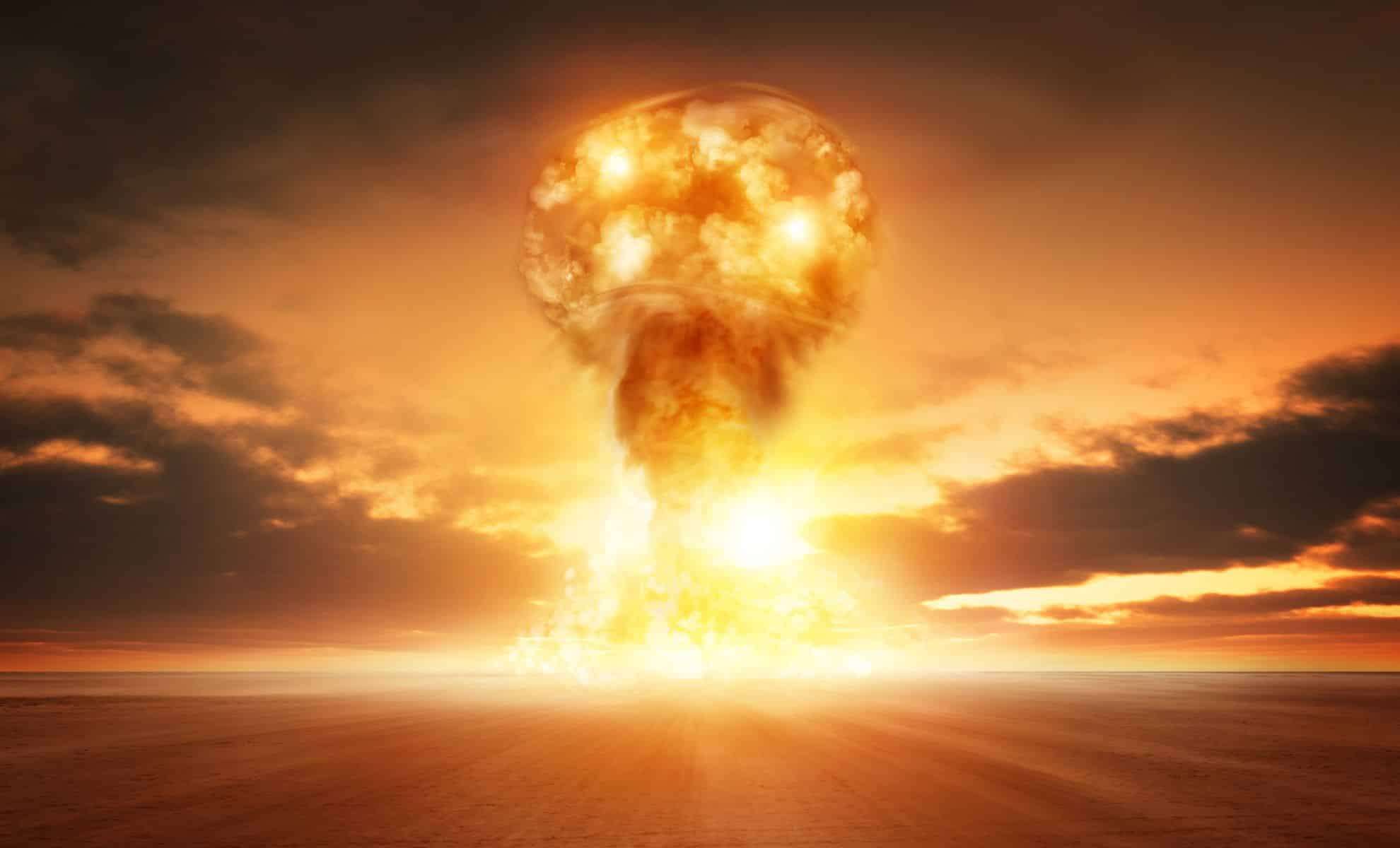
On July 16, 1945, the inaugural nuclear detonation, famously dubbed the Trinity test, took place amidst the arid expanses of New Mexico. Besides its monumental impact on military history, this event unexpectedly led scientists to identify an extraordinary state of matter—quasicrystals. Eight decades later, studies of trinitite—a unique glass formed when copper, debris from test structures, and desert sand melted together during the blast—have unraveled new details regarding extreme atomic phenomena and mineral genesis. A recent article in Proceedings of the National Academy of Sciences (PNAS) highlights the discovery of quasicrystals within red-hued trinitite, providing valuable insights into the intense conditions following nuclear detonations.
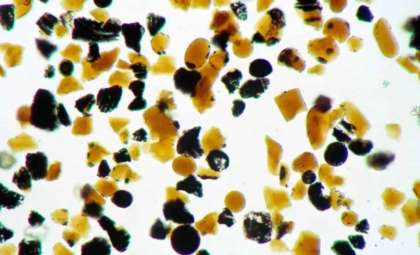
After the explosion, the glassy residue known as trinitite became a subject of geological interest. Typically exhibiting a green tint due to the fusion of copper and sand, trinitite represents an intriguing sample for researchers examining the aftermath of extreme energy releases. The identification of quasicrystals in the copper-enriched red variety of trinitite introduced an unexpected complexity. Terry Wallace, a geophysicist at Los Alamos National Laboratory, emphasized the importance of this find, stating quasicrystals emerge only under extraordinarily harsh environmental conditions virtually unseen on Earth.
Decoding Quasicrystals: Unique Patterns Born from Intense Extremes
Quasicrystals defy traditional crystallography. Unlike conventional crystals, where atoms repeat in a consistent, periodic order, quasicrystals display organized but non-repeating atomic arrangements that break classical symmetry rules. Initially believed to be unable to form naturally, they were first synthesized in labs in 1984. Subsequently, quasicrystals have been located in meteorite samples, where they formed due to extreme pressure and temperature during cosmic collisions. The Trinity test has now demonstrated that such intricate atomic patterns can also arise during the violent circumstances of a nuclear blast.

As Wallace notes, “Their formation hinges on catastrophic events combining intense shock, heat, and pressure—phenomena we seldom observe outside nuclear detonations.” Detecting quasicrystals in trinitite broadens our understanding of the precise physical conditions necessary to generate these uncommon structures. The overwhelming heat, abrupt shockwaves, and colossal pressures from a nuclear explosion create an environment capable of assembling these rare molecular formations, offering an unparalleled window into extreme energy physics largely inaccessible through other means.
Trinitite’s Mysteries: Probing the Origins of Quasicrystal Formation
Despite the thrill of uncovering quasicrystals in trinitite, their exact formation mechanisms remain elusive. Wallace remarks that while the quasicrystal’s intricacy is impressive, “the reason behind its unique structure is still unknown.” Though nuclear blasts clearly furnish the intense environment required, unraveling the precise thermodynamic pathways remains one of today’s scientific puzzles.
Researchers hope ongoing investigations will illuminate the detailed processes guiding quasicrystal creation. Wallace expresses optimism: “In time, someone will decode these mysteries, revealing truths that have so far been hidden.” Such advancements could deepen comprehension of atomic interactions during nuclear reactions and shed light on the broader environmental and geological consequences of nuclear testing. This knowledge is vital for improving predictions and control measures regarding nuclear blasts, an increasingly critical aspect amid concerns about nuclear proliferation.
Quasicrystals in Nuclear Forensics: Tracking Nuclear History with Lasting Markers
Beyond pure scientific interest, quasicrystals hold promise for advancing nuclear forensics. Detecting these structures within minerals from test sites may provide a durable signature of nuclear detonations, assisting in reconstructing the details and history of such events. Wallace explains, “To understand other nations’ nuclear capabilities, it’s essential to grasp their testing activities comprehensively.” Conventional forensic techniques rely on radioactive traces which degrade with time, limiting their usefulness for long-term investigations.
Conversely, quasicrystals remain stable indefinitely once formed. Wallace adds, “A quasicrystal emerging at a blast site can preserve novel data—potentially forever.” This durability positions quasicrystals as transformative tools in forensic science, enabling detailed analyses of nuclear tests long after radioactive evidence dissipates. By examining the unique thermodynamic fingerprints of quasicrystals from various locations, scientists may unravel weapon compositions and methods, bolstering efforts to restrict nuclear armament proliferation.
- Categories:
- News






0 comments
Sign in to Comment