
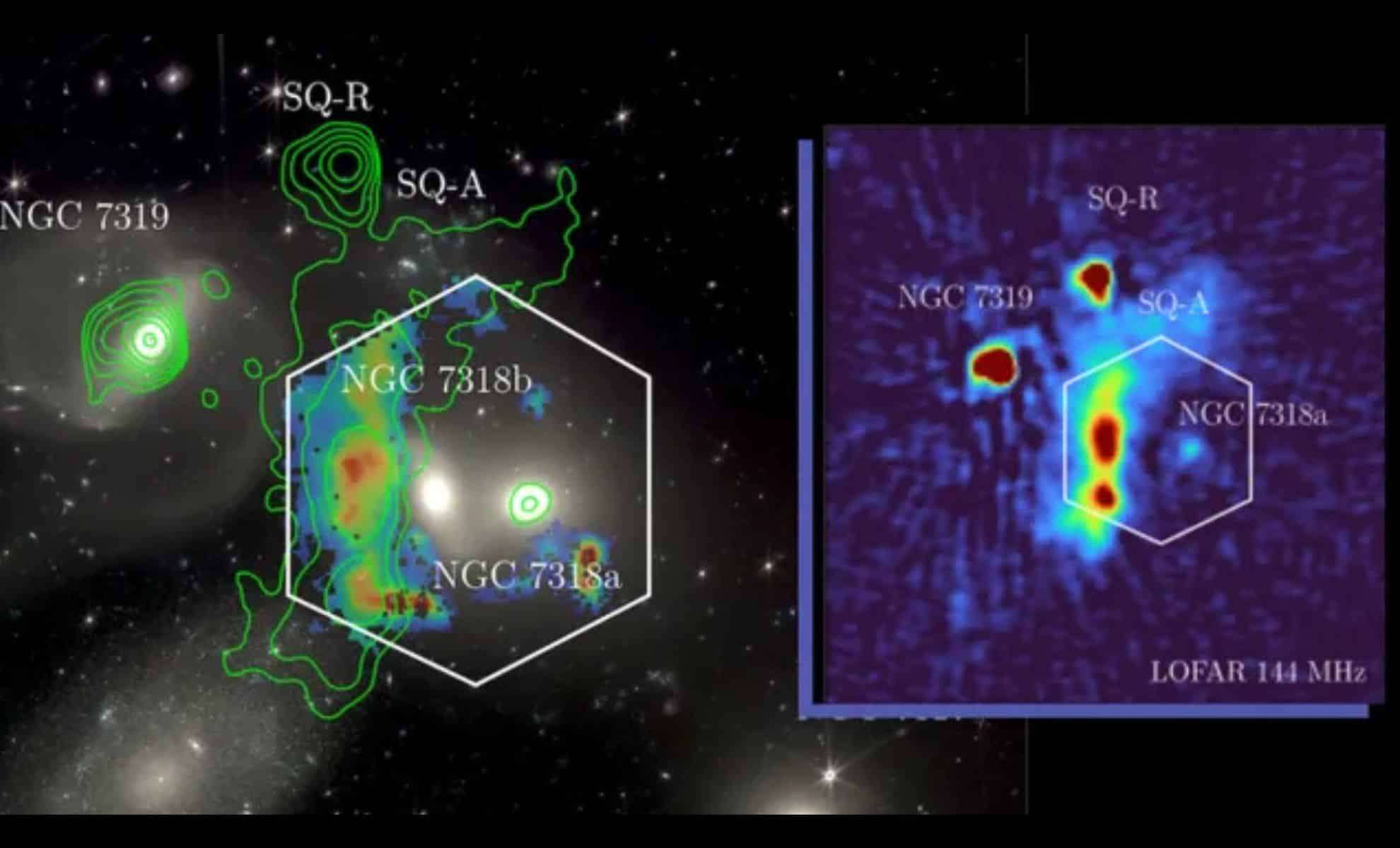
Scientists have witnessed a spectacular cosmic event as the galaxy NGC 7318b barreled through nearby galaxies at a staggering velocity of 2 million mph. This collision sparked a powerful shock wave comparable to a “sonic boom similar to that of a jet fighter.” The encounter took place in Stephan’s Quintet, a cluster of five galaxies engaged in a complex gravitational interaction roughly 290 million light-years from Earth.
This intense collision has dramatically altered the intergalactic space in the area and offers researchers a rare glimpse into the turbulent forces shaping galaxy development. By examining this event, astronomers hope to better understand the role such collisions have played throughout cosmic history.
Exploring Stephan’s Quintet: A Cosmic Collision Laboratory
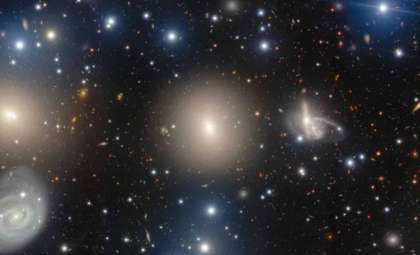
Discovered in 1877 by French astronomer Édouard Stephan, Stephan’s Quintet has recently captured more attention thanks to vivid images from the James Webb Space Telescope (JWST) and the Hubble Space Telescope. This group serves as a natural laboratory for studying how repeated gravitational encounters trigger dramatic changes in galaxy structure.

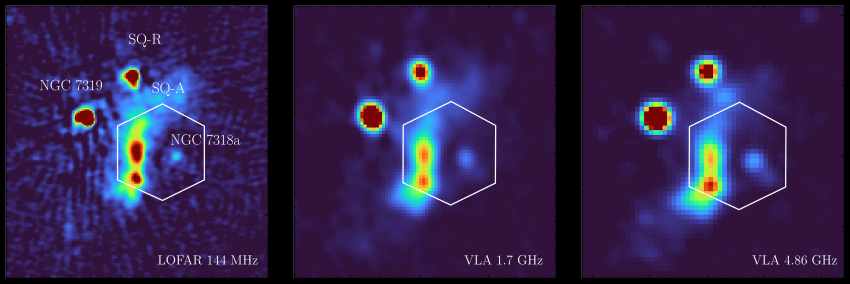
The crash involving NGC 7318b produced intense waves of energy that are propagating through the group, compressing clouds of gas and plasma. This compression has caused the region to emit a bright glow in radio wavelengths. Marina Arnaudova, an astrophysicist from the University of Hertfordshire, noted: “NGC 7318b crashed into the debris field, squeezing the plasma and gas, which revitalizes the plasma to shine brightly in radio frequencies and likely sparks new star formation.”
The observations unravel the complex interactions during galaxy collisions, illustrating how they simultaneously disrupt and renew cosmic material. These processes lead to star birth and the redistribution of matter, underscoring the sheer power of these cosmic events.
The Hypersonic Shock Wave and Its Effects
A standout feature of this galactic encounter is the generation of a shock wave that astronomers compare to a “sonic boom from a jet fighter.” Traveling at hypersonic speeds, this wave sweeps through Stephan’s Quintet, agitating gas and plasma and fostering conditions conducive to star creation.
Scientists utilized the WEAVE spectrograph to examine the shock wave’s properties and its influence on the surrounding medium. WEAVE’s high-resolution spectral analysis enabled researchers to trace ionized gas movement and assess how energy disperses during such cosmic collisions.
“The sudden surge of activity in this galaxy cluster was reignited by NGC 7318b crashing through at over 2 million mph (3.2 million km/h), producing a mighty shock akin to a jet’s sonic boom,” explained Dr. Arnaudova. By studying the resulting turbulence and energy flow, astronomers aim to unlock the mechanisms underpinning galaxy formation and changes.
Galaxy Collisions as Engines for Star Birth
Events like the collision in Stephan’s Quintet offer invaluable opportunities to explore the impact of galaxy mergers. These high-energy encounters shuffle gas and dust, compressing them to levels that ignite the birth of new stars. The glowing plasma in the Quintet is believed to signal stellar nurseries emerging after the collision.
Such mergers are not isolated but represent a significant chapter in cosmic history. Galaxy mergers were more frequent in the universe’s early days and have been crucial in molding galaxies as we observe them now. Studying the Quintet allows scientists to better comprehend the past evolution of galaxies like the Milky Way.
Dr. Arnaudova highlighted the importance of these findings: “Witnessing this unique collision in Stephan’s Quintet provides a rare chance to see galaxies actively interacting.” These insights shed light on how galaxies develop and affect each other over time, enhancing our grasp of universal evolution.
WEAVE’s Role in Decoding Galactic Interactions
The event also showcased the capabilities of the WEAVE spectrograph, which captured some of its earliest data during this powerful collision. This cutting-edge tool allows astronomers to investigate the composition and movement of intergalactic gas and plasma with extraordinary detail.
Space.com reported that WEAVE will be instrumental in future astronomical studies, offering insights into cosmic phenomena like the universe's reionization and the dynamics of large-scale galaxy mergers. Its successful application here underscores its crucial role in expanding our cosmic knowledge.
Findings from WEAVE have transformed perspectives on galaxy collisions, revealing more about energy distribution and matter rearrangement that fuel star formation and galactic transformations. As additional observations are analyzed, WEAVE is set to revolutionize our understanding of the universe’s most energetic processes.
- Categories:
- News





0 comments
Sign in to Comment