
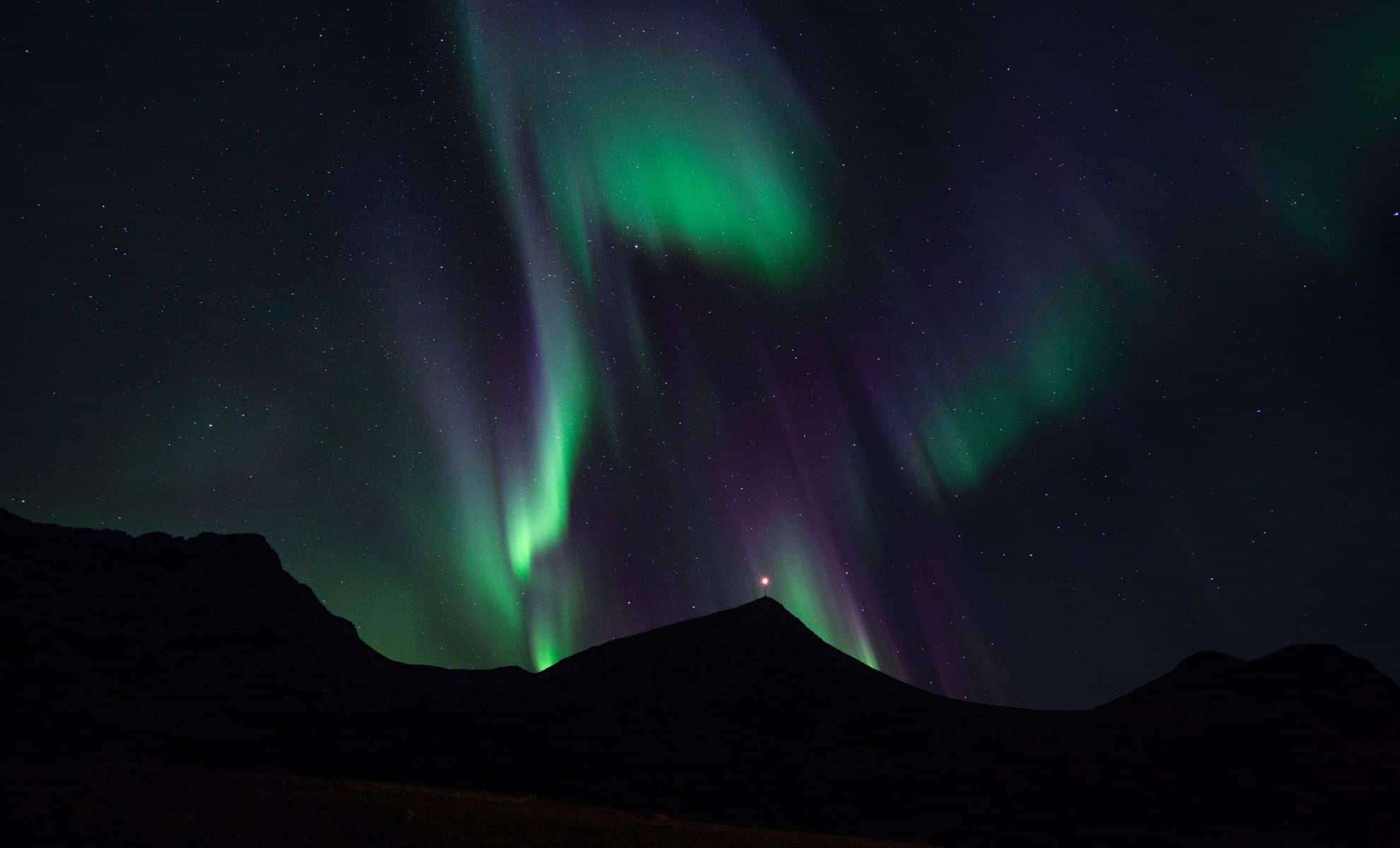
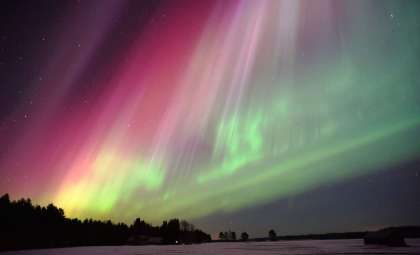
A significant disturbance in Earth’s magnetic field is anticipated this weekend, offering a unique opportunity to view the aurora borealis beyond its typical northern range. The National Oceanic and Atmospheric Administration (NOAA) forecasts that heightened solar activity could cause the Northern Lights to be visible in parts of the U.S. that rarely see this dazzling natural display.
The intensity of this geomagnetic event is measured by the Kp index, which ranges from 0 to 9. NOAA predicts it will reach a level of Kp 4 on Friday night. Although moderate, this strength is sufficient to expand the aurora’s reach to lower latitudes, especially across northern regions of the U.S. and Canada.
In addition to spectacular light shows, the storm may also result in radio communication disruptions lasting through Sunday, driven by increased solar wind from a recent solar flare. While the most promising viewing is expected on Friday night, it remains uncertain if auroral activity will persist into Saturday.

Projected Aurora Viewing Zones
According to NOAA’s latest data, the most vibrant auroras will likely be observed in:
- Canada’s northern territories
- Alaska
Still, under favorable conditions, those farther south could catch glimpses of the lights. The visibility threshold, known as the viewing line, may push southward to as far as southern Minnesota, enabling northern state residents a rare chance to witness the phenomenon.
The following states have the highest probability of sightings:
- Northeastern Washington
- Northern Idaho
- Northern Montana
- North Dakota
- Northern Minnesota
- Northern Wisconsin
- Upper Michigan
Somewhat less likely but still possible are faint appearances in:
- Northern South Dakota
- Parts of Wisconsin
- Northern Michigan
- Northern Maine
Favorable conditions with minimal light pollution are essential in these areas to spot even a subtle auroral glow.
Tips for Optimal Northern Lights Viewing
To increase your chances of witnessing the auroras, consider these suggestions:
- Choose the Right Timing – Peak visibility typically occurs between 10 p.m. and 2 a.m.
- Seek Darkness – Avoid urban light pollution by traveling to remote locations.
- Focus Northward – When observing from lower latitudes, look near the northern horizon.
- Verify Weather Conditions – Clear skies are vital for viewing.
- Be Patient – Auroral activity can escalate rapidly from faint to vivid displays.
Under ideal circumstances, the Northern Lights might be detectable up to 620 miles away from the most intense regions, making faint sightings possible well outside typical auroral zones.
Photographing the Aurora Borealis
For those aiming to capture the Northern Lights on camera, National Geographic advises:
- Utilize a wide-angle lens to encompass a broad sky panorama.
- Set high ISO values (between 800 and 3200) for enhanced light sensitivity.
- Focus your lens to infinity to ensure sharp stars and auroras.
- Keep the camera stable using a tripod to prevent blur.
- Activate night mode if using a smartphone for the best results.
Understanding the Aurora Borealis
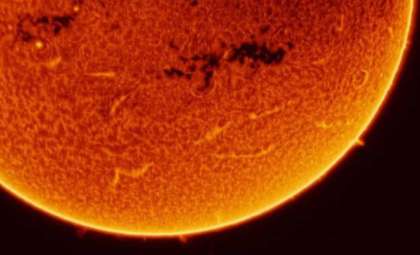
The dazzling colors of the aurora result from interactions between charged particles emitted by the Sun—such as during solar flares or coronal mass ejections (CMEs)—and molecules in Earth’s atmosphere. When these particles collide with oxygen and nitrogen atoms, they produce the vibrant light displays observed near the poles.
These occurrences follow an approximately 11-year solar cycle alternating between quieter periods (solar minimums) and heightened activity (solar maximums). NASA announced the Sun’s most recent peak in October 2024, marking a period rich in aurora occurrences.
Notably, in May 2024, one of the strongest geomagnetic storms in five centuries enabled sightings of the aurora as far south as Texas and Florida. A subsequent event in October 2024 also created rare low-latitude aurora displays, illustrating the powerful impact solar storms have on visibility ranges.
Outlook for Aurora Activity in 2025
As the solar cycle nears its peak, 2025 is anticipated to bring increased frequency and intensity of auroras. Scientists expect stronger geomagnetic storms that could push the Northern Lights even further south in coming months.
For those unable to catch this weekend’s display, stay tuned to NOAA’s space weather updates and solar storm notifications to catch upcoming chances for skywatchers to experience this breathtaking natural event.
- Categories:
- News








0 comments
Sign in to Comment