
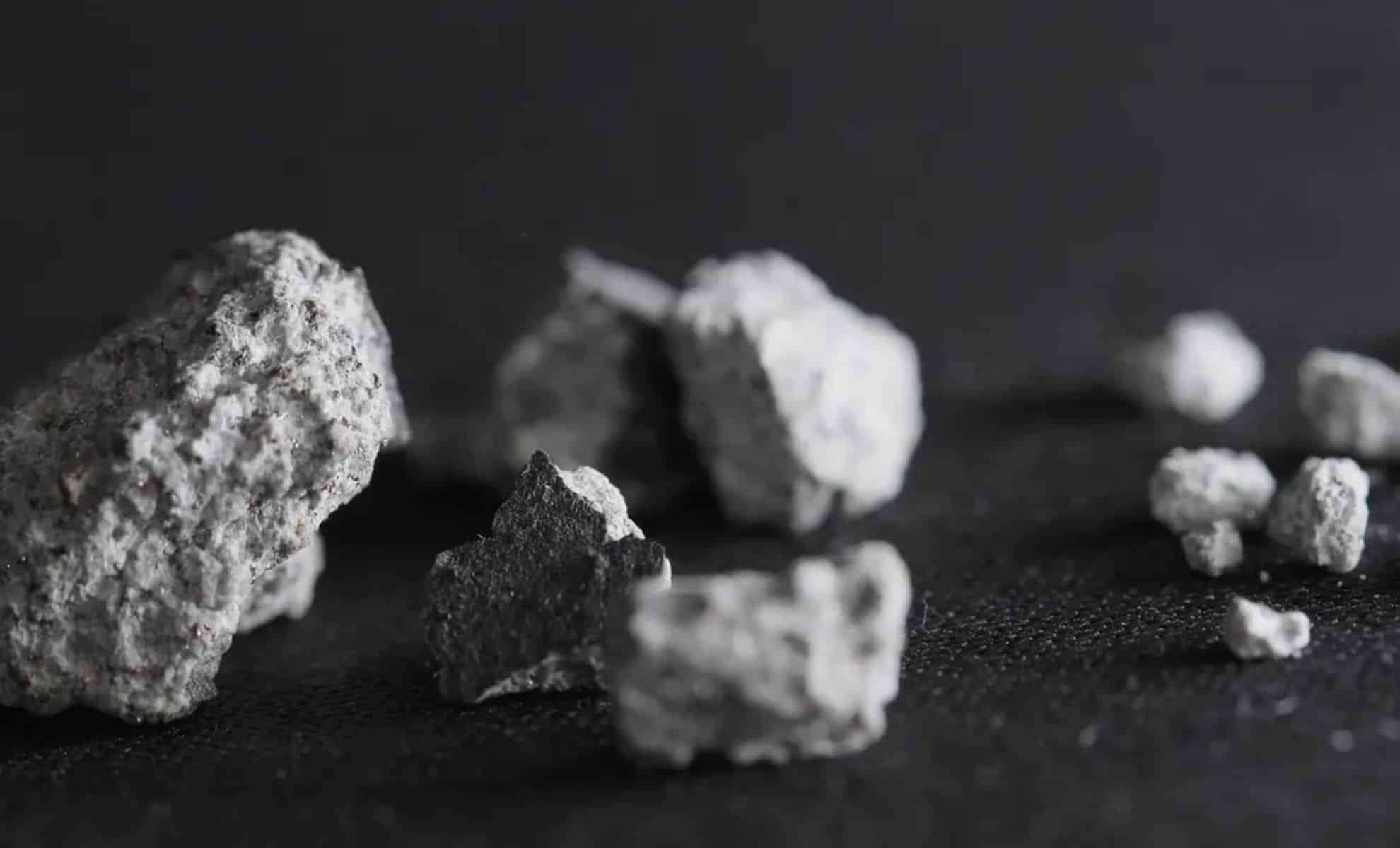
In June last year, a meteorite unexpectedly breached the roof of a residence in McDonough, Georgia, ultimately landing in the living room. This space rock, now christened the McDonough meteorite, has become the focus of intensive research by the University of Georgia, as detailed in an official release. Investigations have dated the meteorite to roughly 4.56 billion years old, notably predating the formation of Earth.
From Bright Streak to Living Room Impact
On the 26th of June, more than 240 observers across the southeastern U.S. witnessed a vivid fireball blazing through daylight skies. The phenomenon was accompanied by a sonic boom that resembled a minor earthquake, as confirmed by the U.S. National Weather Service in Peachtree City, Georgia. They attributed the noise to a fast-moving meteor entering Earth’s atmosphere.
A piece approximately the size of a cherry tomato separated from the meteor and struck a McDonough home. It broke through the roof, tore through air conditioning ducts and insulation, and finally lodged itself into the living room floor, leaving a 1.5-centimeter-wide indentation. Fortunately, the residents were unharmed and have requested to stay anonymous.

Origins of the Space Rock
Led by planetary geologist Scott Harris, scientists at the University of Georgia collected 23 grams of the meteorite fragments from an estimated 50 grams that fell. Their findings identified the specimen as an ordinary chondrite, a common type of stony meteorite with minimal metal but great geological importance.
Applying optical and electron microscopy techniques, Harris’s team dated the meteorite to around 4.56 billion years ago, which surpasses Earth's age by about 20 million years. Earth itself is estimated to be about 4.54 billion years old. Harris explained that the meteorite originates from a family of asteroids within the main belt located between Mars and Jupiter, linked to a massive asteroid disruption approximately 470 million years ago.
This colossal breakup produced countless fragments drifting through space, with some eventually adopting Earth-crossing orbits. One such fragment ended up colliding with Earth as the McDonough meteorite.
An Intense Journey Through Earth’s Atmosphere
According to NASA’s Meteoroid Environment Office, the celestial body was originally about one meter in diameter, entering the atmosphere at a speed near 29,000 mph (47,000 km/h). Atmospheric friction caused it to fragment and slow down substantially, yet it still impacted the home at about one kilometer per second, fast enough to cover nearly ten football fields within a second, as Harris noted.
The meteorite’s trajectory was both spectacular and damaging. Harris recounted to Fox News Digital how the fragment passed through multiple layers of the home’s infrastructure — “through the air duct—entering one side and exiting the other, penetrating feet of insulation, then piercing the ceiling” — before settling into the floor. The strike created a crater and scattered space dust, which the occupants continue to discover weeks later.

Increasing Frequency of Meteorite Discoveries
The McDonough meteorite marks just the 27th confirmed meteorite found in Georgia and is among only the sixth witnessed fall in the state's history. Whereas such events were once considered rare occurrences spanning decades, Harris pointed out that improved technology and keen public observation have significantly increased meteorite recoveries.
Portions of this meteorite will remain at the University of Georgia for further examination, while others will be exhibited at the Tellus Science Museum in Cartersville, Georgia. Harris intends to publish detailed research outlining the meteorite’s composition and entry velocity, offering new insights into smaller celestial objects near Earth and their implications for understanding larger, potentially dangerous asteroids.
A few months prior to this event, the asteroid 2024 YR4 briefly held a 3.1% chance of colliding with Earth, according to NASA, though its risk has since fallen to zero. Events like the McDonough impact provide invaluable data that can aid in safeguarding the planet against future asteroid threats.
- Categories:
- News











0 comments
Sign in to Comment