

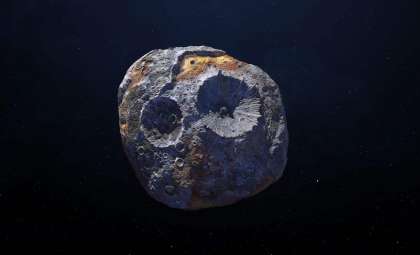
Today, Earth witnesses the close encounter of asteroid 2025 MA90, spanning roughly 280 feet across, as it speeds past our planet. Moving at speeds exceeding 20,000 miles per hour, this space object will safely pass at a distance of about six million kilometers. Despite its size and velocity, there's no need for concern; NASA has verified that this asteroid poses no collision risk. This approach grants scientists a valuable chance to study Near-Earth Objects (NEOs), helping enhance predictive models for asteroid orbits. Observations from this event contribute essential data on asteroid characteristics, aiding in the understanding of future space threats. NASA’s Asteroid Watch program offers comprehensive details on upcoming asteroid flybys, supporting ongoing space research.
Understanding the Importance of 2025 MA90’s Close Approach
The asteroid known as 2025 MA90 belongs to the Aten class, characterized by orbits that cross Earth’s path. Although labeled as a potentially hazardous object due to its orbit proximity, its size—approximately 85 meters—reduces the threat it poses. Typically, asteroids exceeding 140 meters are considered capable of causing serious damage. Should 2025 MA90 enter our atmosphere, much of it would likely burn up like smaller meteors before reaching the surface. Nevertheless, its closeness—within 7.48 million kilometers of Earth’s orbital path—has captured scientific interest to study asteroid properties such as composition, rotation, and trajectory. These insights are essential for refining asteroid movement models.
Why Monitoring Near-Earth Objects Remains Crucial
The Asteroid Watch initiative by NASA plays a critical role in tracking NEOs, providing current data about their nearness to Earth. Asteroid 2025 MA90 is one among many tracked objects supporting efforts to safeguard our planet from potential impacts. Its safe passage reminds us of the importance of continuously observing asteroid movements. Collecting information on their dimensions, velocities, and paths enables scientists to better forecast risks and devise defensive measures. Data from this flyby will further fine-tune NASA’s orbital predictions, enhancing readiness for any future hazardous asteroids.

Meet the Aten Asteroids: Earth’s Nearest Orbit Crossers
2025 MA90 is categorized within the Aten asteroid group, whose orbits intersect with Earth’s orbit around the Sun. Their proximity to Earth raises the potential for impact events. Although 2025 MA90 itself is small and unlikely to cause harm, Aten asteroids vary widely in size, with some large enough to pose serious threats. NASA classifies NEOs based on factors like size and how close they come to Earth. Objects passing within 7.48 million kilometers and sizable enough to cause damage are deemed hazardous. While 2025 MA90 lies within this close range, its modest size means the danger is minimal, making it ideal for study instead of concern.
The Vital Work of NASA’s Asteroid Watch Program
NASA’s Asteroid Watch program is essential in tracking the movement of Near-Earth Objects and evaluating potential impact threats. This platform openly shares asteroid approach data with scientists and the public alike. Observing objects such as 2025 MA90 allows NASA to accumulate knowledge about asteroid composition, trajectories, and impact possibilities. Such information sharpens models forecasting future asteroid close passes and hazards. Collaboration with international partners further ensures a coordinated global planetary defense strategy.
Watching Apophis: A Major Asteroid Encounter on the Horizon
Among the asteroids under close observation by NASA, Apophis stands out, set for an extraordinarily close flyby in 2029. Upon its discovery in 2004, Apophis raised fears of a possible Earth impact. However, continuous tracking has eliminated any threat for at least the next century. Its 2029 pass will bring it near Earth at an unprecedented distance of just 36,000 kilometers, marking the closest approach of a large asteroid on record. This event highlights the importance of sustained asteroid surveillance since any future orbital shifts could alter potential risk levels.
Enhancing Prediction of Future Asteroid Hazards
The observation and analysis of 2025 MA90 and other NEOs is a key part of boosting our capacity to foresee and mitigate asteroid dangers. As NASA expands its monitoring of such objects, the gathered data continuously improves models predicting their courses. This research is vital for understanding asteroid interactions with Earth's orbit and identifying factors that might increase their hazard potential. Although 2025 MA90 is not a direct threat, studying it sharpens our capabilities to detect and respond to more perilous objects well ahead of any impact risk.
- Categories:
- News










0 comments
Sign in to Comment