
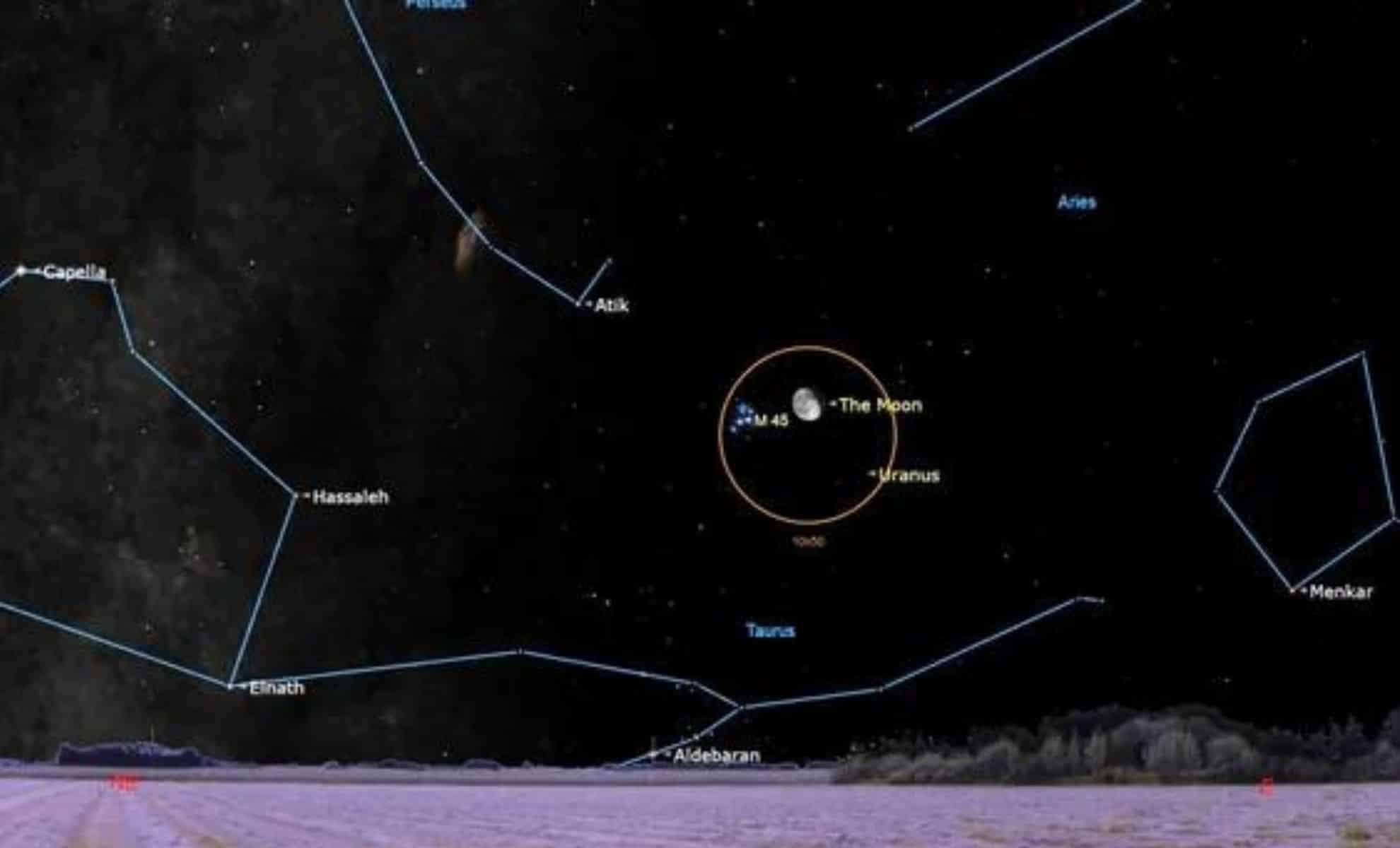
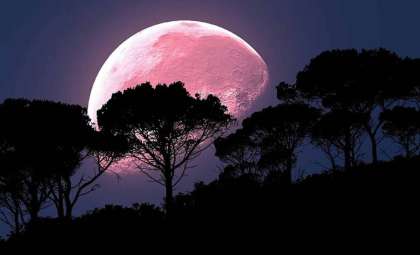
Observers in the western U.S. will soon have the chance to see a remarkable astronomical event during the early hours of Sunday, September 22, 2024. On this date, the waning gibbous moon, shining at roughly 75% illumination, will move across the sky, momentarily blocking out the bright stars of the Pleiades star cluster, also famously known as the Seven Sisters. This rare phenomenon, called an occultation, will cause several stars to vanish and then reappear behind the moon’s glowing surface, making for a captivating spectacle.
The Pleiades Star Cluster: A Celestial Group with Mythical Heritage
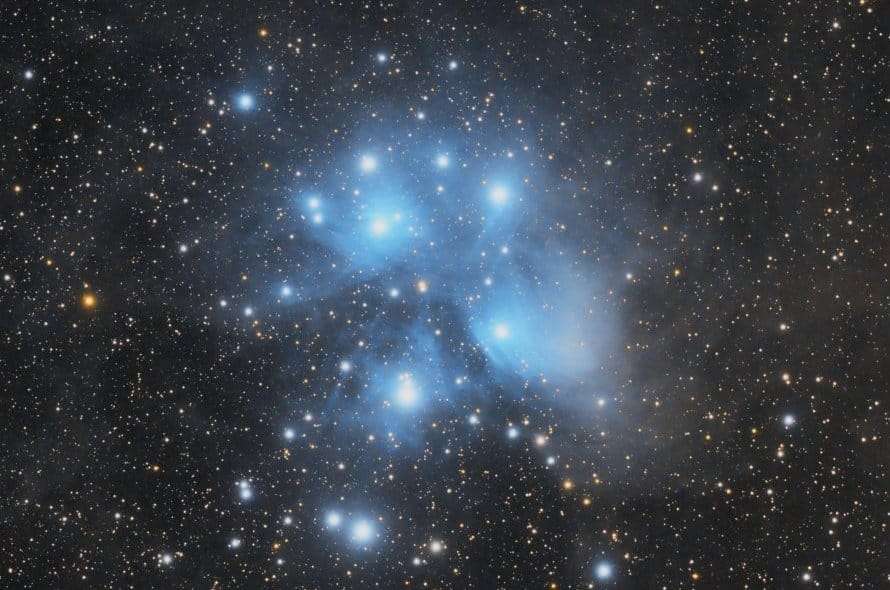
The Pleiades, or Messier 45 (M45), is one of the most distinctive and widely recognized star clusters visible to the naked eye. Located within the constellation Taurus, this cluster comprises young, hot stars closely packed together, easily spotted as a bright grouping against the night sky. Its shimmering blue-white stars create an ethereal glow, especially prominent during northern hemisphere winters.
Without optical aid, the Pleiades appear as a hazy patch of light, but binoculars or telescopes reveal several individual stars—typically six or seven standout points. Rooted in mythology, these stars are known as the Seven Sisters, representing daughters of Atlas and Pleione. The cluster’s most luminous members, including Alcyone, Maia, Electra, and Merope, carry the names of these legendary figures.

Situated approximately 440 light-years from Earth, the Pleiades’ brightness and proximity have made it a key feature in cultural lore and astronomical studies, symbolizing unity and familial bonds across civilizations.
What Is an Occultation? Exploring This Striking Celestial Event
An occultation takes place when one astronomical object moves directly in front of another, temporarily obscuring it. In this upcoming event, the moon will obscure multiple stars within the Pleiades as they vanish behind its illuminated edge before reappearing beyond its shaded limb. The moon’s waning gibbous phase will heighten the contrast, making the stars’ disappearance and return especially vivid.
This event is visible without any equipment, but using binoculars or a telescope will provide a sharper, more detailed view. Stars will be seen fading from the moon’s bright side and emerging from the darker portion, delivering an exciting stargazing experience. Even casual viewers should find the close encounter between the moon and the Pleiades delightful.
Optimal Viewing Spots and Timing for the Occultation
The best vantage points for witnessing this occultation will be across the western United States, where the skies tend to be darker. Observers in the Pacific Time Zone will have the clearest view, as the event unfolds entirely before dawn, allowing the stars and moon to remain clearly visible against the dark sky.
Meanwhile, viewers in the Mountain Time Zone can observe most of the event before daybreak, though the final moments will coincide with the onset of twilight, possibly hindering visibility somewhat.
For those located in the Central and Eastern United States and parts of Canada, the timing is less advantageous. Here, the moon will start occulting the Pleiades during early twilight or daylight, making star visibility more difficult. For example, in Chicago, the star Electra will disappear at approximately 5:01 a.m. CDT under dark skies but reappear amid already brightening twilight. Denver residents will see this star vanish at 3:43 a.m. MDT and reemerge at 4:13 a.m., with most of the event taking place in darkness.
Why Occultations Matter to Astronomers
Events like this occultation provide astronomers — both professionals and enthusiasts — with unique opportunities to study the motion and relative positioning of celestial bodies. Watching the moon interact with the bright stars of the Pleiades offers insight into their dynamics and enriches our understanding of the night sky.
This occultation is part of an ongoing series of lunar passages in front of the Pleiades in coming years, each offering varying conditions to appreciate this dynamic interplay. These occurrences highlight the ever-changing nature of our cosmos and invite observers to deepen their engagement with astronomy.
Upcoming Opportunities and Astrophotography Tips
The September 22, 2024 occultation marks one of multiple moon-Pleiades encounters skywatchers can anticipate in the near future. As the moon continues along its orbit, it will periodically eclipse parts of the cluster, presenting further occasions for observation under diverse circumstances.
Photographers are encouraged to capture this event, using telescopes, binoculars, or high-quality cameras to seize stunning images of the moon passing before the Pleiades. Resources offering advice on moon photography and recommendations for optimal astrophotography gear can help enthusiasts prepare for spectacular shots.
Mark your calendar for September 22, 2024, and prepare to witness a breathtaking meeting of the moon and the Pleiades star cluster in this extraordinary celestial occultation.
- Categories:
- Astronomy ,
- News ,
- Space









0 comments
Sign in to Comment