
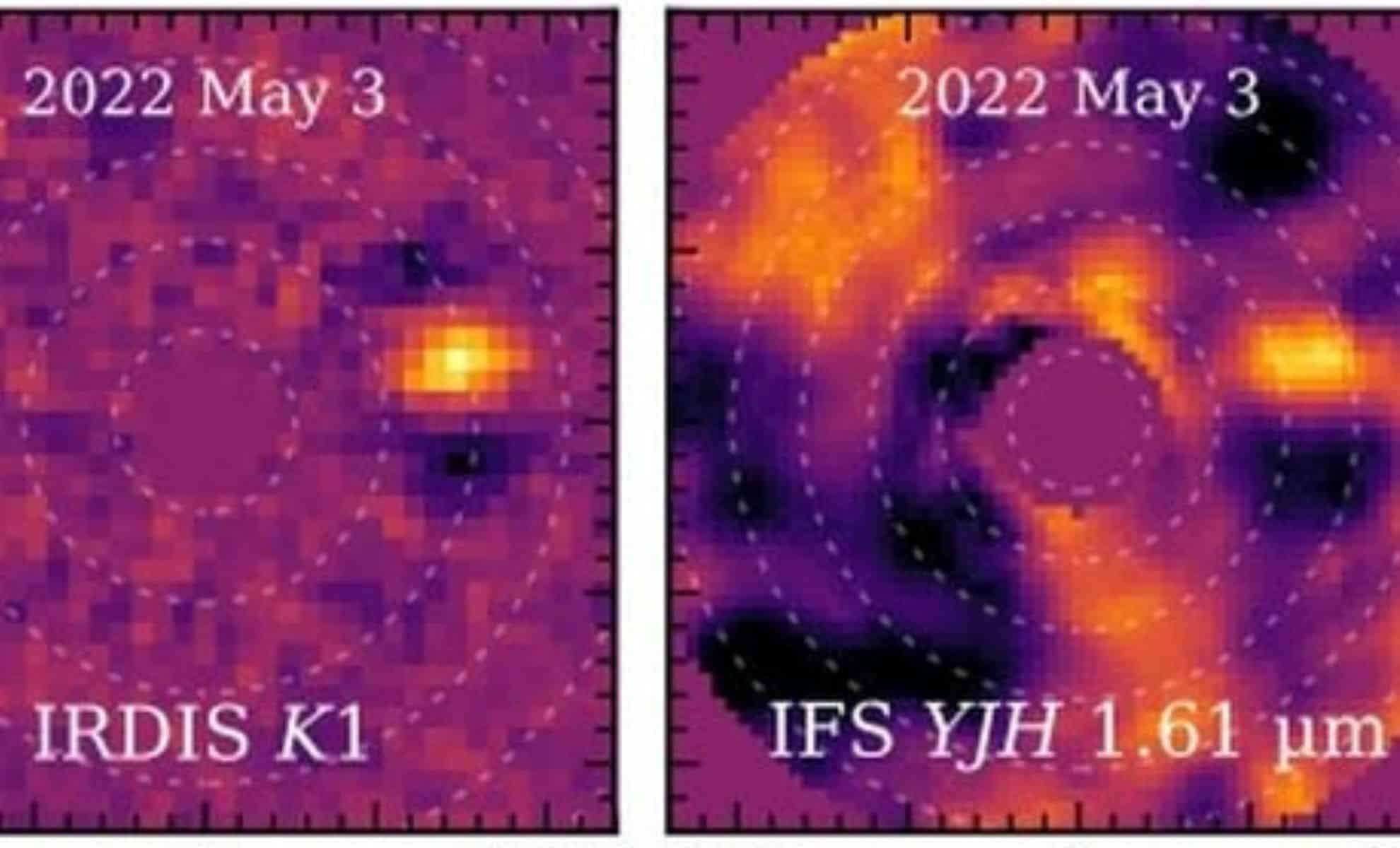
A significant advancement in stellar astronomy has unveiled complex planetary formation within the binary star system HD 135344 AB. Researchers identified a massive planet orbiting the system's primary star — a star previously underestimated in planet formation studies. This breakthrough, detailed in a recent article Astronomy and Astrophysics, sheds light on how planets emerge in binary environments. Notably, while one star still harbors active planet-building materials, its companion has finished this phase, offering scientists an unparalleled glimpse into differing stages of planetary evolution.
Central to this discovery was the employment of the Very Large Telescope (VLT) paired with the cutting-edge SPHERE exoplanet instrument. This technology enabled astronomers to visually capture a young gas giant with a mass approximately ten times that of Jupiter. The findings not only demonstrate the power of modern imaging methods but also prompt a reevaluation of existing models concerning planet development in binary star systems.
An Unexpected Giant in HD 135344 AB
The HD 135344 AB system features two youthful stars: the primary being an A-type main-sequence star and the secondary an F-type main-sequence star. These stars have widely separated orbits and distinct protoplanetary disks. Strikingly, the primary star's disk has dissipated, whereas the secondary star's disk remains rich with planet-forming activity.

Research initially prioritized the secondary star due to the visible features signaling ongoing planetary creation, such as spiral patterns and gaps within its disk. However, the lack of a detectable disk around the primary star had left it largely unexplored—until direct imaging efforts revealed HD 135344 Ab, a youthful, massive planet orbiting at roughly 15–20 astronomical units from the primary star.
Persistence and Luck in Capturing the Planet
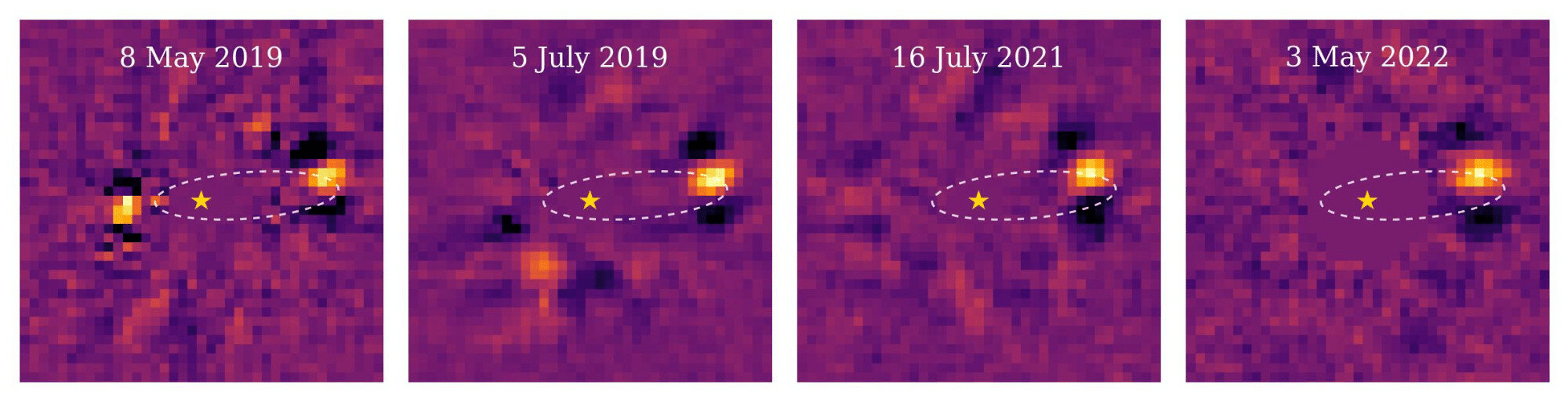
Confirming the existence of HD 135344 Ab required extensive monitoring over four years. Tomas Stolker, the study’s lead scientist from Leiden Observatory, stated, “Star A was never studied before because it lacked a disk. We wondered if it might already boast a planet, and after years of careful observation combined with some fortunate timing, we now know it does.”
The planet’s close proximity to its bright host star made detection extremely challenging. Stolker remarked, “We were fortunate; the planet's position relative to the star is so tight that SPHERE is only just able to resolve it.” This fortunate alignment permitted the team to track the planet's orbital motion, conclusively distinguishing it from background stars.
Insights into Giant Planet Formation
The discovery offers valuable knowledge about how massive planets form, particularly near the star’s so-called “snowline”—a boundary in the protoplanetary disk where volatile compounds freeze. This zone facilitates the accumulation of solid material, a crucial step toward building gas giants.
Researchers propose that HD 135344 Ab belongs to a broader group of young giant planets that typically emerge around snowlines. According to the study, “These planets have historically eluded detection due to their proximity to their stars, which many surveys are not designed to investigate.” Understanding their formation patterns could enhance comprehension of diverse planetary system architectures.
Precision Astrometry as a Key Tool
High-accuracy astrometric data played a crucial role in confirming the planet's identity by distinguishing it from background stellar motion. The researchers pointed out, “Our work highlights how vital precise astrometric measurements are to separate true orbital movement from background star patterns.”
Anticipated data from the upcoming Gaia DR4 release is expected to advance the search for such closely orbiting giants, potentially uncovering more examples in star-forming regions. “Gaia DR4 is likely to provide hints of similar planets which will help guide direct imaging strategies and data processing,” the authors added.
- Categories:
- News











0 comments
Sign in to Comment