
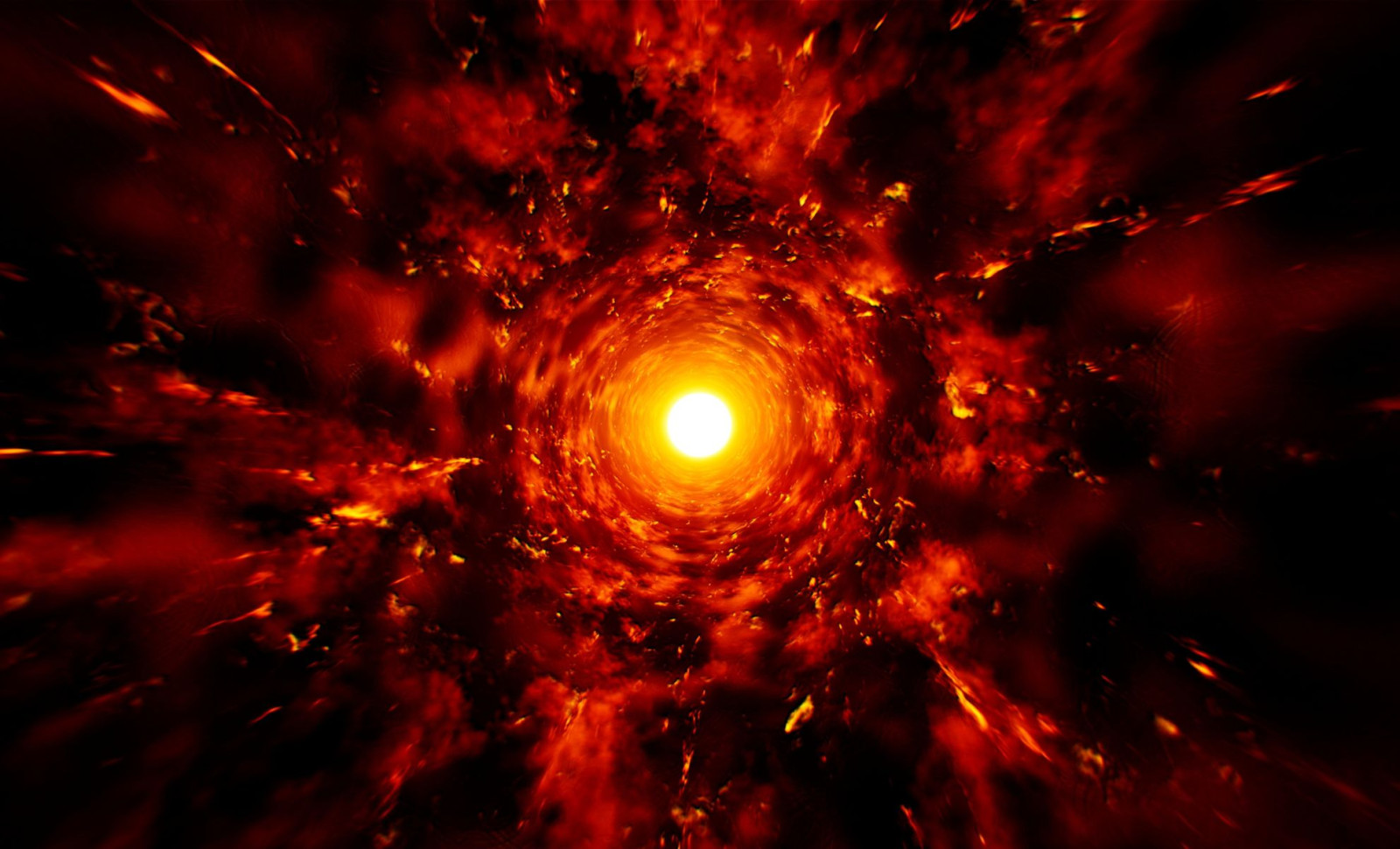
Recent observations have revealed that WOH G64, previously thought to be on the verge of exploding as a supernova, remains a red supergiant star and may have been misunderstood in earlier assessments. This colossal star, spanning around 1,500 times the Sun's diameter and shining up to 282,000 times brighter, ranks among the largest stars ever recorded. It is situated roughly 163,000 light-years from Earth in a satellite dwarf galaxy orbiting our Milky Way.
Located within the Large Magellanic Cloud, WOH G64 was observed dimming and losing material—symptoms commonly associated with a dying red supergiant transitioning into a yellow hypergiant. However, a newly published study in Monthly Notices of the Royal Astronomical Society challenges this long-standing belief.
Revised Spectroscopic Findings Alter Previous Understanding
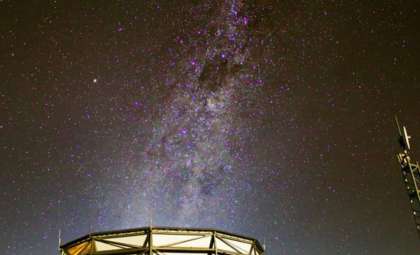
A team led by astrophysicist Jacco van Loon from Keele University conducted detailed observations of the star between November 2024 and December 2025 using the Southern African Large Telescope (SALT). Employing advanced spectroscopy, they detected the presence of titanium oxide within WOH G64's stellar atmosphere.

The published research highlights that this chemical evidence contradicts previous interpretations that associated the star’s dimming and dusty surroundings with a transition to yellow hypergiant status.
“This implies that WOH G64 is currently a red supergiant and may never have ceased to be,” said van Loon in a statement. He likened the finding to a “phoenix rising from the ashes.”
Earlier assumptions about the star’s evolutionary stage were partly based on a high-resolution image captured by the Very Large Telescope in Chile. That image revealed an “egg-shaped cocoon” of gas and dust enveloping the star, leading scientists to believe it had shed its outer layers in preparation for eventual collapse. The fresh SALT findings now cast doubt on this scenario.
Binary Star System Could Explain the Peculiar Phenomena
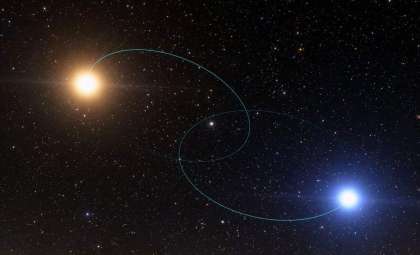
The new study also introduces the possibility of a binary companion influencing the star’s observed behavior. Researchers propose that WOH G64 may share its system with a smaller, blue star exerting gravitational influence, potentially pulling material from the supergiant.
This gravitational interplay could account for the unusual cocoon-like structure identified in 2024. The team suggests that the star’s outer layers are being distorted by the companion’s presence rather than being fully expelled into space.
“The atmosphere of the red supergiant is being stretched out by the approach of the companion star, but it has not been stripped altogether,” van Loon explained.
While the idea of a companion star had previously been considered when the dusty cocoon was first detected, it did not gain widespread acceptance. The current findings, supported by extensive spectral data, provide stronger evidence warranting renewed discussion of this hypothesis.
- Categories:
- Space





0 comments
Sign in to Comment