
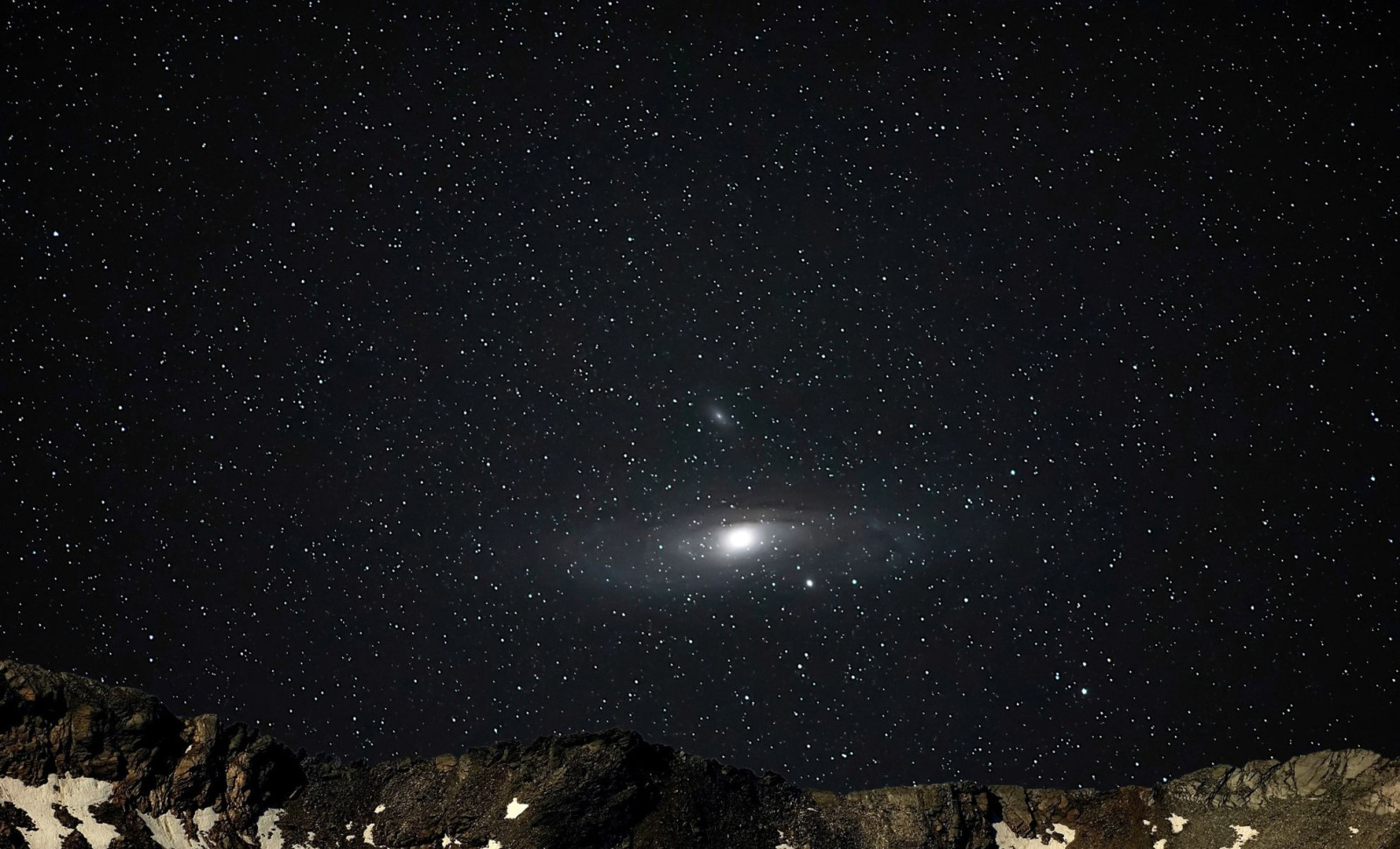
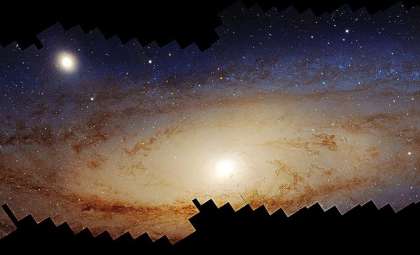
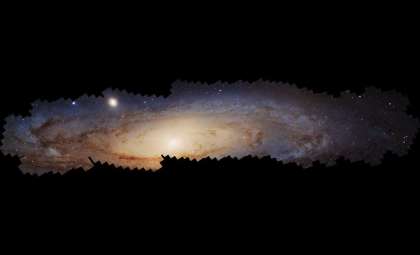
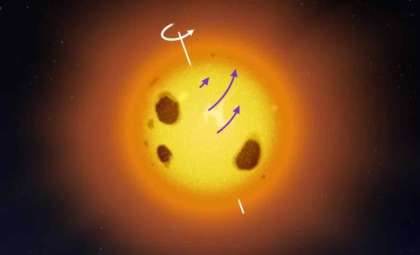
An enormous star in the Andromeda Galaxy has mysteriously disappeared, leaving researchers intrigued and searching for answers. Initially detected brightening in 2014, the yellow supergiant known as M31-2014-DS1 faded from view by 2018 without exhibiting any supernova signs. Presently, two new studies propose different theories to explain this stellar enigma.
The unexplained vanishing of M31-2014-DS1 questions established perspectives on stellar death in massive stars. Typically, stars of its scale end with a massive explosion before collapsing into a neutron star or black hole. However, this star brightened for a period, then gradually dimmed without any explosive finale.
Could This Be a Failed Supernova?
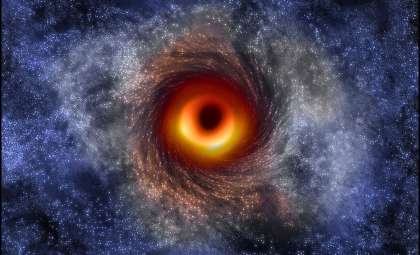
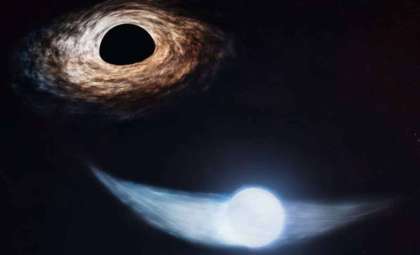
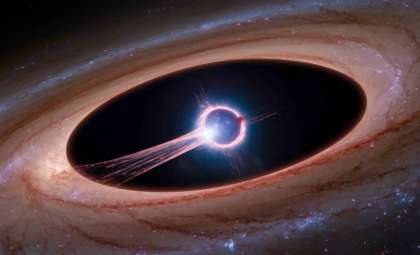
One prominent hypothesis, based on observations from the James Webb Space Telescope (JWST) and Chandra X-ray Observatory, suggests that the star underwent a failed supernova—directly collapsing into a black hole without the usual explosive event. Posted on arXiv and supported by a second paper also on arXiv, researchers highlight a dim, deeply red source in the original position of M31-2014-DS1. This faint remnant is now just 7 to 8 percent as luminous as the initial star and surrounded by a substantial dust shell spanning 40 to 200 astronomical units.

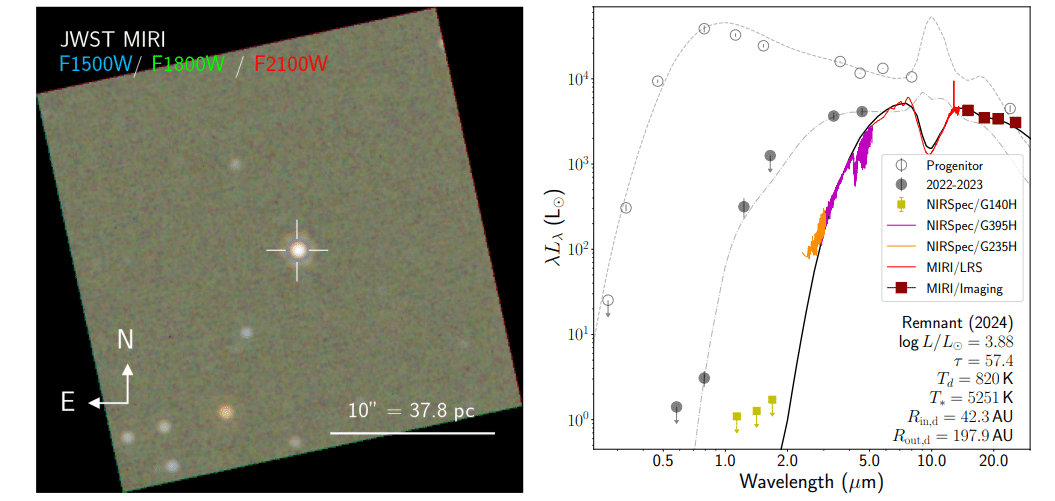
The scientists suggest that the infrared glow and the enveloping dust originate from fallback material, gas expelled during the star’s collapse which subsequently falls back onto the newborn black hole. Their preprint states:
“The accretion luminosity is not detected in X-ray observations to ~100 times deeper limits than the IR luminosity,” suggesting the surrounding dust might be absorbing the X-rays, making them undetectable from Earth.
This scenario fits with the notion that a thick dust shroud is blocking the high-energy X-ray emissions normally emitted during black hole formation.
Absence of X-ray Signals Raises Questions
However, an alternative team disputes this idea of a failed supernova. They analyzed multiple X-ray observations from Chandra (2015 and 2024) and Swift (2020) and found no evidence of X-ray activity where the star disappeared. This is unexpected since fallback accretion onto a black hole should emit persistent X-rays for potentially thousands of years.
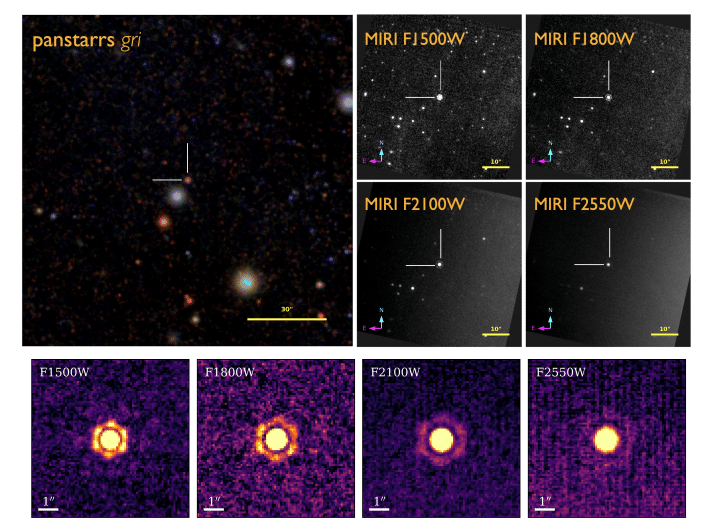
They also note that the residual dim red source remains relatively steady in brightness, which contradicts the expected fading in a failed supernova scenario as fallback material dwindles. This led the team to conclude:
“Several observational details challenge the interpretation of M31-2014-DS1 as a failed SN.”
Could a Stellar Merger Explain the Mystery?
In light of these inconsistencies, the second group proposes another explanation—a merger event between two stars. They suggest the faint red object and heavy dust presence might result from two stars colliding and blending into a new star enveloped in dense dust. This would justify the brightening recorded in 2014 and its gradual dimming as the dust cloud expands.
This merger hypothesis also accounts for the lack of X-ray emissions and the consistent infrared signal, since no black hole accretion would be occurring. The researchers predict the system might brighten once more as the dust clears, revealing the central object. As both research teams emphasize, ongoing observation—especially using JWST—will be essential to distinguish between a failed supernova and a stellar merger in the coming years.
- Categories:
- Space


0 comments
Sign in to Comment