
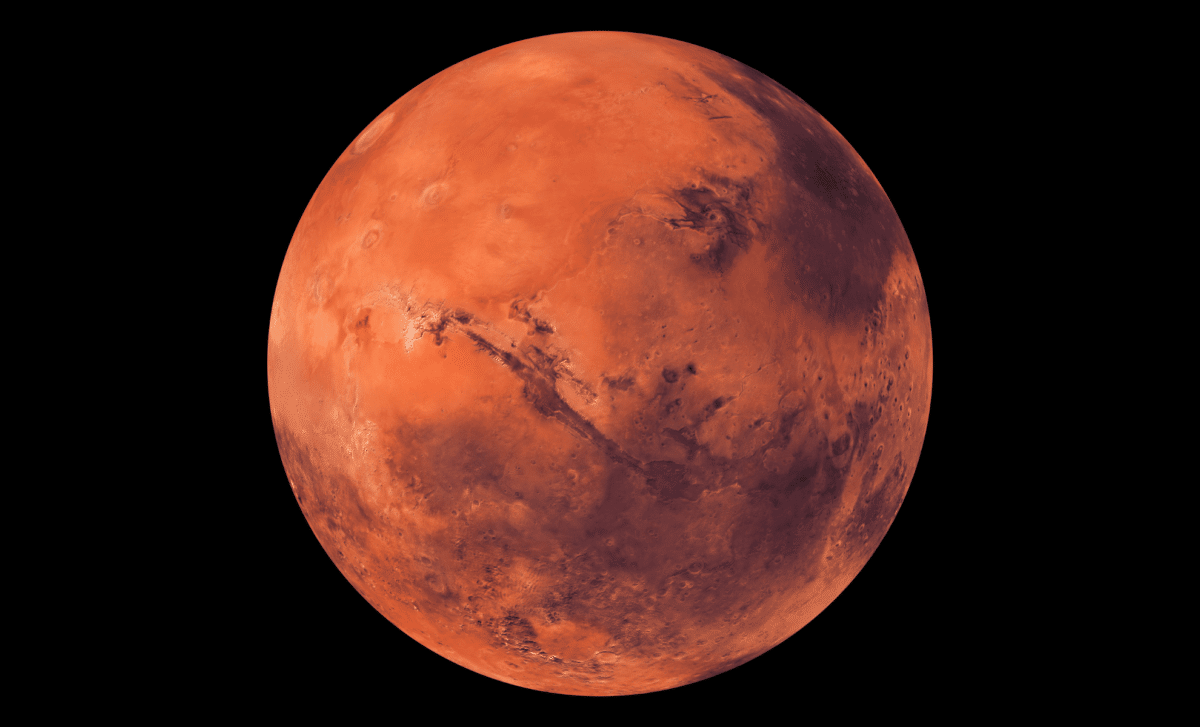
Scientists at the Institute of Atmospheric Physics (IAP) under the Chinese Academy of Sciences have introduced the GoMars model, an innovative simulation capable of replicating a full Martian year right here on Earth. Unveiled in Advances In Atmospheric Sciences, this cutting-edge tool offers new understanding of the dynamic processes shaping the Mars atmosphere, providing valuable data for upcoming Chinese planetary missions.
Recreating Mars’ Climate Cycle: A Major Scientific Advancement
The GoMars initiative is designed to emulate Mars’ entire atmospheric behavior, including dust storms, temperature variations, and carbon dioxide cycle fluctuations that define its extreme environment. Operating as an advanced Mars General Circulation Model (MGCM), it models the span of a full Martian year — approximately 687 Earth days — capturing complex climate phenomena beyond the reach of shorter studies.
This model marks a pioneering step for China as the first fully autonomous system capable of synthesizing data from orbiters and rovers into a unified simulation framework.

“The Martian dust cycle is a complex system with significant diurnal, seasonal, and interannual variability. Accurately simulating this cycle remains a core goal—and a major challenge—in the development and refinement of Mars general circulation models (MGCMs), which will support China’s future Mars exploration missions,” said Liu Shuai, a Ph.D. candidate at IAP and first author of the study.
With GoMars, experts can investigate how dust uplift, atmospheric flows, and solar energy combine to trigger planet-wide dust storms — powerful events that can obscure the sun’s rays for extended periods.
Advancing Planetary Climate Modeling to New Heights
In contrast to previous models that largely depended on NASA or ESA data, GoMars uniquely blends international observations with regional modeling parameters. Beijing’s supercomputers have been used to intricately simulate dust transport and temperature changes that affect Mars’ tenuous atmosphere and its heat distribution mechanisms.
This sophisticated modeling reveals crucial patterns in pressure gradients and thermal tides, illustrating why Mars’ atmosphere is extraordinarily responsive to minor dust variations. Findings from this research are expected to significantly influence China’s Mars orbiter program slated for launch in the early 2030s.
“Our next step will focus on enhancing the model’s resolution while continuously optimizing its dynamical core and physical parameterizations,” said Prof. Dong Li, co-author of the study. “Key improvements will include integrating more realistic data on surface dust and sand sources, refining the representation of dust-related physical processes, and expanding the model to simulate the Martian water cycle.”
From Virtual Mars to Real-World Exploration: The Importance of GoMars
Published in Advances In Atmospheric Sciences, the GoMars model strengthens China’s autonomous capabilities in planetary research and enriches the global knowledge of atmospheres beyond Earth. Its detailed framework can be adapted to study exoplanet climates or other rocky worlds with thin atmospheres, such as Venus or Titan.
Beyond scientific discovery, these insights hold practical value for mission logistics. Accurately forecasting dust storm cycles and atmospheric disturbances will aid in optimizing the design of landing technologies, aerobraking procedures, and solar energy management for spacecraft. As China progresses with its Tianwen program, GoMars is poised to become an essential tool for managing surface activities, testing habitats, and supporting long-term robotic exploration efforts.
- Categories:
- Astronomy






0 comments
Sign in to Comment