
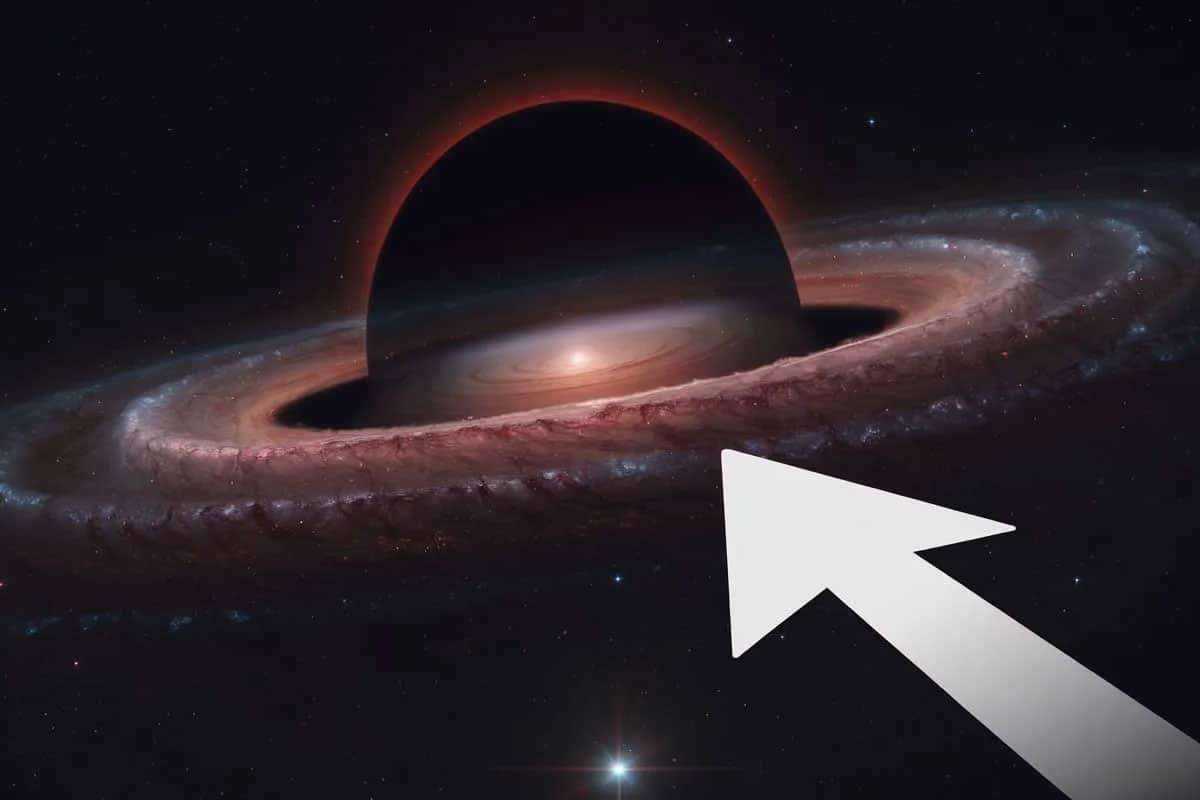
About 13.7 billion years ago, the universe underwent a remarkable phase called cosmic inflation, a fleeting epoch of swift expansion that laid the foundation for everything we observe in the cosmos today. During this time, tiny quantum fluctuations appeared, resembling delicate waves rippling across an immense cosmic sea.
Though these quantum irregularities were incredibly small, they were instrumental in sculpting the universe's structure. As inflation expanded the universe, these initial fluctuations grew larger and more pronounced, eventually leading to the formation of galaxies, clusters, and vast cosmic webs.
Groundbreaking research from Johns Hopkins University physicists has provided fresh insights into the behavior of these quantum fluctuations. Their findings indicate that when these minor variations are intensified through nonlinear effects, they can profoundly influence the universe's overall evolution — akin to the butterfly effect in chaos theory, where minor events can trigger massive changes.

Black holes: possible gateways to other universes?
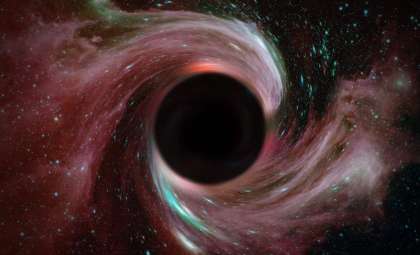
One compelling implication of this research is that quantum fluctuations might instigate black hole creation from collapsing pockets within the cosmos. Unlike typical black holes formed from dying stars, these could potentially encase entirely separate universes inside them.
This idea resonates with modern hypotheses suggesting that our own cosmos may reside within a black hole, challenging conventional Big Bang paradigms. The possibility that black holes serve as passages to alternate universes opens extraordinary avenues for exploring multiverse concepts and the fundamental nature of reality.
Consider these fascinating ramifications of the theory:
- Each black hole might encompass a distinct universe, governed by its unique laws of physics
- Our visible universe could be just one among infinite nested realities within a grander cosmic framework
- Long-standing black hole information paradoxes might find resolution by acknowledging these embedded universes
The endless expansion of cosmic inflation
Simulations by the research group reveal an additional captivating scenario: in some theoretical models, the universe could become locked in a phase of eternal inflation. This would depict a perpetually expanding cosmos, continuously spawning new regions of space-time.
While this eternal growth suggests limitless possibilities, it might also hinder the emergence of life as we know it. The ongoing rapid expansion would inhibit matter from coalescing into stars, planets, and complex structures crucial for life’s existence.
To illustrate these differences, here is a comparison between cosmological perspectives:
Traditional CosmologyModel of Eternal InflationInflation ends after a finite timeInflation continues indefinitelyStructure formation allowedLarge-scale formation may be suppressedSingle observable universePossibility of multiple bubble universes
Illuminating the shadowy epoch after inflation
Though the initial cosmic inflation phase is fairly well characterized through observations like the cosmic microwave background and galaxy mapping, the subsequent era remains elusive. This so-called dark age of inflation has stayed beyond the reach of traditional electromagnetic detection methods.
Thanks to advances in gravitational wave astronomy, researchers now have new tools to probe this mysterious epoch. Innovative numerical simulations are breaking new ground, enhancing our comprehension of the universe’s earliest moments.
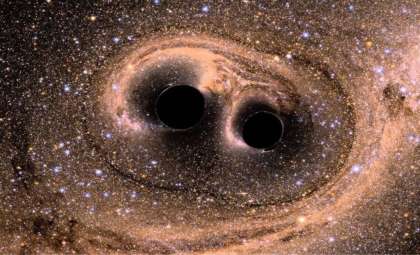
These pioneering models suggest the possibility of multiple pairs of black holes colliding, producing spectacular cosmic events that could unlock crucial clues about space-time and fundamental physics.
The work carried out by Angelo Caravano, Keisuke Inomata, and Sébastien Renaux-Petel represents a milestone in primordial universe research. By integrating cosmology with chaos theory and high-level computational methods, their studies offer new pathways toward understanding our cosmic roots and future trajectory.
As we delve deeper into the enigma of black holes and the dawn of the universe, it becomes clearer that the butterfly effect’s influence might span far beyond expectations, ultimately shaping the very essence of reality. Exploring these mysteries promises both excitement and profound revelations about our vast and remarkable cosmos.
- Categories:
- Astronomy






0 comments
Sign in to Comment