
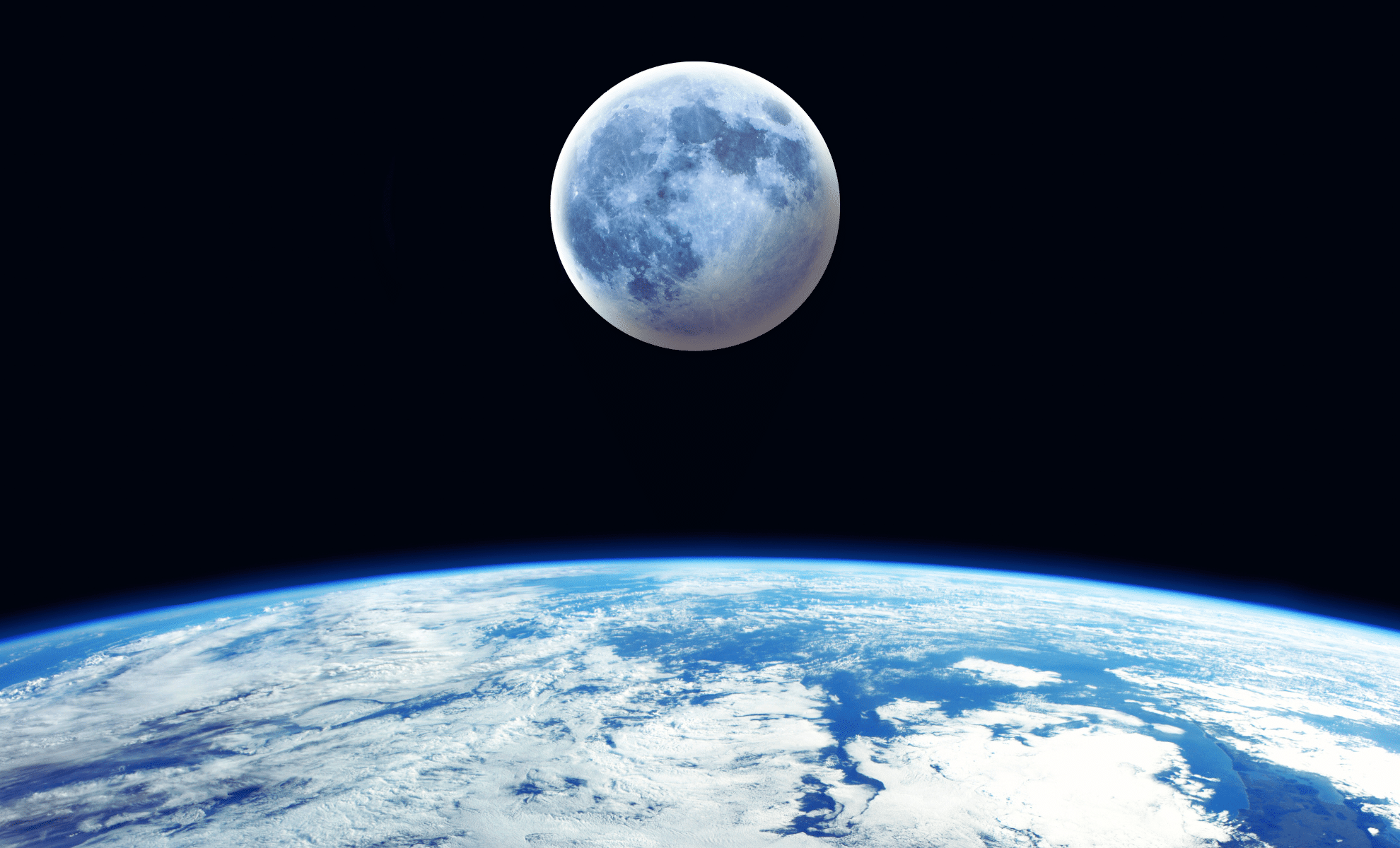
Our nearest cosmic neighbor, the Moon, is gradually distancing itself from Earth. A comprehensive analysis featured on The Conversation reveals that the Moon moves roughly 1.5 inches (3.8 centimeters) farther away from our planet annually. Though subtle, this steady drift highlights the profound gravitational forces shaping the Earth-Moon system over billions of years.
Understanding the Earth-Moon Distance Dynamics
The investigation confirms that “the Moon is getting 1½ inches (3.8 centimeters) farther away from the Earth every year.” While this increment seems minor, its cumulative effect over vast time scales underscores the intricate gravitational interplay at work. Scientists employ highly precise techniques, such as firing laser beams at retroreflectors left on the lunar surface by astronauts, to measure the distance with exceptional precision. By timing the travel of light to the Moon and back, researchers monitor how the Moon’s orbit changes.
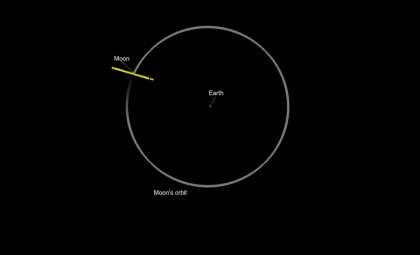
Moreover, the Earth-Moon distance is not fixed. “The distance to the Moon actually changes over a single month as it goes around the Earth.” Due to its elliptical orbit, the Moon’s distance varies during each revolution, averaging approximately 239,000 miles (385,000 kilometers). The orbit fluctuates by nearly 12,400 miles (20,000 kilometers), causing variations in the Moon’s apparent size. When the Moon is nearest to Earth, these larger appearances are termed “supermoons.”

These monthly fluctuations influence phenomena like ocean tides and enhance our grasp of celestial mechanics. The ongoing increase in average separation distance, about 1.5 inches yearly, stems from complex tidal interactions.
The Role of Tidal Forces in the Moon’s Recession
To grasp why the Moon drifts away, one must consider tidal forces, the critical factor in this process. Tidal effects emerge from gravitational pulls that cause Earth’s oceans to bulge toward the Moon and on the opposite side of Earth.
Because Earth spins, these tidal bulges are slightly ahead of the Moon’s position. This offset exerts a gravitational force on the Moon, nudging it forward along its orbit. “The Moon’s gravity is strongest on the closer side of the Earth, creating a bulge of water pointing toward the Moon,” according to the research. This forward tug causes the Moon’s orbit to expand gradually, pushing the satellite outward.
Implications of the Moon’s Outward Spiral: Earth’s Day Lengthens
The Moon’s outward journey does not occur in isolation. As its orbit enlarges, Earth’s rotation slows down in response. This occurs because Earth transfers some of its rotational energy to the Moon, accelerating the satellite while decelerating Earth’s spin. Consequently, our days become incrementally longer.
Though this effect is extremely subtle, the research notes that “the exchange makes a day get very slightly longer,” by only tiny fractions of a second each century. Over immense periods, these incremental changes accumulate, subtly shifting Earth-Moon dynamics.
Is the Moon Destined to Escape Earth’s Grip?
Considering the Moon’s slow recession, one might question if it will at some point break free from Earth’s gravitational influence. The study clarifies that such an event is not expected anytime soon. Billions of years from now, Earth’s rotation may decelerate until it becomes tidally locked with the Moon, causing Earth’s day length to match the Moon’s orbital period, halting further recession.
Before this tidal locking could occur, a significant cosmic transformation is predicted: “In a billion years or so, the Sun will get brighter and boil away the oceans,” the research states. Since tides depend heavily on these oceans, this process will alter tidal effects profoundly. Moreover, the Sun’s lifecycle will eventually turn it into a red giant, probably engulfing both Earth and its lunar companion.
Therefore, while the Moon is steadily moving away, it poses no immediate concern. These gradual changes will unfold over timescales far beyond human history.
- Categories:
- News




0 comments
Sign in to Comment