
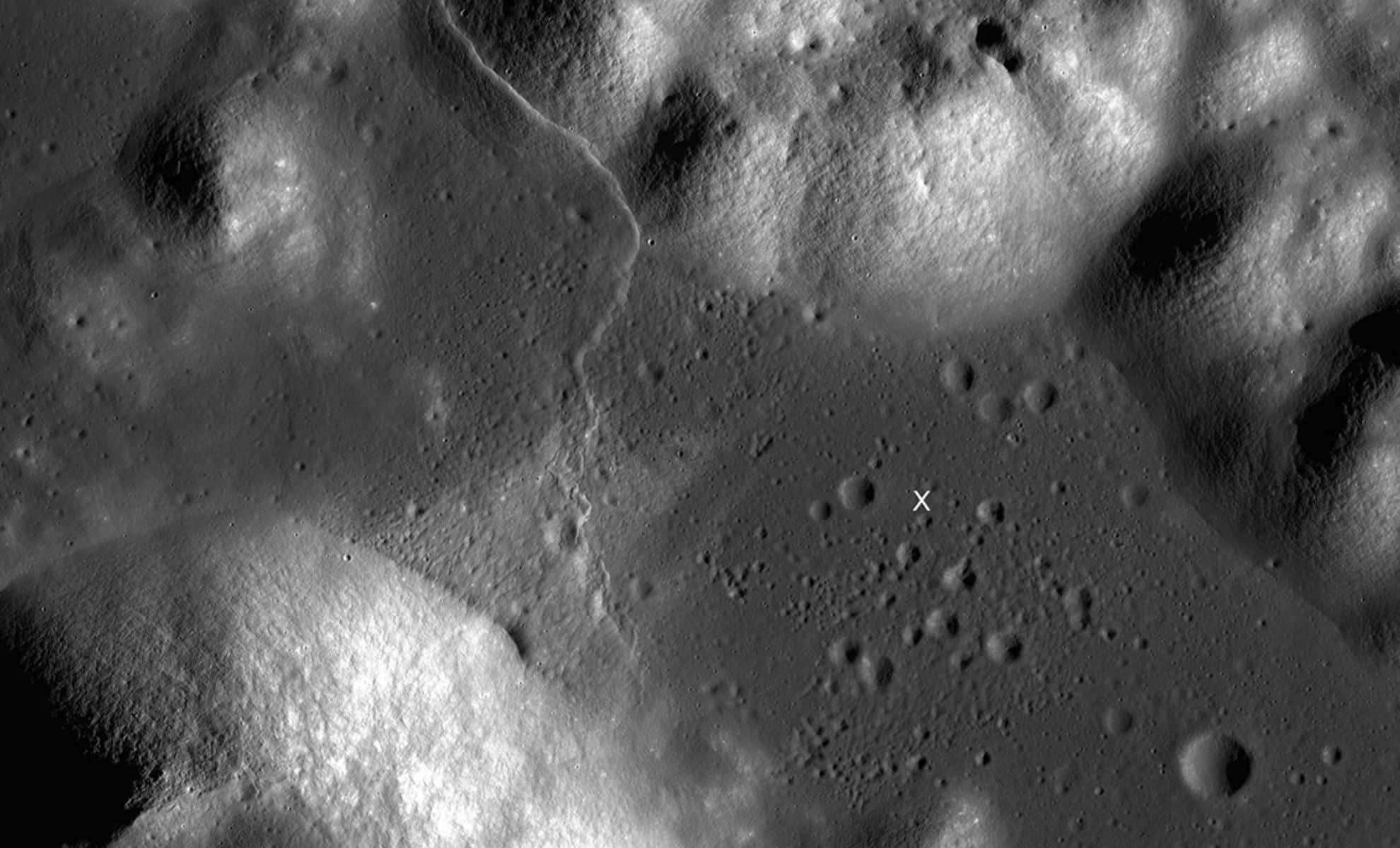
As NASA advances its plans to revisit the Moon through the Artemis III mission, recent research is revolutionizing our understanding of seismic risks on the lunar surface. Published in Science Advances, this study introduces an innovative approach to predict the frequency and intensity of moonquakes by integrating insights from the Apollo missions and data gathered by the Lunar Reconnaissance Orbiter (LRO). These findings are crucial for planning stable locations and durable designs for lunar habitats, especially around the Moon's south pole, Artemis III's primary landing zone.
Combining Historic Apollo Evidence with Modern LRO Observations
Researchers utilized a distinctive fusion of data from Apollo 17 surface rock samples alongside over a decade's worth of high-resolution images taken by the LRO, which has orbited the Moon since 2009. These resources enabled detailed investigations into lunar surface disruptions such as rock displacement and landslide occurrences near known fault lines, prominently the Lee-Lincoln fault within the Taurus-Littrow Valley, where Apollo 17 landed in 1972.
By evaluating the degree of cosmic radiation exposure on boulders, scientists determined the exposure timelines of these rocks, uncovering when they were dislodged—events linked to seismic occurrences on the Moon. These geological traces are now shedding new light on the Moon's crustal dynamics and seismic activity.

Determining Moonquake Frequency and Impact Strength
This method allowed researchers to gauge that moonquakes measuring approximately magnitude 3.0 happen along the Lee-Lincoln fault roughly every 5.6 million years. Despite their apparent rarity, these quakes' consequences for lunar outposts are profound. Unlike Earth’s seismic events, moonquakes can endure for several hours, posing significant risks to habitats, mission activities, and critical equipment stability.
Beyond magnitude, the proximity of structures to active faults seriously influences risk levels. As Thomas Watters, senior scientist emeritus at the Smithsonian’s National Air and Space Museum, highlighted:
“The hazard probability goes way up depending on how close your infrastructure is to an active fault.”
Seismic dangers vary significantly across the lunar surface, making the identification of higher-risk zones vital for the design of resilient lunar stations. These insights assist mission teams in selecting geologically stable areas to minimize hazards for astronauts and robotic explorers during extended missions.
Reevaluating Lunar Seismic Activity for Upcoming Expeditions
While the Moon was once thought to be largely inactive geologically, this research indicates otherwise. Although overall activity is lower than on Earth, the existence of active fault systems, especially near planned Artemis landing areas, demands more conservative mission strategies. The study overturns past beliefs by revealing that seismic events are unequally distributed and might be more persistent over time.
“One of the things we’re learning from the Lee-Lincoln fault is that many similar faults have likely had multiple quakes spread out over millions of years,” said Nicholas Schmerr, planetary seismologist and co-author of the study.
“This means that they are potentially still active today and may keep generating more moonquakes in the future.”
This shift prompts NASA to move beyond assumptions of minimal lunar seismicity toward actively pinpointing threat zones. This knowledge is essential for identifying optimal sites for prolonged missions as Artemis aims to establish a continuous human presence on the Moon.
Enhancing Lunar Seismic Monitoring Networks
To bolster these advancements, NASA plans to upgrade its seismic observation infrastructure on the Moon. The forthcoming Farside Seismic Suite will feature two sensitive seismometers deployed at the Schrödinger Basin on the lunar far side. Operated under NASA’s Commercial Lunar Payload Services (CLPS), this mission will monitor seismic activity in an untouched region.
Simultaneously, the Lunar Environment Monitoring Station is in development for potential deployment during Artemis III. Co-led by Schmerr, this instrument package will deliver immediate seismic data from the Moon’s south pole, aiding crewed and robotic exploration safety measures. These technologies are expected to greatly improve NASA’s predictive capabilities for moonquakes, influencing both infrastructure design and astronaut protection policies.
Collectively, this new generation of equipment will revive lunar seismic studies unseen since the final Apollo seismometer stopped working in 1977. Armed with updated data, scientists will better simulate lunar tectonic processes, optimize facility placements, and engineer structures able to endure lengthy moonquakes.
- Categories:
- News









0 comments
Sign in to Comment