
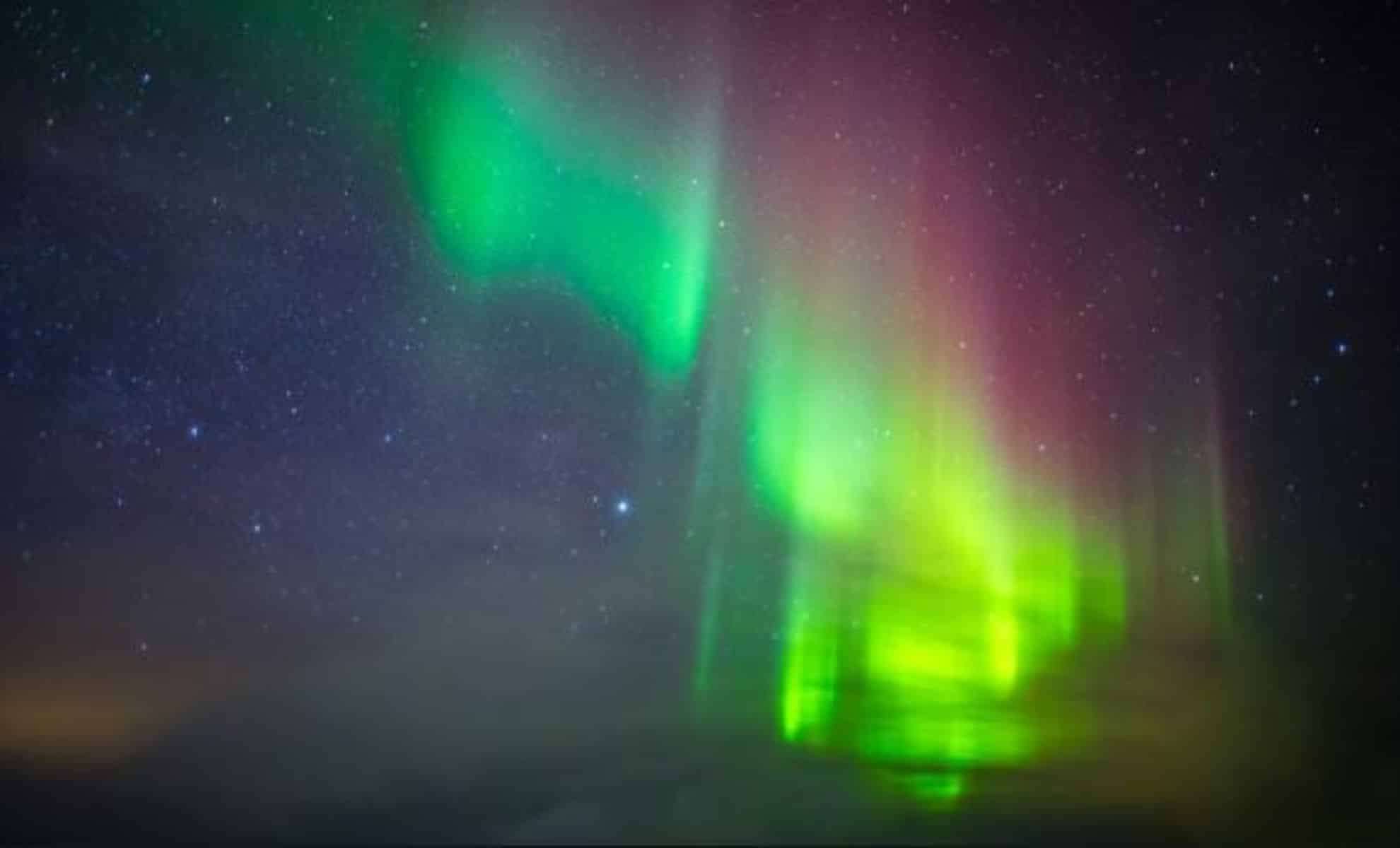
The mesmerizing aurora borealis, commonly known as the northern lights, is set to illuminate the skies across the northern United States this evening, reaching farther south than usual thanks to an approaching geomagnetic storm. The National Oceanic and Atmospheric Administration (NOAA) reports that up to 10 states could witness this spectacular natural display, offering a rare spectacle for many residents.
This remarkable show arises from a coronal mass ejection (CME)—a powerful release of charged plasma from the Sun that occurred earlier this week. When this solar eruption interacts with Earth's magnetic field, it triggers vivid auroral lights in the upper atmosphere. NOAA predicts a Kp index between 4 and 5 on the geomagnetic scale, signaling a moderate storm likely to produce impressive auroras.
Best Locations and Timing for Viewing
The northern lights could be seen in the northernmost U.S. states tonight, including Montana, North Dakota, Wisconsin, and Maine, with possible sightings dipping as far south as northern Nebraska. NOAA's guidance, available at this link, suggests optimal viewing between 10 p.m. and 2 a.m. local time, provided skies remain clear and lighting conditions are favorable.

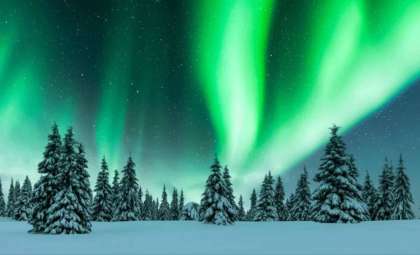
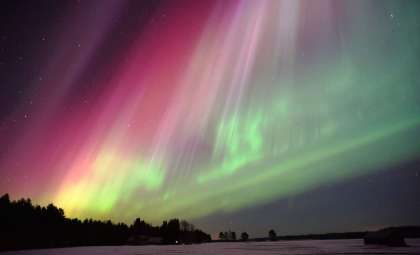
Friday night's storm is expected to strengthen, potentially enabling aurora visibility in additional states such as Iowa, New York, New Hampshire, and Vermont. Viewers might witness glowing shades of green, purple, and red, colors produced when electrons collide with oxygen and nitrogen molecules in Earth’s atmosphere.
For the best experience, NOAA recommends seeking out dark, unobstructed locations with a northern horizon view. Even if the aurora is faint to the eye, night mode on smartphone cameras can often capture its vibrant glow.
Understanding the Phenomenon
The aurora borealis results from a captivating interaction between solar activity and Earth’s magnetic environment. When a CME delivers high-energy particles toward Earth, they are guided by our planet’s magnetic field toward the polar regions, where collisions with atmospheric gases cause excitement in molecules that emit photons during relaxation—a process known as excitation and relaxation.
The Sun is currently nearing the peak of its 11-year solar cycle, termed the solar maximum, anticipated by NASA to peak in 2026. This phase brings increased solar storms, which have recently generated extraordinarily bright auroras, including a record event in 2024 that extended visibility to Texas and northern Florida.
This week’s ongoing geomagnetic storm, driven by the latest CME, exemplifies the dynamic space weather conditions. NOAA forecasts heightened activity for the coming days, presenting an excellent window for aurora enthusiasts.
A Unique Journey into Cosmic Phenomena
The northern lights stand among the most breathtaking natural events, combining visual splendor with scientific intrigue. While usually confined to high latitudes near the poles, strong geomagnetic storms allow this spectacle to occur much further south than normal.
The luminous curtains dancing across the night sky not only delight spectators but also offer valuable scientific insight into the complex relationship between the Sun and Earth. They reveal the intricate interplay of magnetic forces and solar particles essential for life on our planet.
For many, witnessing the aurora borealis is a rare and unforgettable experience, and the current geomagnetic activity creates an outstanding chance to see this extraordinary sky display. As these radiant lights sweep overhead, they evoke wonder and remind us of the vast universe surrounding our world.
- Categories:
- News







0 comments
Sign in to Comment