
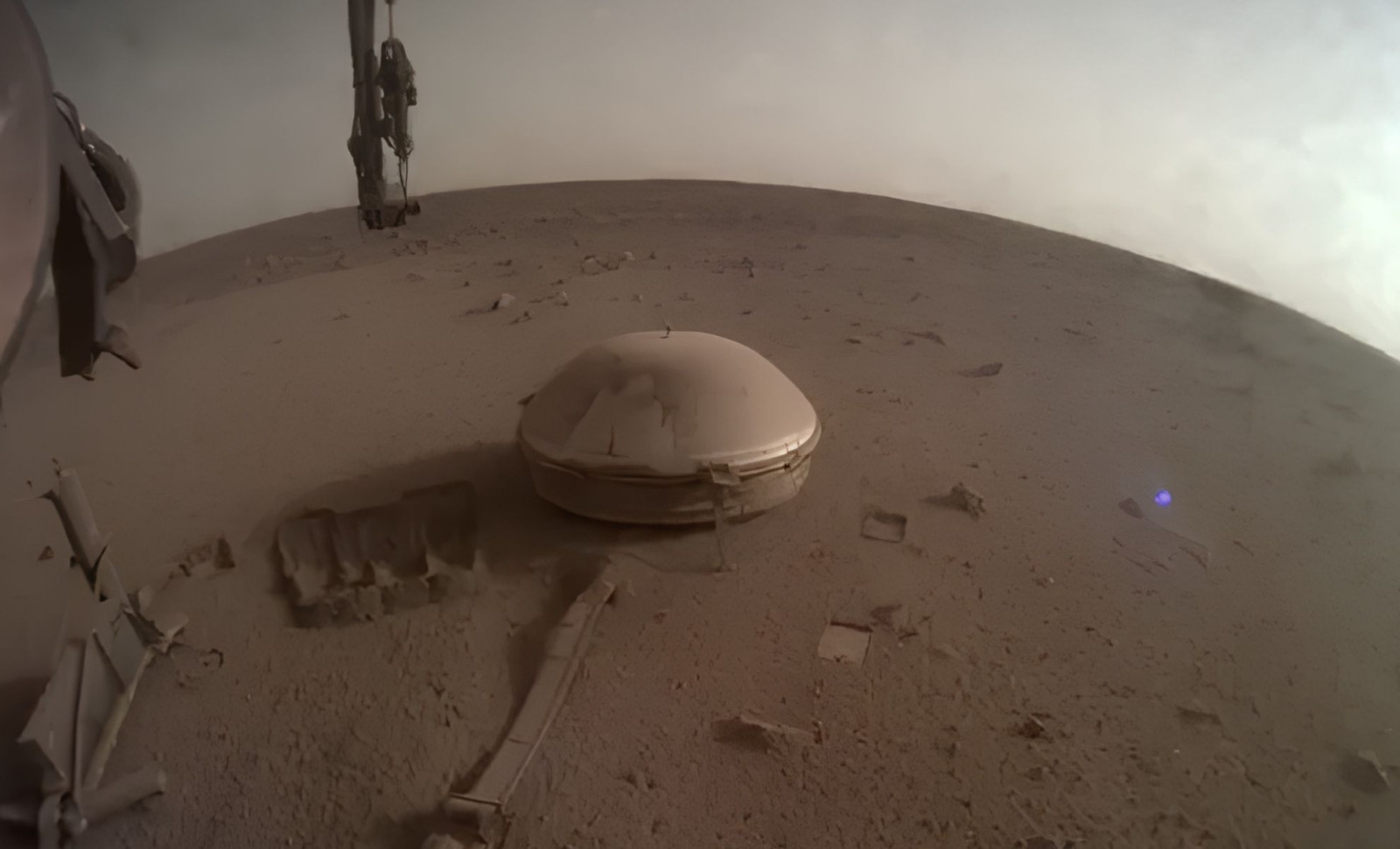
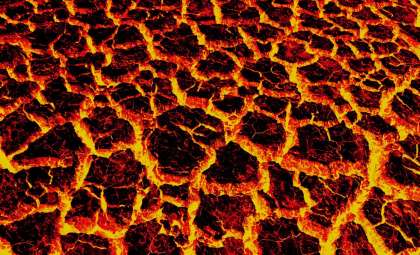
Recent seismic investigations suggest that Mars once harbored immense magma chambers beneath its surface, indicating a far more intricate internal structure than previously assumed. Data from NASA’s InSight lander points to ancient molten rock formations that could reshape our understanding of the planet’s geological past.
Traditionally, Mars has been thought to possess a straightforward crustal setup. Unlike Earth, where plate tectonics continually remodel the crust through volcanic and seismic activity, Mars was believed to have a rigid outer shell with a relatively uniform crust.
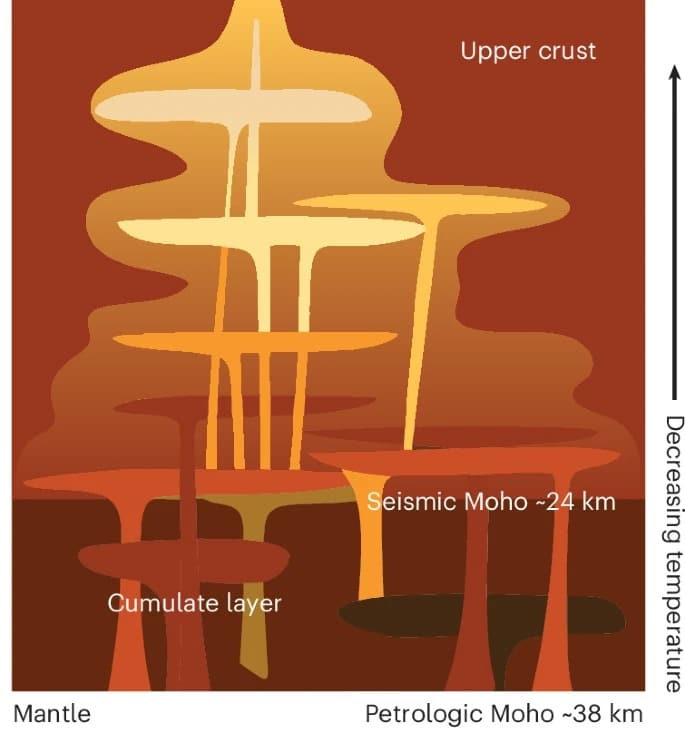
However, groundbreaking work published in Nature Astronomy reveals a distinct subsurface boundary approximately 15 miles (24 kilometers) beneath the Martian surface. These findings imply that extensive magma reservoirs once existed underground, enabling molten material to differentiate into various layers before solidifying and forming the crust we observe today.

InSight Lander Exposes Subsurface Martian Layers
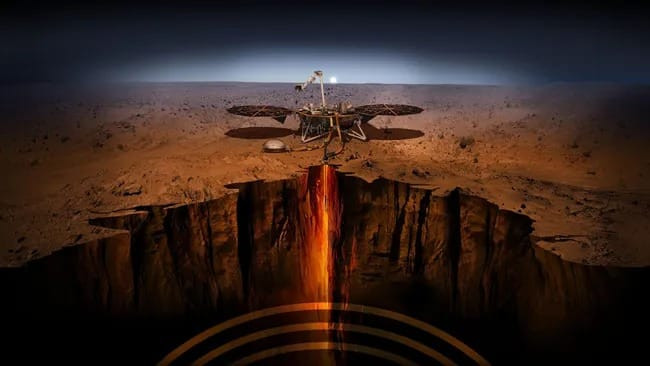
During its four-year mission, NASA’s InSight lander recorded seismic waves from marsquakes triggered by meteorite impacts and internal planetary processes. The speed variations of these waves through different rock types let scientists peer beneath the surface.
This effort uncovered a previously unexplained crustal boundary. Researchers at the University of Oxford matched the seismic signatures with geothermal models, revealing that the upper crust comprises mainly mafic rock rich in iron, magnesium, and silica. Beneath lies a denser ultramafic rock layer, low in silica but abundant in iron and magnesium, extending about 8.7 miles (14 kilometers) deeper before reaching the mantle.
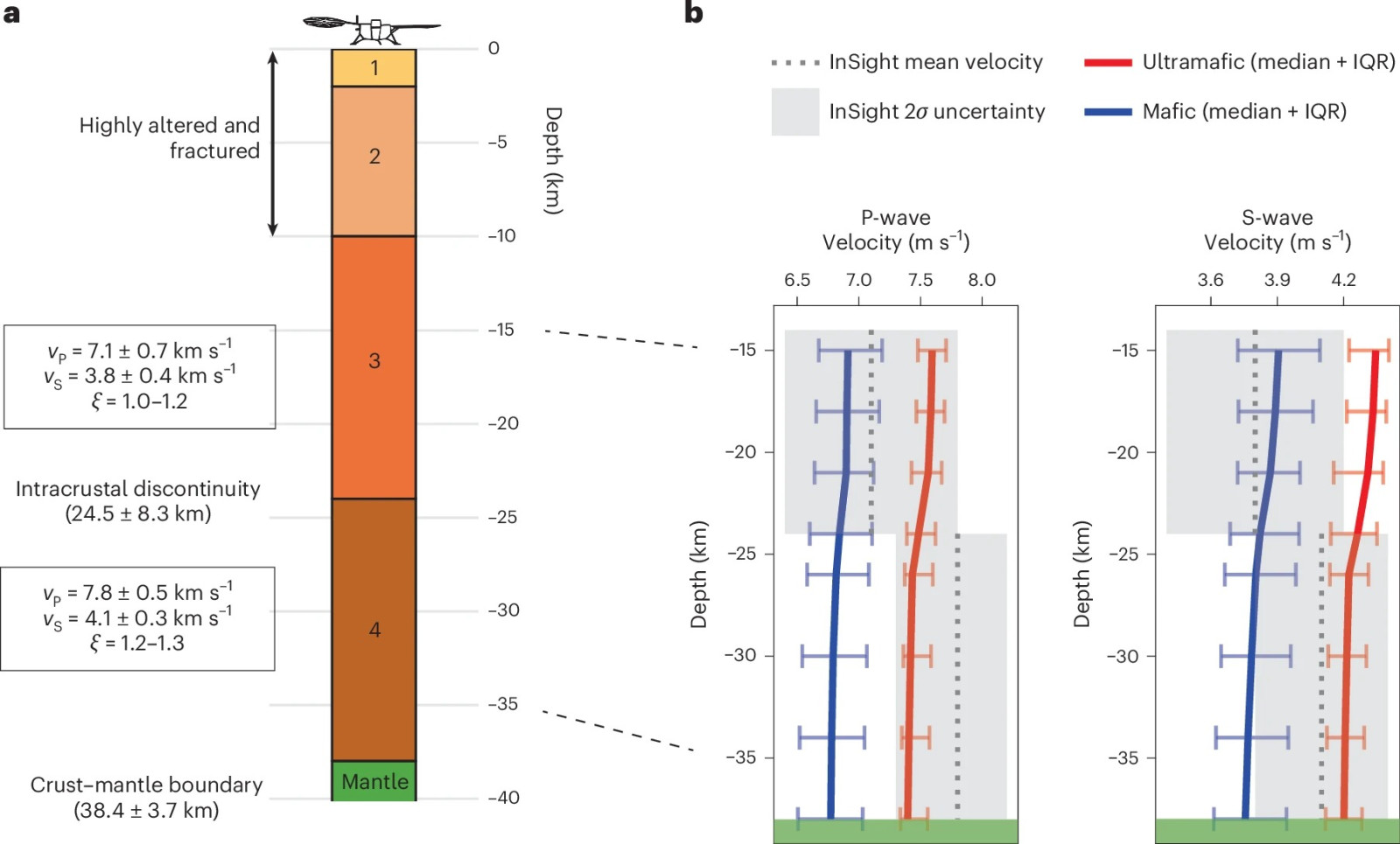
The June 26 publication in Nature Astronomy attributes this stratified composition to magmatic differentiation, a process where heavier materials sink while lighter molten rock solidifies above.
Massive Magma Networks May Spread Beneath Mars’ Surface
The study also suggests these magma chambers are not isolated features fueling individual volcanoes. Instead, molten rock may have created extensive interconnected reservoirs extending for hundreds or thousands of kilometers beneath the Martian crust. This network would connect famed volcanic landmarks like Olympus Mons and the Tharsis volcanic plateau rather than treating them as separate entities.
Tobermory Mackay-Champion, lead author now at the University of Bristol, explained how this insight challenges previous assumptions about Martian volcanism.
“We’ve traditionally assumed that volcanism on Mars was relatively simple compared to that on Earth, but this discovery suggests that the planet could sustain massive, long-lived magmatic systems capable of evolving and reprocessing molten rock throughout the crust,” he said.
The team notes that this kind of transcrustal magmatism had so far only been observed on Earth.
A Fresh View on Mars’ Early Evolution
The researchers propose that these magma chambers formed as molten material ascended from deep within Mars, causing heating and partial melting of the crust. Similar geological processes shaped Earth during the Archaean Eon, roughly 4 to 2.5 billion years ago.
They also suggest that such widespread volcanic activity could have contributed greenhouse gases to Mars’ early atmosphere. But in time, Mars lost much of its gaseous envelope and water, likely due to its weak gravitational hold and lack of a magnetic shield. Jon Wade from the University of Oxford pointed out how this discovery may expand our understanding of planetary habitability.
“If Mars could develop this kind of complex crust without plate tectonics, then maybe the conditions needed for habitability can emerge on more planets than we realized, including those previously dismissed based on size or their apparent lack of tectonic activity,” he said.
Additionally, repetitive cycles of molten rock may have transported mineral deposits closer to the Martian surface than once thought. Mackay-Champion remarked:
“Mars may hold significantly more near-surface mineral wealth than previously recognized, boosting its potential for future mining, crewed missions and, eventually, permanent settlements.”
- Categories:
- Science



0 comments
Sign in to Comment