
Scientists have identified an enormous magma chamber lurking deep below Tuscany, Italy, unnoticed for ages. This vast underground magmatic system rivals those beneath famous supervolcanoes like Yellowstone. The discovery, led by the University of Geneva alongside Italian research centers, was made possible by analyzing data from a seismometer array that mapped Tuscany’s underground features.
Tuscany’s Geothermal Landscape Reveals Unexpected Depths
Known for its geothermal springs and thermal activity, Tuscany has long attracted scientific interest. However, the newly found magma reservoir far exceeds prior expectations. According to Matteo Lupi, the project’s lead scientist, the scale of this magma body was wholly unforeseen.
“We knew that this region, which extends from north to south across Tuscany, is geothermally active, but we did not realize it contained such a large volume of magma, comparable to that of supervolcanic systems such as Yellowstone,” as mentioned in the release.
Add Cosmo Herald as a Preferred Source

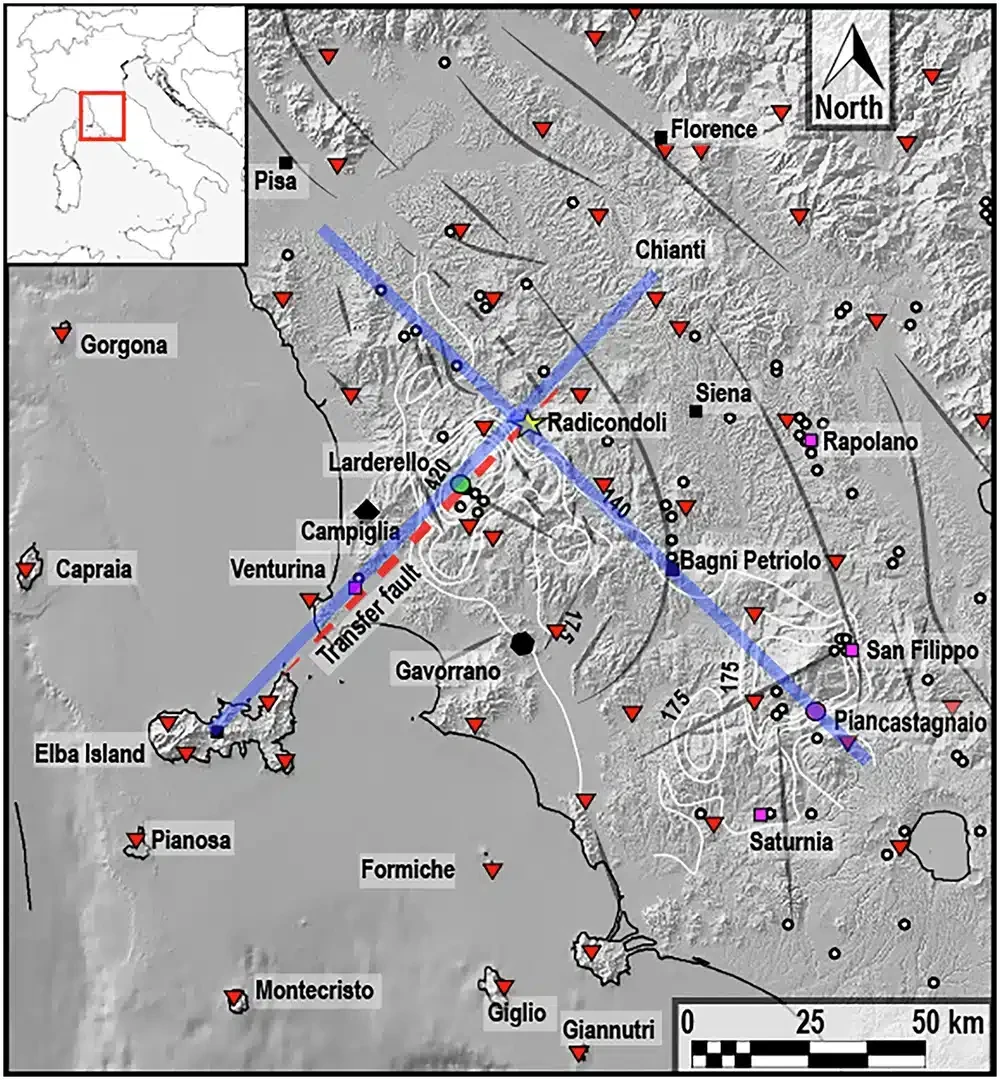
Unlike supervolcanoes known for eruptions, this massive magma formation lies quietly beneath the surface, showing no signs of explosive activity despite its size.
Seismic Methods Illuminate the Deep Magmatic Body
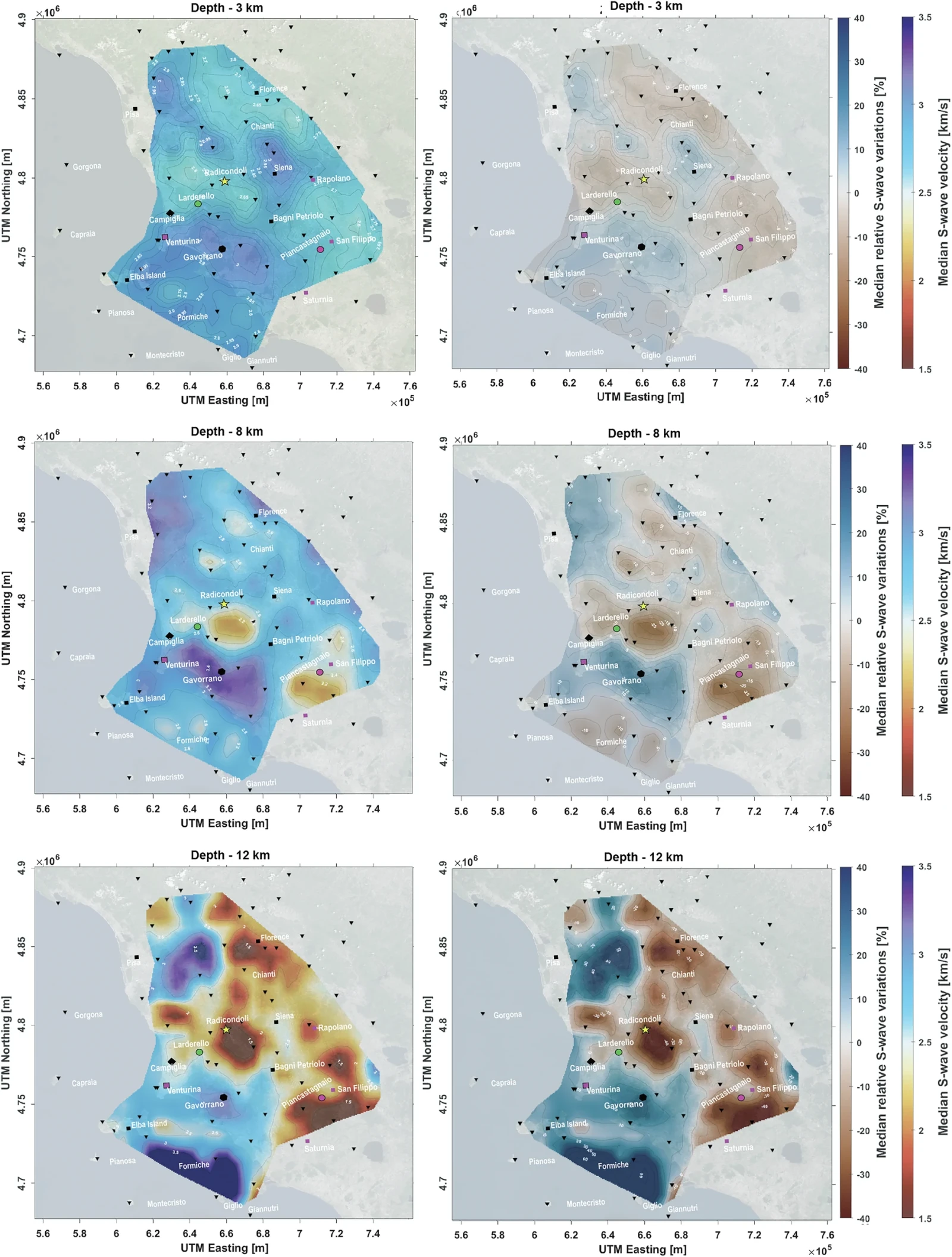
The research, reported in Communications Earth & Environment, utilized seismometers—special instruments sending waves through the Earth’s layers to create detailed subterranean maps. This approach enabled scientists to model the crust down to a depth of 15 kilometers and uncover the extensive magma network beneath Tuscany.
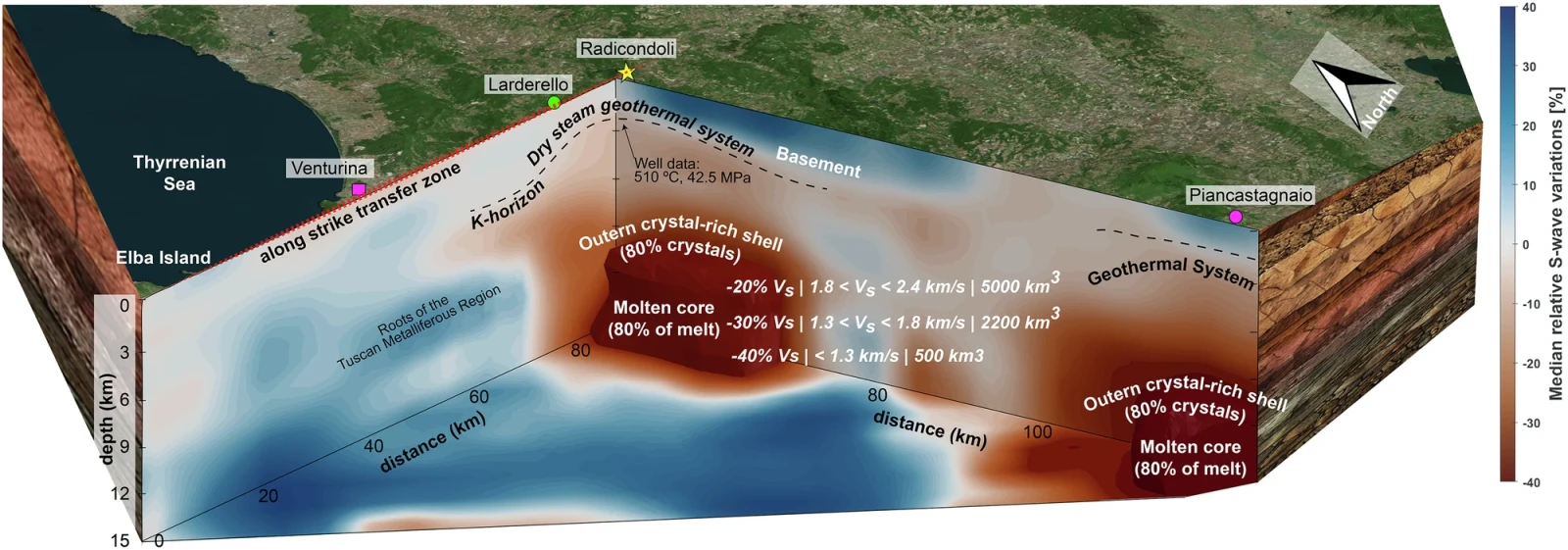
Seismic mapping offers a quick, cost-effective way to explore underground structures, with potential benefits extending beyond volcanology to identifying geothermal sites and rare mineral deposits such as lithium and rare earth elements.
“These results are important both for fundamental research and for practical applications, such as locating geothermal reservoirs or deposits rich in lithium and rare earth elements, which are used, for example, in electric vehicle batteries.”
The Mystery of the Dormant Magma
One of the most compelling questions raised by this discovery is why such a large magma body has not triggered any volcanic eruptions. The study's authors acknowledge this remains an unresolved puzzle.
“The reason why this large amount of melt never gave rise to eruptions is enigmatic and debated,” they said.
This insight into why some magma chambers remain inactive could improve predictions of volcanic hazards worldwide. The researchers concluded:
“Such partial melts may help understand the long-term evolutionary processes taking place at volcanic systems that featured super-eruptions and in regional-scale high-enthalpy systems that have not (yet?) erupted.”
- Categories:
- Science



0 comments
Sign in to Comment