
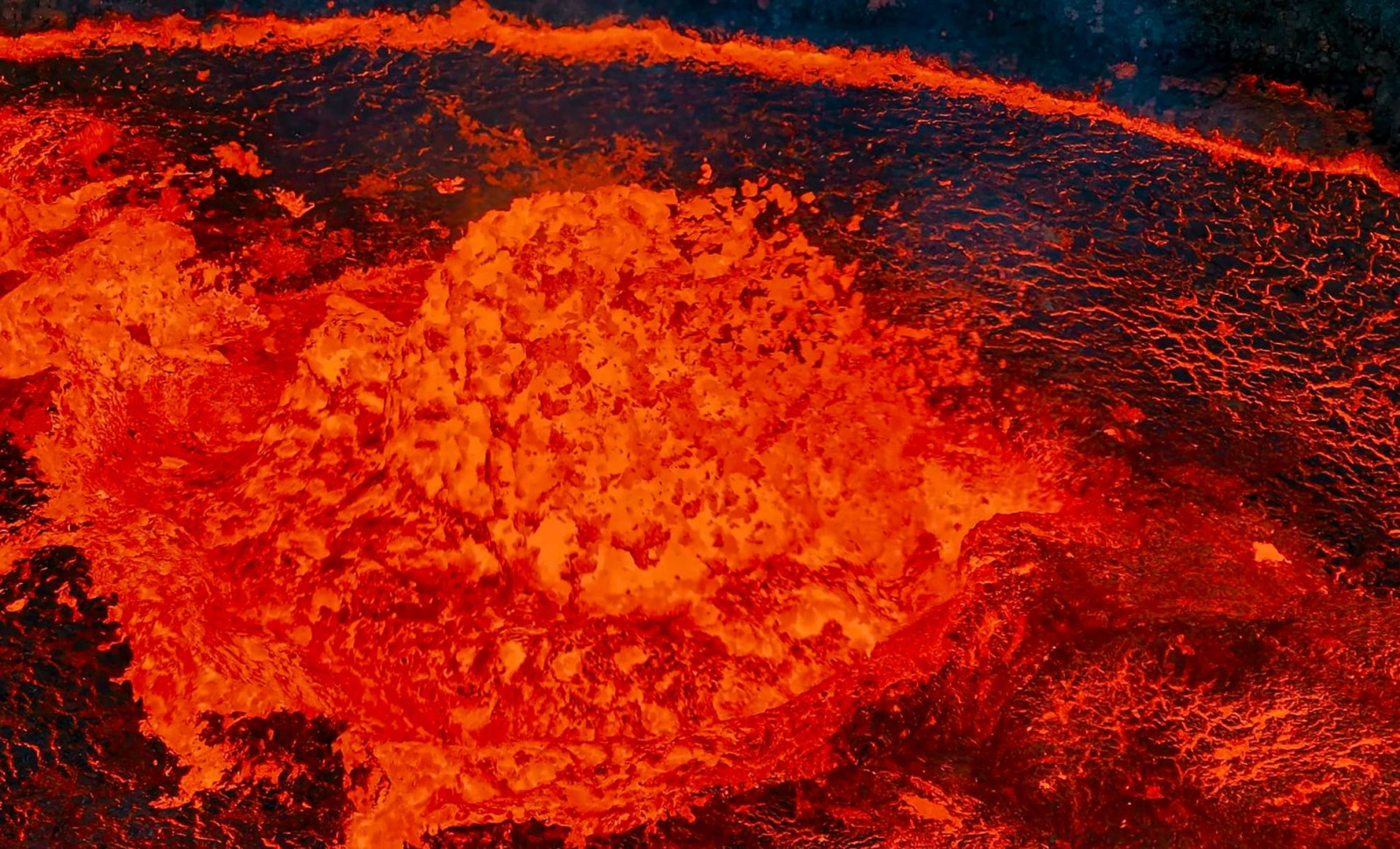
In March 2022, the Azores’ São Jorge Island experienced intense seismic activity, hinting at extraordinary underground processes. Researchers from University College London (UCL) later uncovered that a colossal volume of magma—equivalent to 32,000 Olympic-sized pools—was ascending from deep below. For several tense days, the island came alarmingly close to erupting.
The molten material surged rapidly from depths exceeding 20 kilometers, with most of its ascent initially producing minimal seismic noise. It wasn’t until the magma approached the upper crust that the frequency of earthquakes increased dramatically, leaving scientists to wonder just how narrowly São Jorge escaped a volcanic eruption.
Experts emphasize the importance of investigating such concealed magma movements to better comprehend the growth and development of volcanic islands. While these deep magma intrusions don’t always culminate in eruptions, they significantly influence the gradual transformation of the landscape. The findings, published in Nature Communications, come from an integration of seismographic data, satellite observations, and GPS tracking, enabling an unprecedented reconstruction of the magma’s subsurface trajectory.

Unseen Magma Surge Alters the Island’s Crust
Dr. Stephen Hicks from UCL Earth Sciences described how the magma swiftly ascended through the crust within a few days. “It was mostly a silent journey,” he remarked, highlighting the challenges in forecasting such phenomena.
Satellite measurements detected an uplift of about six centimeters on São Jorge’s surface, confirming the magma’s incursion into shallower layers. Ultimately, the molten rock halted its rise approximately 1.6 kilometers below ground, resulting in what scientists call a “failed eruption.”
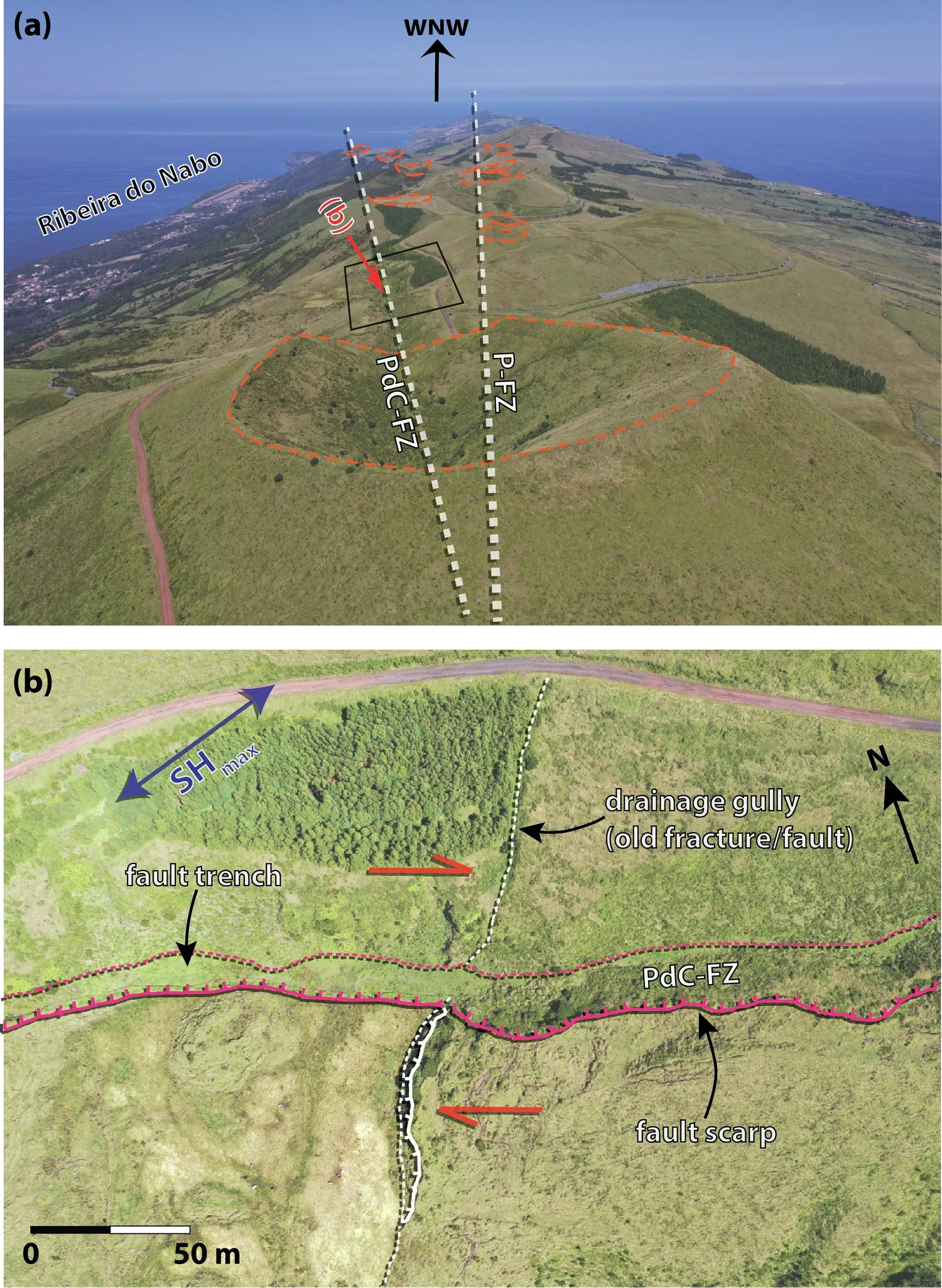
Unlike a typical eruption that breaks through the surface, a failed eruption occurs when magma approaches the crust’s near-surface zones but does not breach them, leaving only minimal geological disturbances visual above ground.
Magma Routed Along Fault Line
The research identifies the Pico do Carvão Fault Zone as the main channel nurturing the magma’s ascent. The intrusion generated thousands of minor tremors distributed along this fault rather than one significant quake. Dr. Pablo J. González from the Spanish National Research Council commented:
“The fault acted like both a highway and a leak. It helped magma rise, but may also have prevented an eruption.”
This venting effect probably eased pressure within the magma chamber and stopped the molten rock from surfacing, thereby averting an eruption.
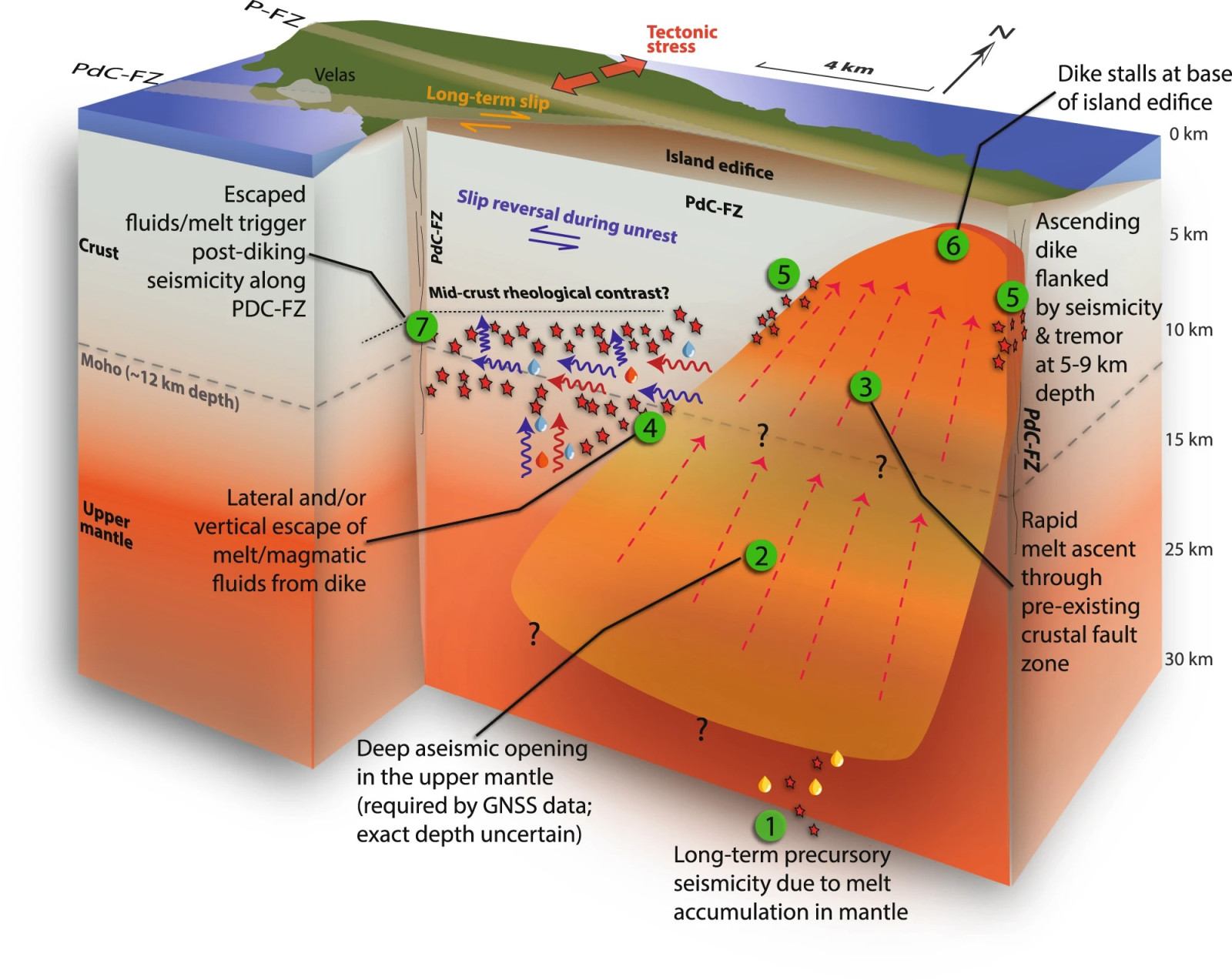
The dual function of the fault illustrates how geological features can govern volcanic processes by guiding magma and enabling the escape of fluids and gases, which can act as natural pressure relief mechanisms.
Highly Detailed Mapping of Subsurface Magma Movement
To chart the magma’s route, the team utilized seismometers stationed both on São Jorge and on the surrounding Atlantic seabed, complemented by GPS data and satellite imagery.
“This study supported local authorities in assessing a potential volcanic threat, highlighting the value of combining onshore and offshore geophysical data for accurate detection and localization of seismic events and ground deformation,” noted Dr. Ricardo Ramalho of Cardiff University noted.
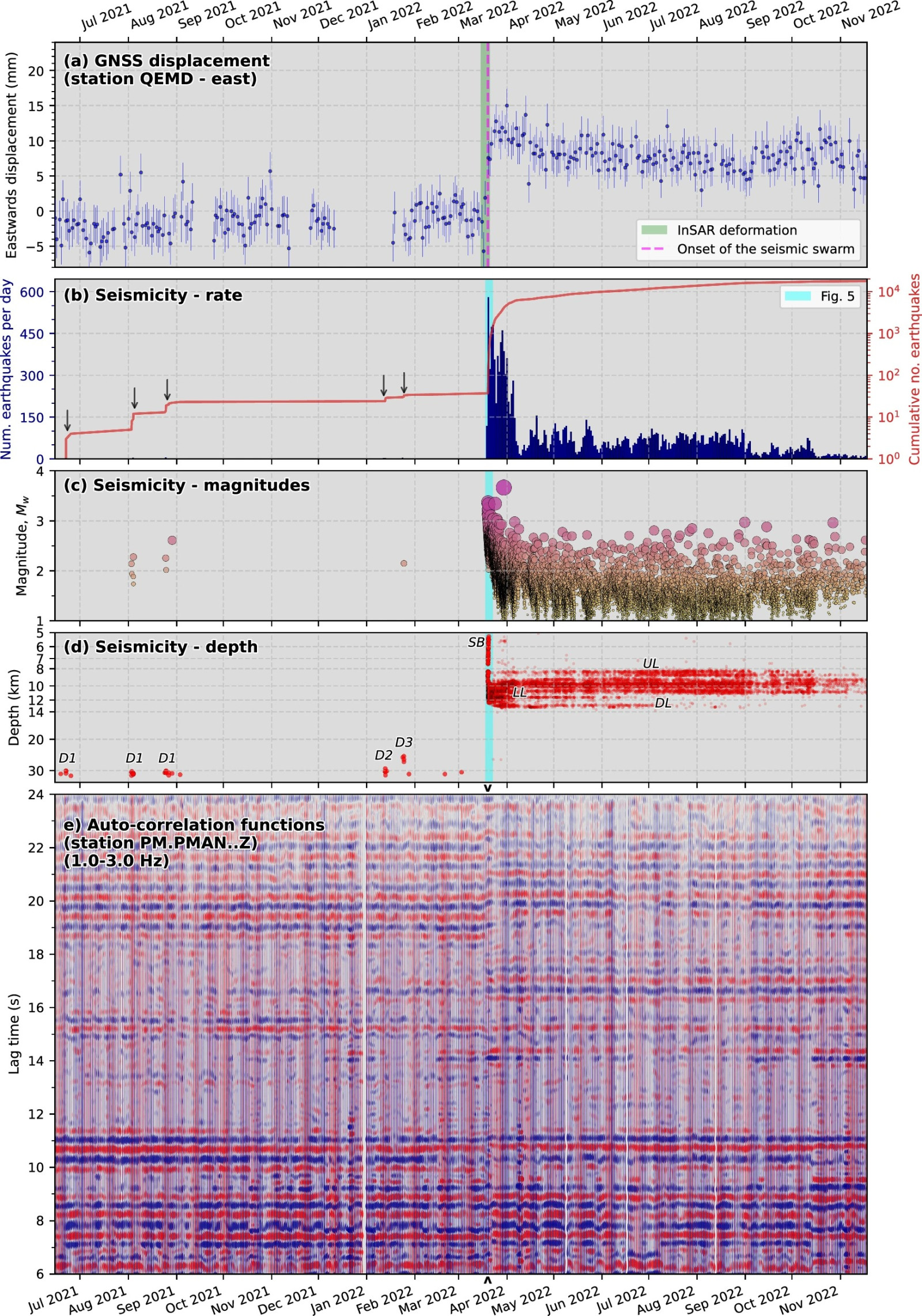
The detailed mapping provides some of the clearest insights to date into the complex interactions between magma, faults, and the surrounding crust beneath volcanic islands.
The São Jorge episode reveals how immense magma masses can swiftly migrate underground with minimal warning. Although no eruption occurred, the thousands of earthquakes generated valuable data informing scientists worldwide about the volcanic processes shaping the island.
- Categories:
- Science





0 comments
Sign in to Comment