

A telescope carried by a high-altitude balloon has achieved one of the most detailed studies of the turbulent area surrounding a black hole. Operating from the stratosphere, the instrument targeted Cygnus X-1, a prominent stellar-mass black hole. Instead of capturing direct images, scientists analyzed the polarization of emitted X-rays to uncover its mysteries. These observations offer innovative approaches to exploring matter under extreme gravitational forces.
Exploring Black Hole Phenomena From the Edge of Space
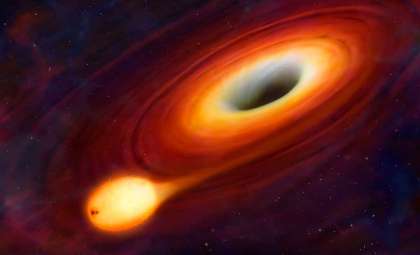
Elevated far above the Earth's atmospheric interference, the X-Calibur balloon telescope examined X-ray signals coming from Cygnus X-1, a luminous X-ray emitter and a black hole system discovered in the 1960s. Recently featured in The Astrophysical Journal, the findings shed light on how matter behaves just before being consumed by the black hole’s intense gravitational pull.
Instead of conventional imaging, researchers relied on measuring X-ray polarization, which reveals patterns in how light waves are oriented after interacting with magnetic fields and material near a black hole. This method provides valuable information about the structure and dynamics of the accretion disk, the swirling matter spiraling inward.

“The observations we made will be used by scientists to test increasingly realistic, state-of-the-art computer simulations of physical processes close to the black hole,” said Henric Krawczynski, the Wilfred R. and the project’s principal investigator.
These new insights promise to close gaps between theoretical models and actual observations, a challenge that has long confronted black hole science.
Why Polarization Unlocks Secrets Hidden to Direct Imaging
Unlike optical telescopes that produce clear images, X-ray polarization does not create traditional pictures of black holes. Instead, it reveals how X-ray light changes after intense interactions with gravity and surrounding matter. This technique is especially effective for Cygnus X-1, whose direct visual signals are difficult to isolate.
“If we try to find Cyg X-1 in the sky, we’d be looking for a really tiny point of X-ray light,” said Jingwei Gau, one of the lead researchers on the project. “Polarization is thus useful for learning about all the stuff happening around the black hole when we can’t take normal pictures from Earth.”
This balloon mission complements the work of space-based instruments such as NASA’s Imaging X-ray Polarimetry Explorer (IXPE). Together, these datasets enable astrophysicists to identify patterns and test models simulating how high-energy radiation interacts with magnetic fields and plasma in extreme gravitational environments.
“Combined with the data from NASA satellites such as IXPE, we may soon have enough information to solve longstanding questions about black hole physics in the next few years,” added Krawczynski.
Key issues include understanding black hole growth, jet formation from their poles, and the role of magnetic fields in guiding infalling matter.
Advancing Astronomy Through Balloon-Borne Platforms
The achievements of the X-Calibur mission demonstrate that balloon-borne astronomy is a cost-effective yet powerful approach for high-energy astrophysics. Operating above more than 99.5% of Earth's atmosphere, these telescopes avoid many distortions and absorption effects that challenge ground observations, especially in the X-ray spectrum.
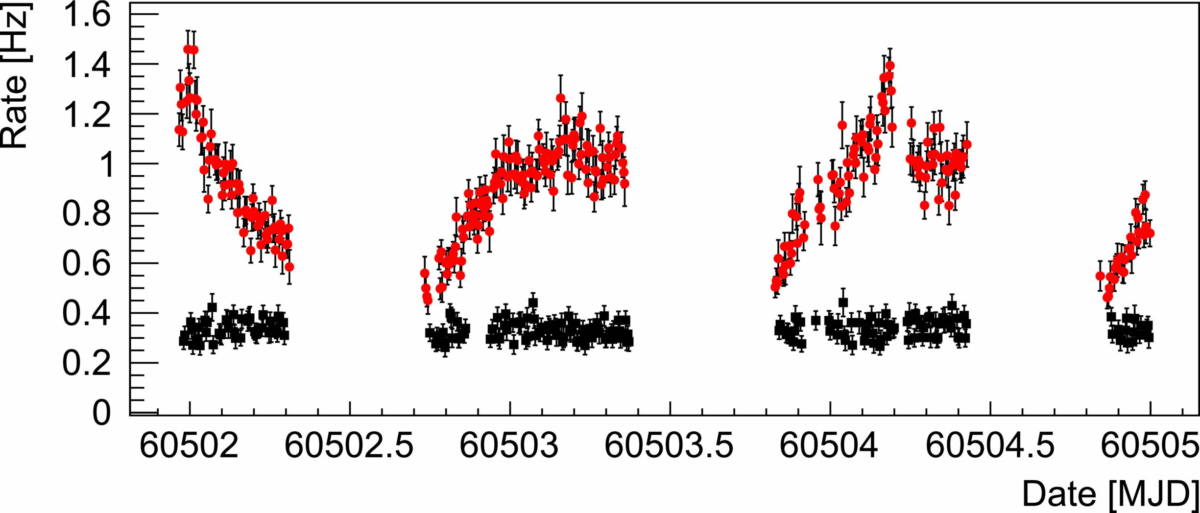
This mission involved meticulous planning as it launched from Esrange Space Center in Sweden, traveling across the Arctic to Canada. It collected nearly fortnight's worth of continuous X-ray data, tracking polarization changes as the black hole system rotated, effectively providing different viewing angles of the accretion mechanism.
These results could guide the development of future missions and more sensitive instruments capable of simultaneously observing many black holes. The ability to chart energy and matter dynamics in relativistic contexts may pave the way for rigorous tests of Einstein’s theory under some of the universe’s most extreme conditions.
Making Strides Toward Unraveling Cosmic Enigmas
Though studying an entity that cannot be directly seen might seem paradoxical, scientists are increasingly adept at interpreting the signatures black holes imprint on their surroundings. From gravitational light bending near the event horizon to subtle rotations of X-ray photons, black holes manifest measurable effects.
Thanks to X-Calibur and similar efforts, a richer understanding is emerging—one that might significantly alter our views on gravity, spacetime, and stellar evolution. As observational techniques and technology advance, the coming decade promises transformative progress in black hole research.
- Categories:
- Physics









0 comments
Sign in to Comment