
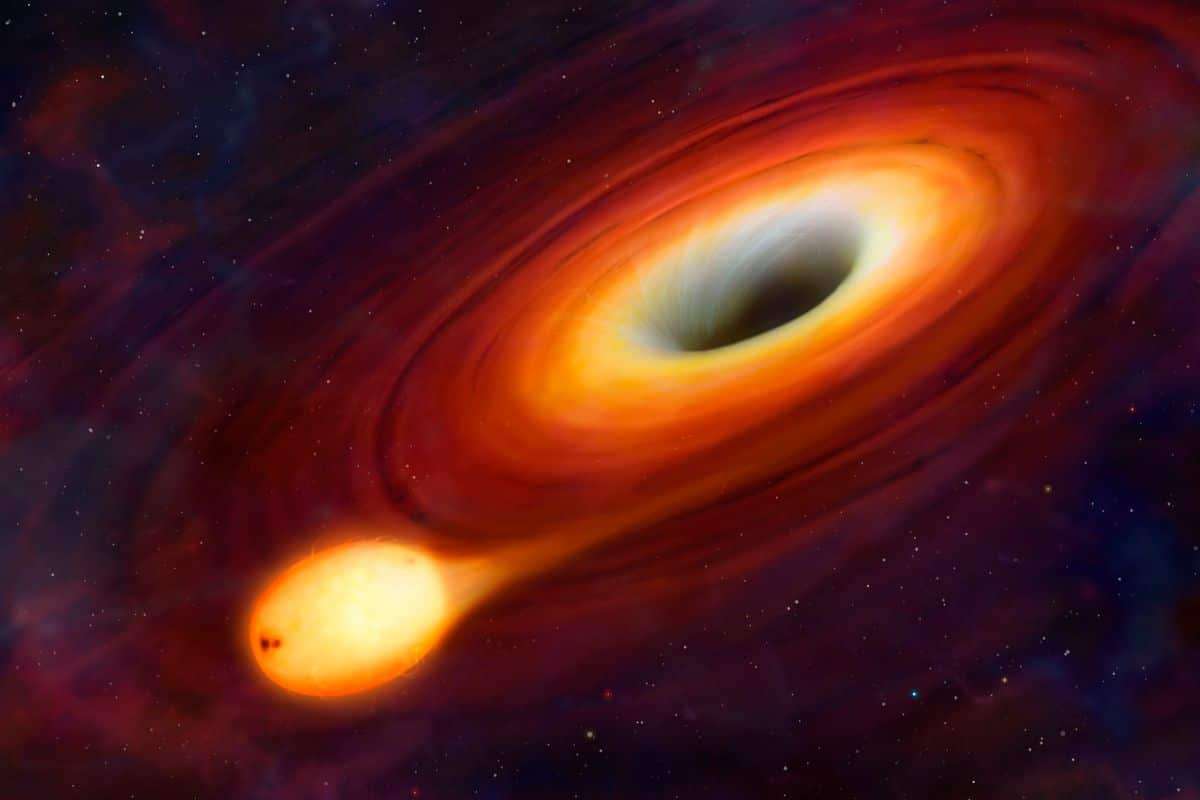
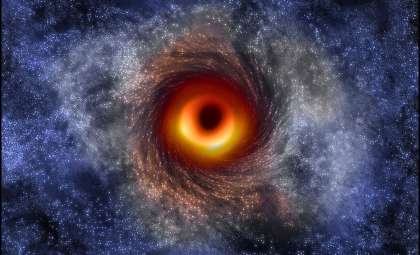
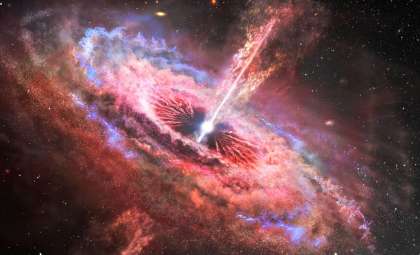
Supermassive black holes lie at the centers of most large galaxies, including our own Milky Way. These enormous objects periodically consume vast amounts of interstellar material, activating their active galactic nucleus (AGN) phase and emitting intense high-energy radiation.
Many assume such radiation would eradicate any form of life nearby. However, recent findings challenge this notion.
AGN Radiation: A Surprising Contributor to Habitability
A published article in The Astrophysical Journal by teams from Dartmouth and the University of Exeter reveals that AGN radiation might not only destroy life but could also promote it under certain conditions.

Lead author Kendall Sippy points out that the presence of pre-existing life makes all the difference. "If life has already taken hold and oxygenated the atmosphere, then the radiation isn’t as damaging and may even have beneficial effects," says Sippy. "Once a planet reaches this stage, it gains enhanced resilience against UV radiation and lowers the risk of extinction events."
Ozone Formation Shields Planets from Harm
Using models that simulate AGN radiation impacts on Earth and similar planets with varying atmospheric profiles, researchers found that oxygen-rich environments respond positively. Radiation triggers chemical processes building up an ozone layer, which then protects planetary surfaces from harmful UV rays.
This process mirrors Earth's past about two billion years ago, when early microorganisms began producing oxygen and transforming the atmosphere.
Co-author Jake Eager-Nash explains, "Rapid oxygenation allows ozone to regulate the atmosphere, creating favorable conditions for life to thrive. Without this feedback, life forms may perish quickly."
Could Earth Endure Close to an Active Black Hole?
Our planet’s distance from Sagittarius A*, the Milky Way’s central black hole, shields it from AGN radiation. Still, the study explored scenarios where Earth was situated much nearer to an AGN, subjecting it to radiation billions of times stronger.
Simulations indicated that during Earth’s early oxygen-poor period, AGN radiation would have made life emergence impossible, but as atmospheric oxygen reached modern levels, an ozone layer could form rapidly—within days—offering immediate protection.
"At current oxygen concentrations, the ozone shield builds fast enough that life should stand a chance," says Eager-Nash.
Galaxy Type Influences Habitability under AGN Radiation
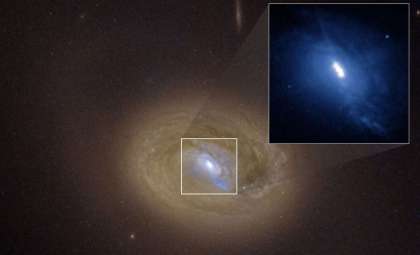
The protective effect of ozone depends on a galaxy's structure. In tightly packed "red nugget relic" galaxies like NGC 1277, where stars crowd the central black hole, AGN radiation would likely be fatal for life.
Conversely, in larger, more spacious galaxies such as spiral galaxies like the Milky Way or giant ellipticals like Messier 87, star distribution helps lessen AGN radiation’s impact on planets that may support life.
An Unexpected Collaboration Sparks New Insights
The investigation began when Ryan Hickox, a Dartmouth professor, went on sabbatical and traveled aboard the Queen Mary 2. Onboard, he encountered Nathan Mayne, an astrophysicist from Exeter, who was delivering a guest lecture.
This meeting inspired the idea to apply PALEO, a tool originally designed to simulate solar radiation on exoplanet atmospheres, to the far more intense radiation from AGNs.




0 comments
Sign in to Comment