
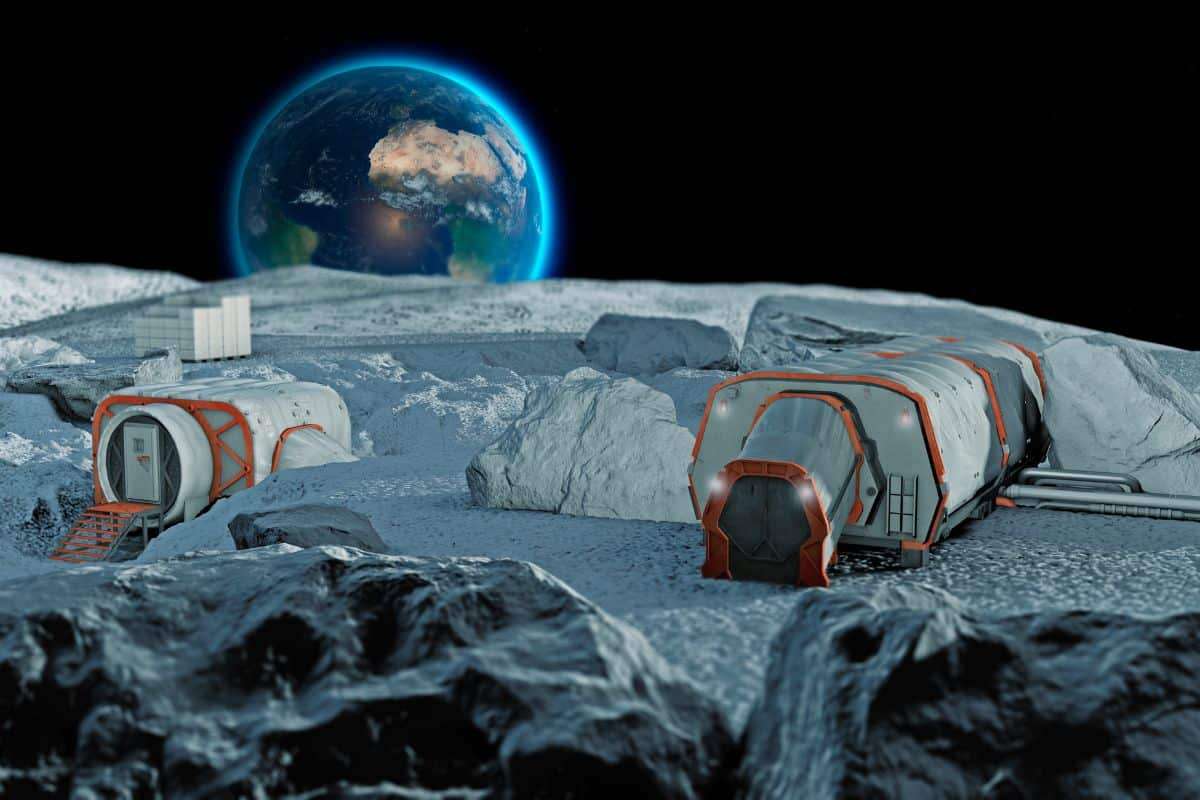
As humans inch closer to establishing a lasting foothold on the Moon, manufacturing directly on the lunar surface is becoming a vital breakthrough to turn this aspiration into reality. Once viewed as a desolate and unwelcoming place, the Moon has now taken center stage in ambitious space exploration plans.
Initiatives like Artemis are tackling the many obstacles involved, aiming to transform the Moon into a cutting-edge center for science, industry, and interplanetary missions. Still, traditional building approaches face many limits, making lunar manufacturing—which integrates advanced methods such as 3D printing, robotics, and AI—a highly promising alternative.
Overcoming the Unique Obstacles of Lunar Construction
Constructing facilities on the Moon requires more than engineering skill. The extreme and hostile conditions pose significant barriers. Surface temperatures fluctuate dramatically—from a scorching 127 °C during the day to a bitter -173 °C at night.
Additionally, the lunar regolith—a layer of fine, abrasive dust covering the terrain—complicates construction and presents a persistent hazard to equipment functionality and longevity.
Sending construction materials from Earth to the Moon is an immense challenge due to rocket payload limits and astronomical costs. To foster a self-sufficient lunar settlement, scientists are experimenting with in-situ resource utilization (ISRU)—extracting and repurposing local materials like the regolith for building and other necessities.

Dr. Mohammad Azami, a PhD researcher at Concordia University’s Aerospace Robotics Lab, stresses the importance of autonomy: “Being able to fabricate what’s needed directly on-site is a critical milestone,” he explains.
The Potential of Additive Manufacturing for Lunar Projects
3D printing stands out as a highly adaptive method ideally suited for Moon construction. Unlike conventional techniques, it enables the creation of intricate structures one layer at a time, optimizing material usage. This adaptability suits the Moon’s unpredictable and resource-limited environment.
Krzysztof Skonieczny, associate professor at Concordia’s Institute of Aerospace Design and Innovation, summarizes, “Every lunar build will be pioneering… It will require real-time input from astronauts or Earth-based experts transmitting design data.”
Azami’s work has resulted in a mobile 3D printing robot that processes a blend of polyether ether ketone (a polymer fit for space conditions) with simulated lunar dust. This technology not only converts regolith into viable construction materials but also forms radiation shielding—an essential safety feature for lunar habitats.
Enhancing Manufacturing with Robotics and Artificial Intelligence
The integration of robotics and AI is fundamental to efficient manufacturing on the Moon. These technologies bring precision, flexibility, and autonomy to complex tasks that humans can only partially manage remotely. Robots are capable of executing processes like 3D printing with limited supervision, while AI equips them to swiftly adjust to dynamic challenges encountered during lunar assembly.
AI-driven systems also facilitate instant communication between lunar crews and experts on Earth, delivering actionable guidance and continuous enhancement of building techniques in real-time.
Ensuring Energy Independence for Lunar Installations
Realizing a self-sufficient Moon base depends heavily on reliable energy solutions. Solar power offers the most promising source, yet the two-week-long lunar night presents a daunting obstacle for continuous energy supply. Advanced energy storage technologies are crucial to maintain uninterrupted operations.
Sustainability underpins all lunar manufacturing efforts. Teams like Azami’s focus on crafting energy-efficient methods for harnessing and using lunar resources, aiming to reduce dependency on shipments from Earth and pave the way for permanent lunar habitats.
- Categories:
- Space










0 comments
Sign in to Comment