
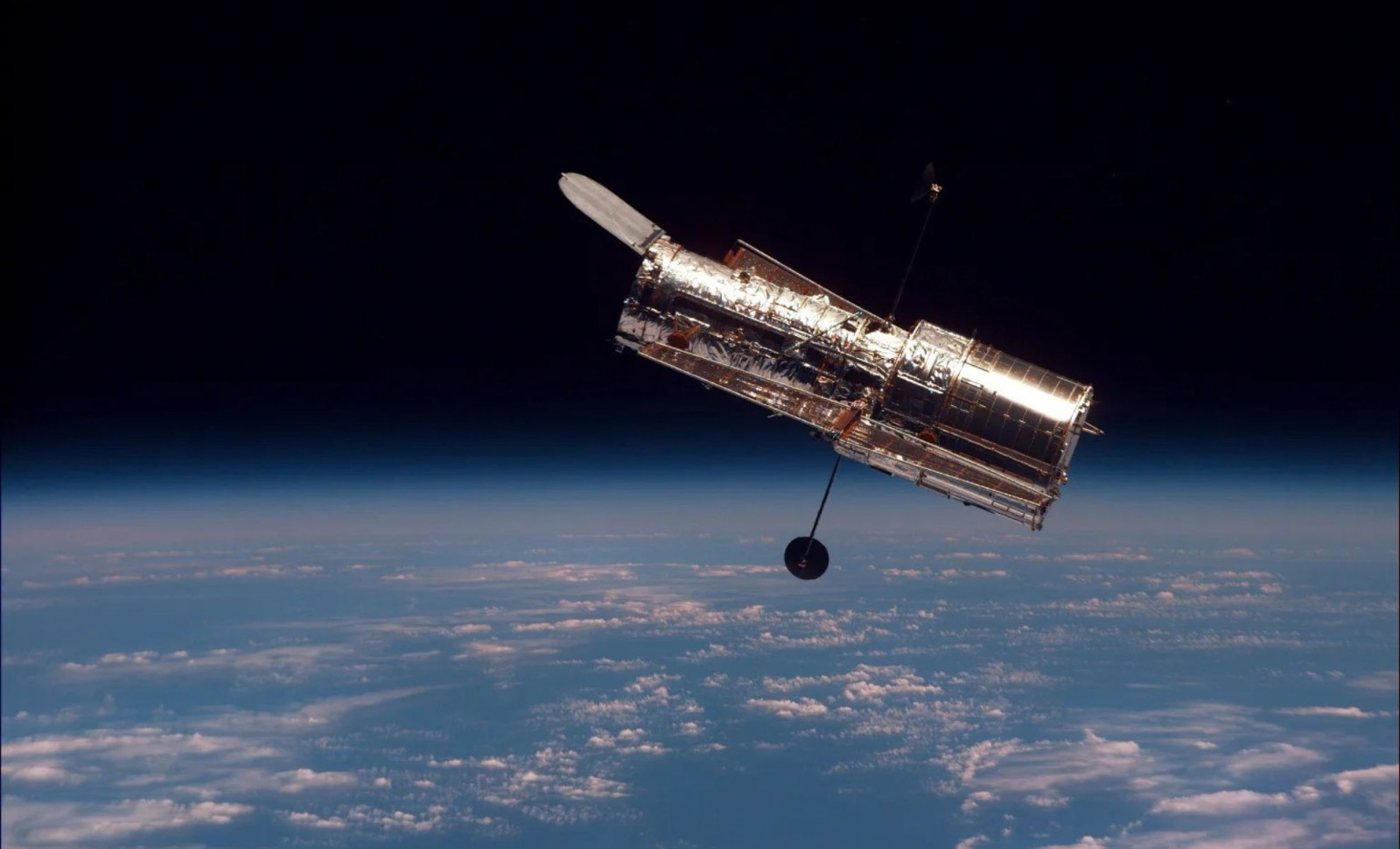
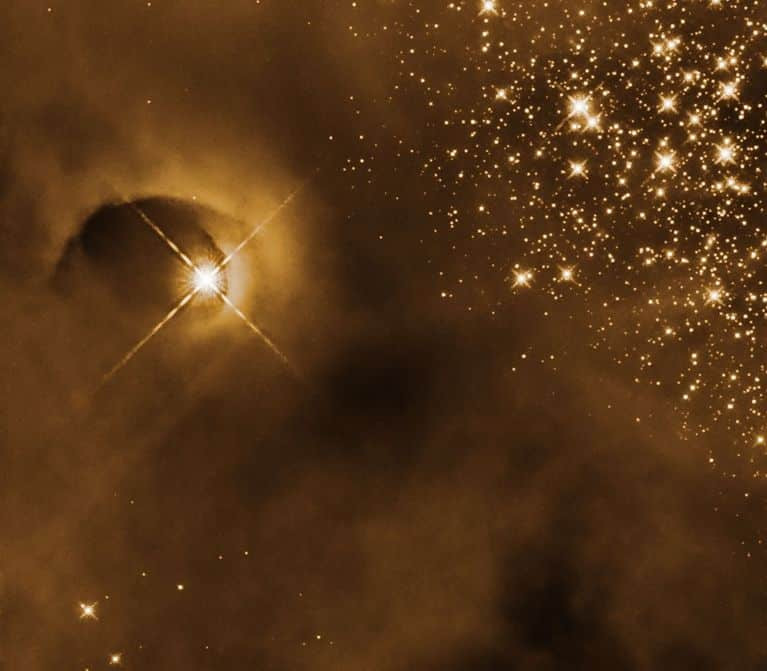
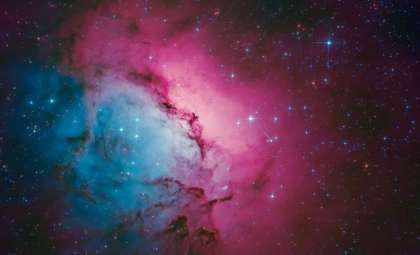
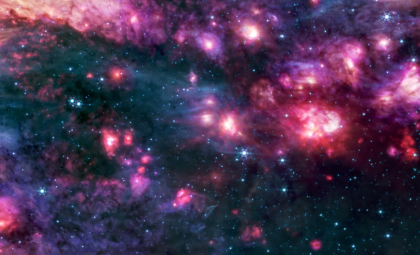
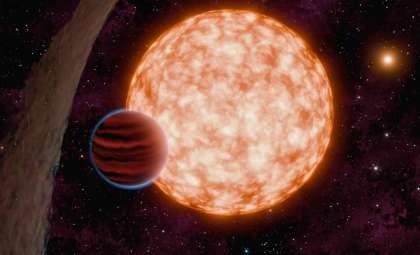
The Hubble Space Telescope has unveiled remarkable new images revealing the birth of stars within the Orion Molecular Cloud Complex. Young protostars, including HOPS 310 and HOPS 181, are forcefully ejecting powerful jets and winds, sculpting the dense gas and dust from which they emerge.
Released on January 14, 2026, these observations aim to deepen our understanding of star formation and the dynamic relationship between newborn stars and their surrounding material. Located at approximately 1,300 light-years away in Orion’s “sword” region, this stellar nursery offers an excellent opportunity for detailed study due to its proximity and rich content.
Protostellar Jets Mold Their Environments
The images prominently feature HOPS 310, a young star concealed by thick clouds. NASA reports that this protostar has carved out a vast cavity within the surrounding gas and dust by means of intense winds and outflows. The brightly illuminated cavity walls highlight the interaction zones between expelled material and the surrounding cloud.

Bipolar jets consisting of fast-moving particles shoot from the protostar’s magnetic poles, cutting diagonally across the images and illustrating vigorous star-forming activity. Nearby, the bright star CVSO 188 stands out in the foreground, yet the hidden HOPS 310 remains the main agent behind the scenes.
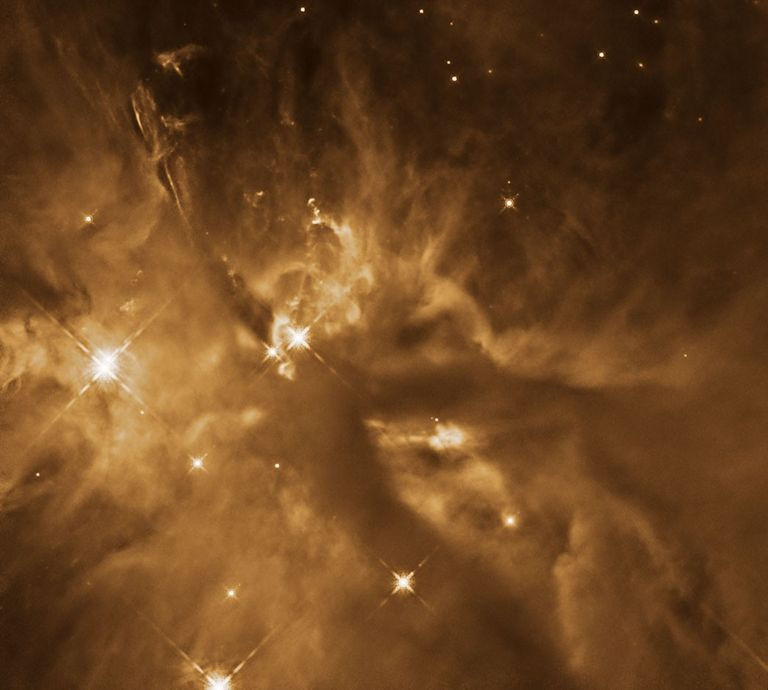
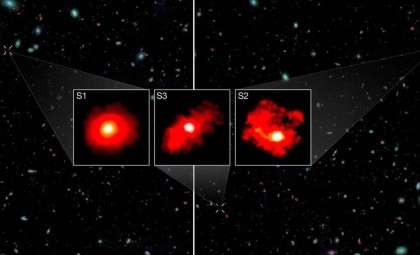
Faint background galaxies can also be seen within the Hubble frame, providing additional context that aids researchers in calibrating spatial measurements and determining the orientation of structures inside the cloud.
Stable Sizes of Outflow Cavities over Time
Beyond striking visuals, the research included a detailed examination of how stellar envelopes and outflows affect their surroundings. Contrary to prior beliefs, the study found no signs that cavities produced by jets and winds expand as protostars age. Instead, cavity dimensions appear to remain largely constant through later developmental phases.
NASA emphasizes that this new insight challenges earlier concepts portraying cavity clearing as a slow, ongoing process. Rather, the initial energetic events seem to establish cavity size early, with limited further growth afterward.
The findings refine our models of mass accretion, the process by which protostars draw in material from their envelopes. Since cavities are not gradually expanding, alternative forces likely influence the limits on how much mass the young stars can accumulate.
Unraveling the Puzzle of Low Star Birth Rates
Despite Orion’s abundance of molecular gas, star formation here remains relatively infrequent. The slow rate of new star production continues to puzzle scientists. NASA notes that the decreasing pace of material accretion onto protostars cannot be fully attributed to observed outward flows.
This observation adds complexity to current theories about star formation timing and mechanisms. The combination of unchanging cavity sizes and limited mass inflow strongly suggests that environmental conditions or initial cloud properties play a significant role in regulating star growth.
As detailed by NASA’s Goddard Space Flight Center, these images belong to a weeklong showcase of Hubble’s continuous insights into young stellar objects. Additional releases will appear through January 17, revealing more of the captivating process of star formation.
- Categories:
- Space



0 comments
Sign in to Comment