
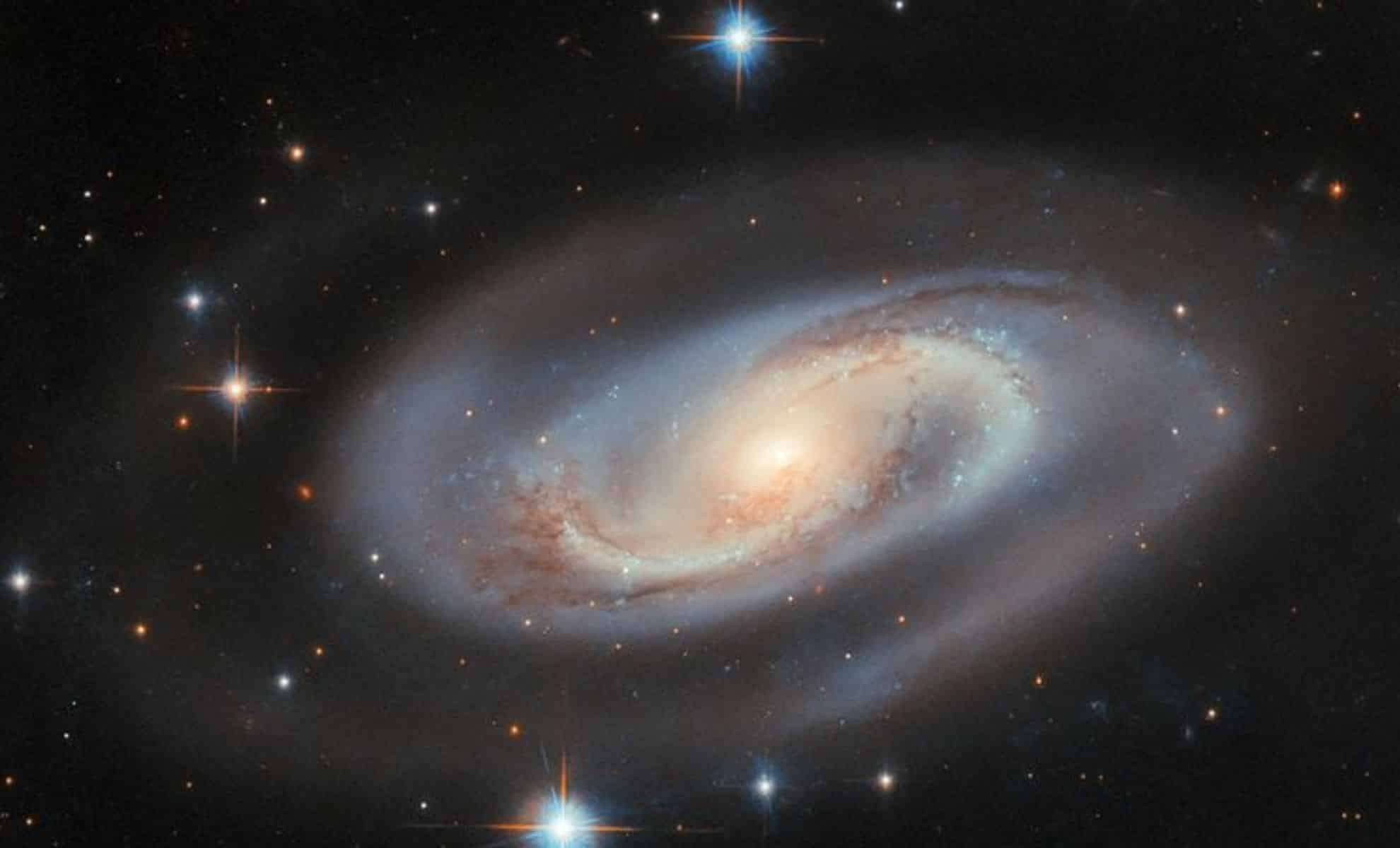
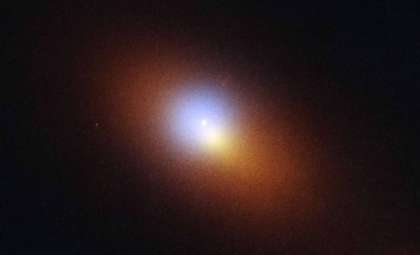
The Hubble Space Telescope continues to enrich our knowledge of the cosmos by capturing detailed data from distant celestial objects. Recently, it observed light from the galaxy UGC 11397, which is located approximately 250 million light-years from Earth, meaning the light took that long to reach us. Positioned within the constellation Lyra, this spiral galaxy appears ordinary on the outside but conceals an extraordinary phenomenon at its core. An immensely large black hole actively consumes surrounding matter, providing a rare glimpse into the energetic processes at an active galactic nucleus. These findings, shared by NASA’s Goddard Space Flight Center, highlight how UGC 11397’s black hole emits a broad spectrum of high-energy radiation, detectable thanks to Hubble’s sophisticated instruments.
Unveiling the Dynamic Core of UGC 11397
UGC 11397 might look like a typical spiral galaxy at first, with two elegant arms filled with stars and dark lanes of dust, as noted in similar spiral galaxy observations. However, its central region harbors a supermassive black hole weighing in at around 174 million solar masses. Unlike a passive black hole, this one is actively accreting gas, dust, and even stars, creating a vibrant spectacle across multiple wavelengths of electromagnetic radiation.
As matter falls inward, it heats to extreme temperatures, releasing energy that spans from X-rays to gamma rays. This emission fluctuates in brightness and frequency, signaling the presence of an active galactic nucleus (AGN). In UGC 11397, thick clouds of dust obscure the visible light from the core, preventing standard optical telescopes from detecting this activity. Nevertheless, powerful X-rays penetrate the dust, allowing astronomers to study the black hole’s feeding activity and its growth.

Understanding Its Type 2 Seyfert Galaxy Nature
The galaxy UGC 11397 falls under the Type 2 Seyfert galaxy category, characterized by its energetic central black hole concealed behind dense dust. Seyfert galaxies are a specific group of active galaxies with luminous centers driven by accreting supermassive black holes. Type 2 Seyferts, in particular, have nuclei shrouded in gas and dust, which block optical wavelengths but still emit detectable high-energy radiation like X-rays, observed through advanced telescopes such as Hubble.
This classification is crucial for astronomers aiming to decode the varying phases of supermassive black hole activity and their broader influences on galactic development. Type 2 Seyfert galaxies offer vital clues about how black holes consume matter and reshape their surroundings over time, contributing to our understanding of black hole growth — a significant topic in contemporary astrophysics.
Insights into Black Hole Evolution from Hubble’s Data
The detailed observations of UGC 11397 represent a stepping stone towards an extensive survey of galaxies with active central black holes. Researchers intend to analyze hundreds of similar galaxies to track how supermassive black holes evolve, especially during the universe’s earlier stages. Measuring black hole masses and feeding rates through instruments like Hubble helps scientists unravel the physical mechanisms behind black hole expansion and their impact on the host galaxies’ evolution.
A critical part of this investigation is examining star formation in the turbulent vicinity of supermassive black holes. The centers of galaxies are subjected to intense radiation and extreme gravitational forces that create hostile conditions. By exploring these environments, astronomers hope to learn the requirements for star birth under such circumstances and gain insights into the evolutionary history of galaxies, including the Milky Way, shaped in part by its central black hole.
- Categories:
- News





0 comments
Sign in to Comment