
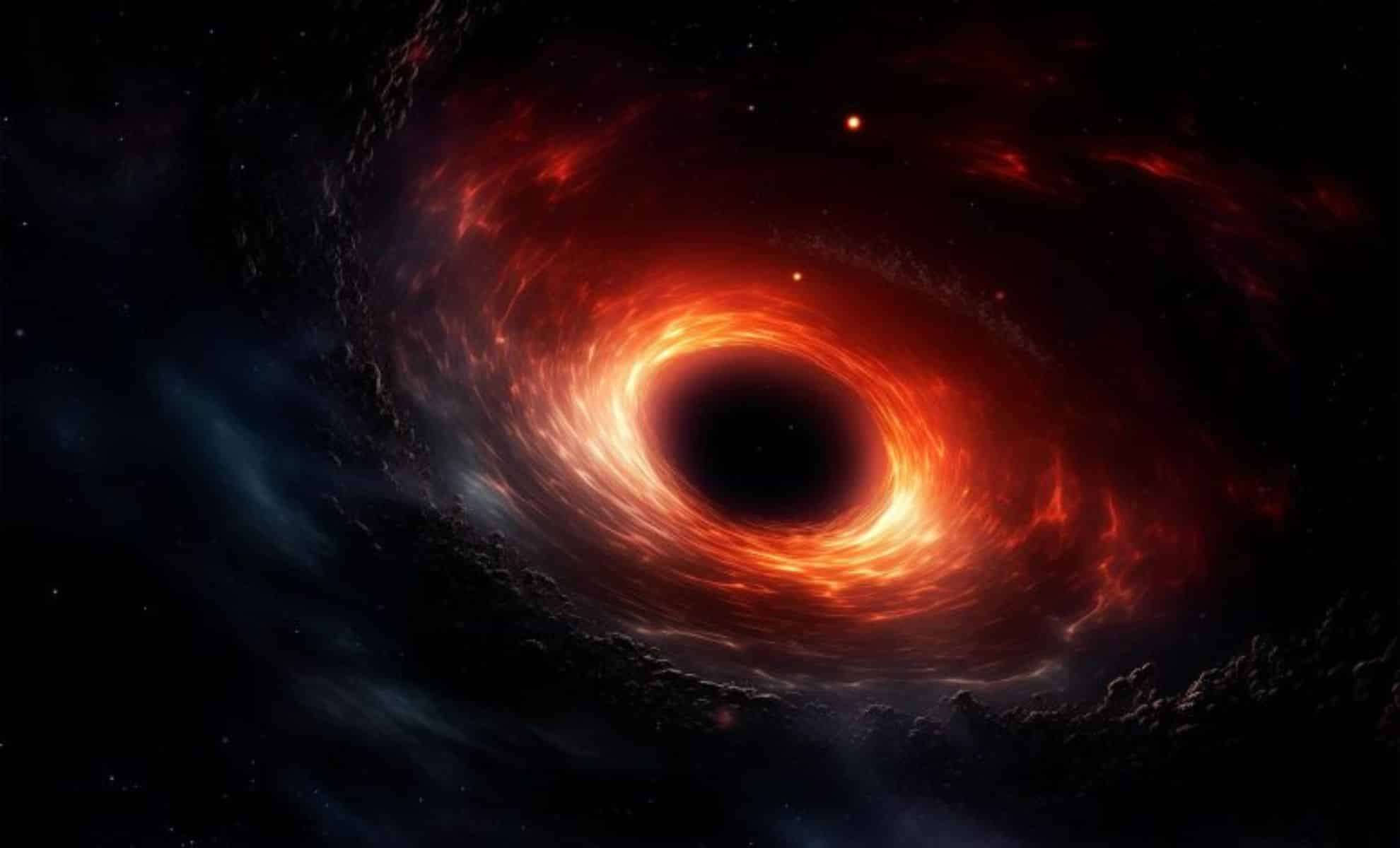
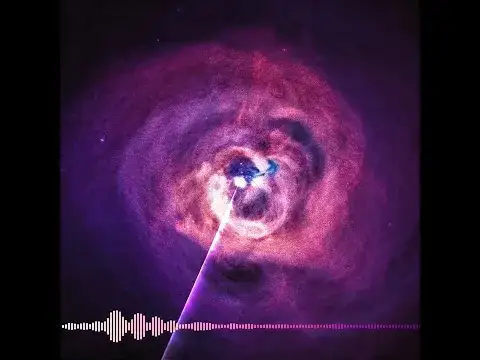
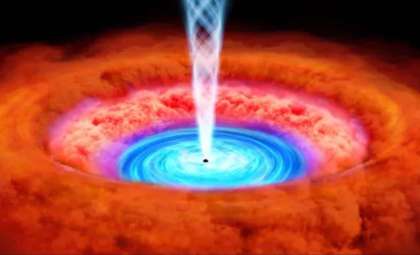
NASA has unveiled a chilling audio recording capturing sound waves emanating from a supermassive black hole positioned 250 million light-years away within the Perseus galaxy cluster. This haunting recording, described as an ethereal, ghostlike wail, was generated by translating acoustic waves found in the hot gas enveloping the black hole, enabling humans to hear them for the first time.
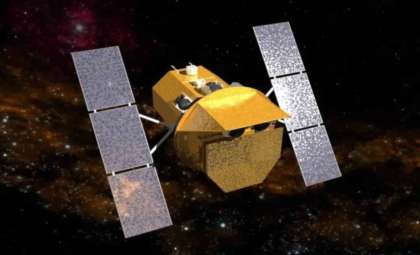
While it’s commonly believed that sound can't propagate through space due to the vacuum, the Perseus cluster's dense gas and plasma create an environment where low-frequency sound waves travel across immense cosmic scales. Utilizing X-ray observations from NASA’s Chandra X-ray Observatory, researchers amplified these waves by 57 and 58 octaves, rendering them audible.
The result is a deep, haunting moan unlike any conventional sound—an unsettling resonance seemingly emerging from the depths of space.

The Science Behind These Cosmic Sounds
These haunting sound waves from the Perseus black hole offer a remarkable glimpse into how energy transfers within the universe. Traversing the intracluster medium—the hot gas permeating galaxy clusters—these waves carry energy that can heat this cosmic gas, influencing galaxy formation and evolution across millions of years.
Discovered in 2003, these sound waves represent the lowest frequency note ever observed in space: a B-flat 57 octaves below middle C. The wave’s oscillation cycle spans nearly 10 million years, placing it well beyond human hearing in its original state.
Through sonification, NASA has accelerated these frequencies to a human audible range, offering a rare sonic window into the dynamics surrounding this cosmic titan.
Converting Black Hole Vibrations Into Sound
Though space is often considered silent, the Perseus galaxy cluster hosts hot gas that facilitates the passage of sound waves. Using Chandra X-ray Observatory’s data, scientists isolated these waves and raised their pitch by 57 to 58 octaves, bringing the cosmic sounds within human perceptual range. The outcome is a mysterious, otherworldly tone that lets us grasp black holes’ immense power through sound.
The Importance of These Cosmic Sounds
Though intriguing as a curiosity, these black hole "sounds" hold significant scientific value. Examining acoustic waves in galaxy clusters sheds light on how supermassive black holes control the temperature of surrounding gas, shaping star formation rates and galaxy evolution.
It’s thought that these waves contribute critically to heating the intracluster medium, preventing it from cooling rapidly and triggering intense bursts of star formation. This regulation mechanism is key to the current structure of galaxy clusters.
Furthermore, turning astronomical measurements into audible data—known as sonification—has proven invaluable for exploring cosmic phenomena from a fresh perspective. This auditory approach can uncover hidden patterns and formations otherwise difficult to detect visually, enriching our understanding of black holes and the cosmic environment.
Sonifying Black Holes Beyond Perseus
Perseus isn’t the only supermassive black hole sonified by NASA. The agency has also transformed M87*—the first imaged black hole—into sound. Unlike Perseus, which relies on actual acoustic waves, the M87* sonification assigns musical notes to different wavelengths of data, including radio, optical, and X-ray signals.
This technique translates various cosmic emissions into sound, offering a novel way to connect with the unseen forces shaping our universe.
As technology progresses, we can expect more celestial sonifications, enabling humanity to perceive the cosmos through sound like never before.
Discovering a Sonic Universe
NASA’s evocative black hole audio tracks invite us to appreciate not just the vast mystery of space but also the power of data sonification. By transforming remote cosmic events into audible experiences, scientists unlock new realms of exploration, offering a compelling multisensory view of the universe.
These unsettling sounds provoke awe and curiosity, reminding us that space is far from silent. Rather, it’s a grand cosmic orchestra resonating through time and space, just waiting for us to listen and discover.
- Categories:
- News






0 comments
Sign in to Comment