

NASA has launched an innovative project using the combined strengths of the Hubble Space Telescope and the New Horizons spacecraft to observe Uranus from two distinct vantage points.
This collaboration aims not only to deepen our knowledge of Uranus but also to improve the methods scientists use to analyze exoplanets, planets orbiting stars beyond our solar system. By treating Uranus as a stand-in for these remote worlds, researchers are advancing techniques to better interpret the atmospheres and features of planets light-years away.
A Dual Viewpoint on Uranus
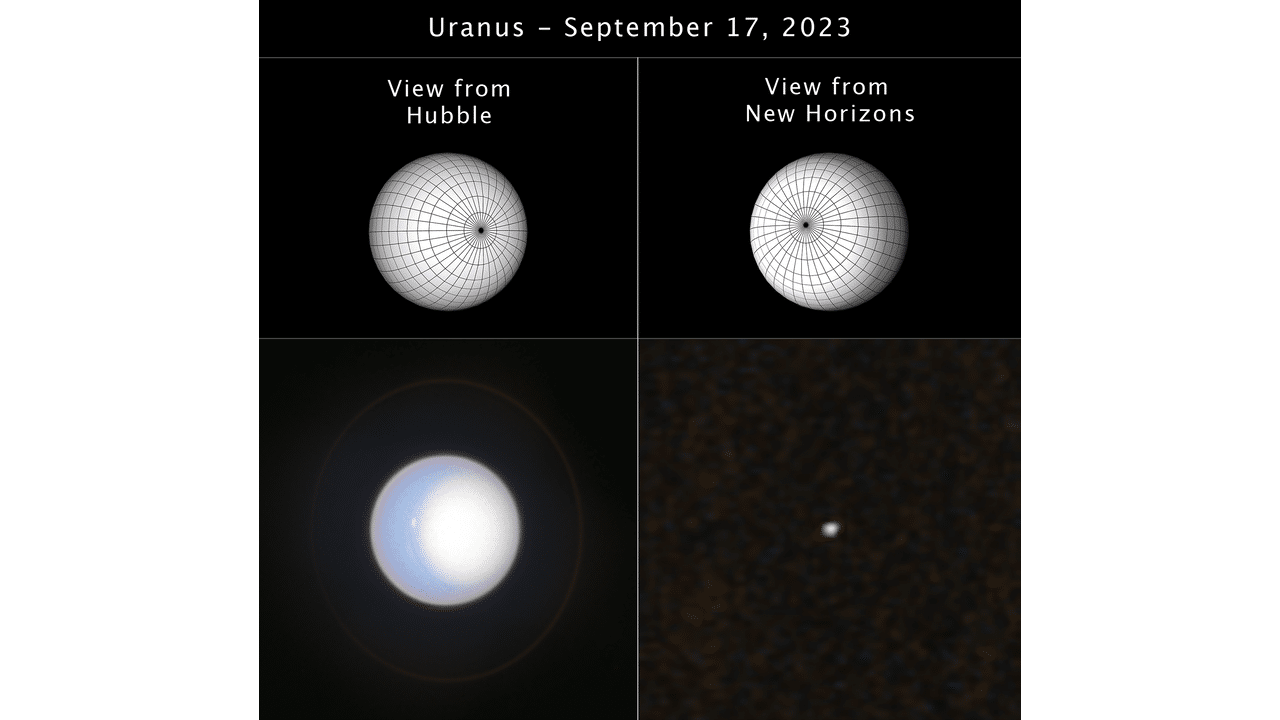
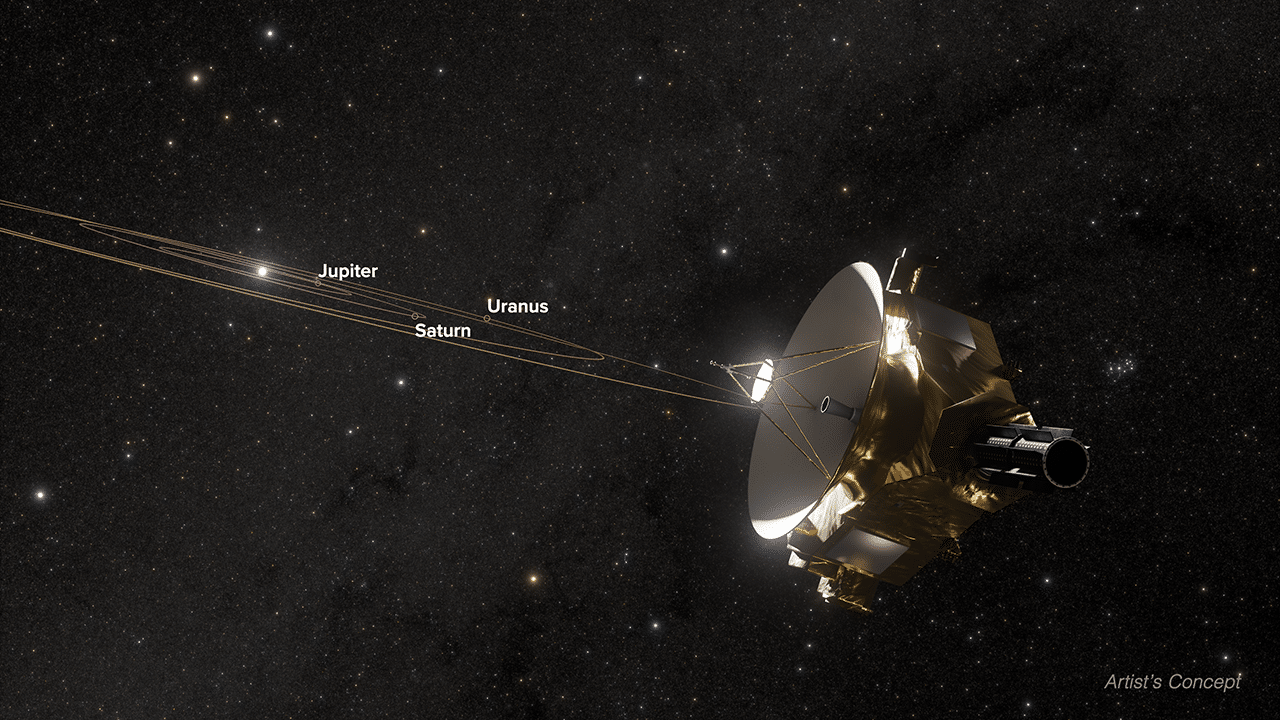
In September 2023, simultaneous observations were made with Hubble capturing Uranus from its orbit around Earth while the New Horizons spacecraft, positioned an astonishing 6.5 billion miles afar, observed the planet from a distant perspective. While Hubble delivered detailed images, revealing atmospheric elements like cloud formations and storm patterns, New Horizons viewed Uranus as a mere point of light, mimicking how current technology perceives exoplanets.

This rare pairing of detailed and distant imagery allows astronomers to compare how planetary characteristics manifest at different resolutions—a crucial step toward decoding the faint light received from distant exoplanetary systems.
Samantha Hasler from MIT highlighted the technique's significance: “Uranus appears as just a small dot on the New Horizons observations, similar to the dots seen of directly-imaged exoplanets from observatories like Webb or ground-based observatories. Hubble provides context for what the atmosphere is doing when it was observed with New Horizons.” This dual perspective offers insights pivotal for making sense of the weak signals captured from distant alien worlds.
Uranus as an Ideal Stand-In for Exoplanets
Uranus was chosen for this study due to its likeness to many exoplanets, being a gas giant similar in nature to numerous worlds identified beyond our solar system. Its location far from the Sun introduces observational difficulties akin to those faced when analyzing exoplanets. By juxtaposing high-resolution images from Hubble with the much fuzzier views from New Horizons, scientists aim to anticipate how distant exoplanets might behave and appear under various viewing conditions.
A surprising outcome of the investigation was that Uranus appeared dimmer in the New Horizons imagery than models had forecasted. According to Hasler, this suggests that exoplanets could also seem fainter during particular phases or atmospheric states. “We found that Uranus was actually dimmer than predicted in the New Horizons data taken from a different viewpoint,” Hasler remarked, underscoring the importance of understanding brightness variability in exoplanet observations, especially during partial illumination phases.
Implications for Upcoming Exoplanet Missions
This partnership between Hubble and New Horizons paves the way for forthcoming NASA endeavors such as the Nancy Grace Roman Space Telescope, launching in 2027, and the early-stage Habitable Worlds Observatory. Both missions seek to directly image exoplanets and analyze their atmospheres for clues about potential habitability, including the search for biosignatures.
Alan Stern, New Horizons’ lead investigator, emphasized the research’s broader significance: “These landmark New Horizons studies of Uranus from a vantage point unobservable by any other means add to the mission’s treasure trove of new scientific knowledge, and have yielded surprising new insights into the worlds of our solar system.” As NASA readies next-generation observatories, these findings enhance astronomers’ readiness for deciphering exoplanet data.
The Complexities of Capturing Exoplanet Images
Photographing exoplanets presents major hurdles due to their vast distances and the overwhelming brightness of their host stars, which often eclipses the planetary light. Instruments like Hubble and James Webb can detect these distant bodies, but usually only as faint points. Yet, by analyzing the subtle light signals they emit or reflect, scientists glean valuable data on their atmospheres, surfaces, and possible habitability.
The joint Uranus observations by Hubble and New Horizons offer essential groundwork for interpreting these faint patterns. Tracking how Uranus’ light fluctuates—or largely stays consistent—over its rotation advances understanding of gas giant atmospheric dynamics. Consistent cloud features seen by both spacecraft suggest that brightness may not change much during rotation, a key consideration for future exoplanet studies.
Advancing the Search for New Worlds
By merging two vastly different viewpoints, NASA has crafted a valuable approach to decode the weak, distant signals from exoplanets. This cooperative study of Uranus offers critical insights for examining alien planetary systems, particularly those featuring gas giants akin to Uranus.
Findings from this effort will be instrumental as researchers get ready for next-gen projects like the Nancy Grace Roman Space Telescope and Habitable Worlds Observatory that aim to image exoplanets directly and seek signs of life. As noted by Samantha Hasler, “Studying how known benchmarks like Uranus appear in distant imaging can help us have more robust expectations when preparing for these future missions. And that will be critical to our success.”
NASA’s ongoing exploration within our solar system coupled with enhanced exoplanet research is steadily bringing us closer to answering profound questions about planetary origins and the possibility of life beyond Earth.
- Categories:
- Astronomy ,
- News ,
- Space ,
- Nasa







0 comments
Sign in to Comment