
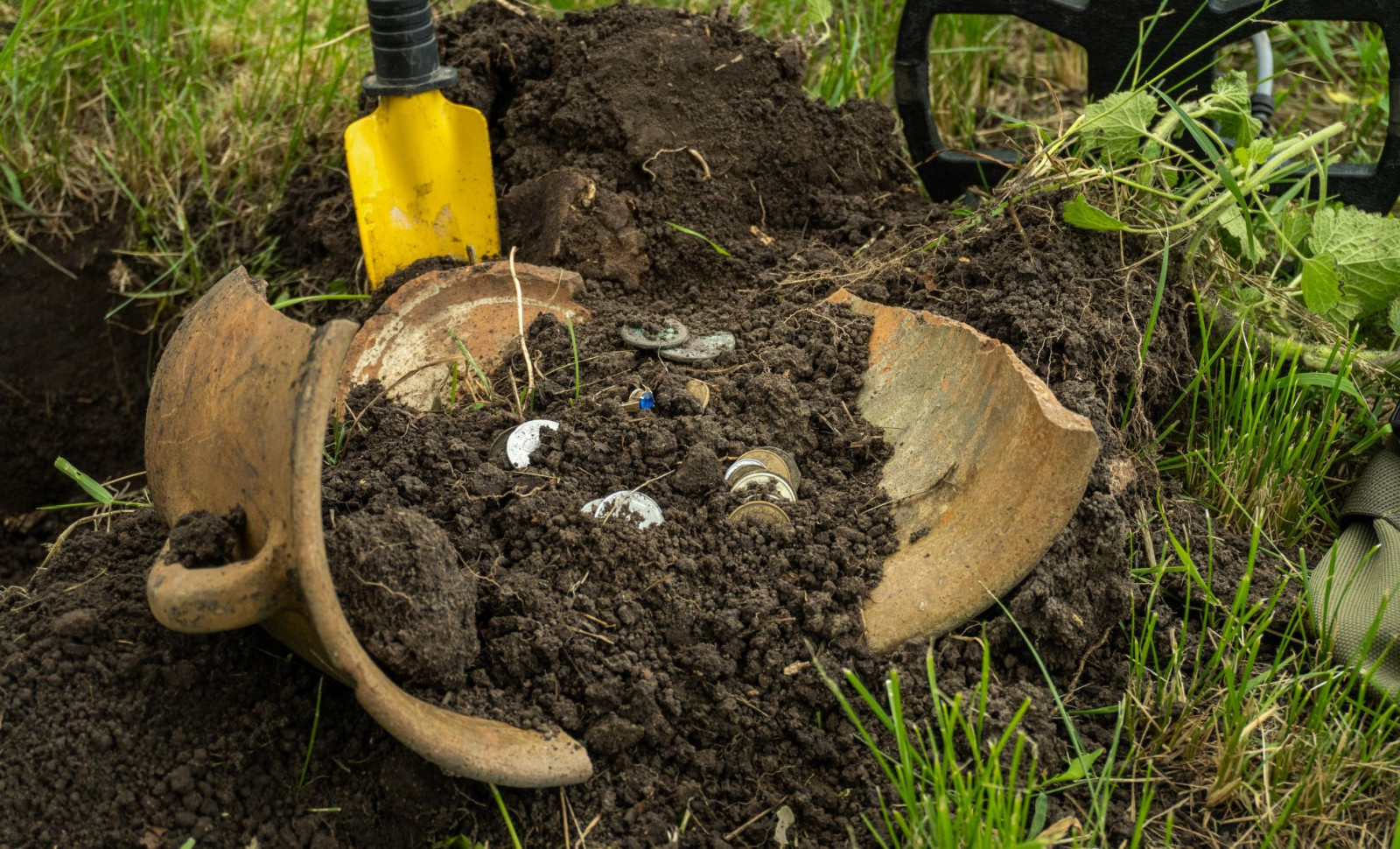
A recent archaeological excavation in the historic city of Notion, situated in western Turkey, brought to light a concealed collection of Persian gold coins. These coins were stored in a small vessel over 2,500 years ago and are believed to have potentially been used as payment for mercenary soldiers amid the Persian-Athenian conflicts.
The treasure was discovered in 2023 by a team from the University of Michigan during the Notion Archaeological Survey. The Turkish Ministry of Culture and Tourism has now authorized the publication of this finding, enabling scholars to investigate this ancient hidden wealth.
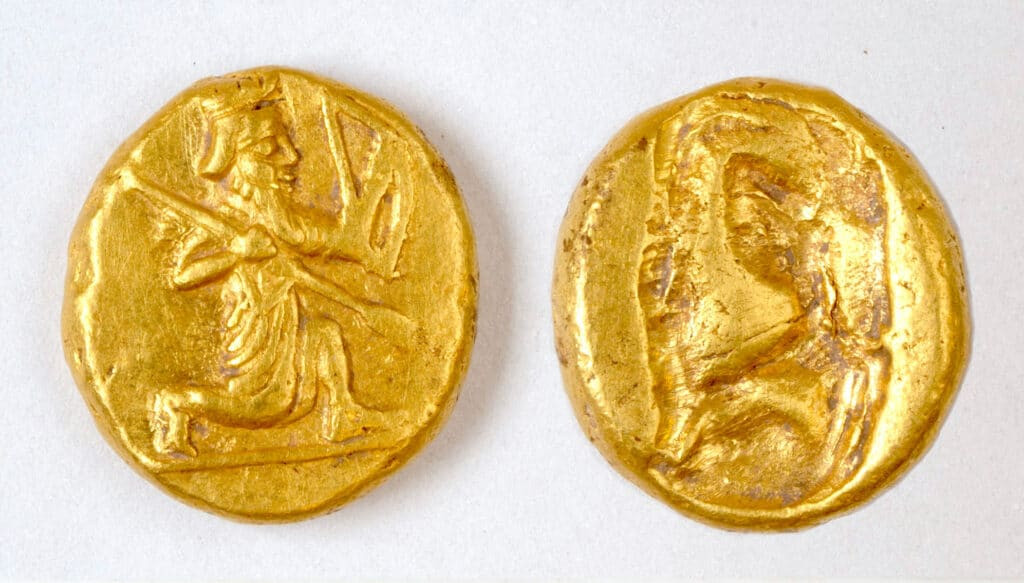
This coin trove comprises darics, gold currency once issued by the Achaemenid Persian Empire. Each daric depicts a kneeling archer, a hallmark emblem of Persian gold coinage. Experts estimate that these coins were minted during the fifth century B.C., potentially in Sardis, an ancient city located roughly 60 miles northeast of Notion.

The Forgotten Treasure of a City Caught in Conflict
Uncovering such a coin hoard is a rare event. Typically, individuals who concealed valuable coins expected to retrieve them later. The fact that this hoard was never reclaimed suggests an unforeseen circumstance prevented its recovery.
Christopher Ratté, a professor specializing in ancient Mediterranean art and archaeology at the University of Michigan and director of the Notion Archaeological Survey, highlights that the find indicates an abrupt disruption for the original owner.
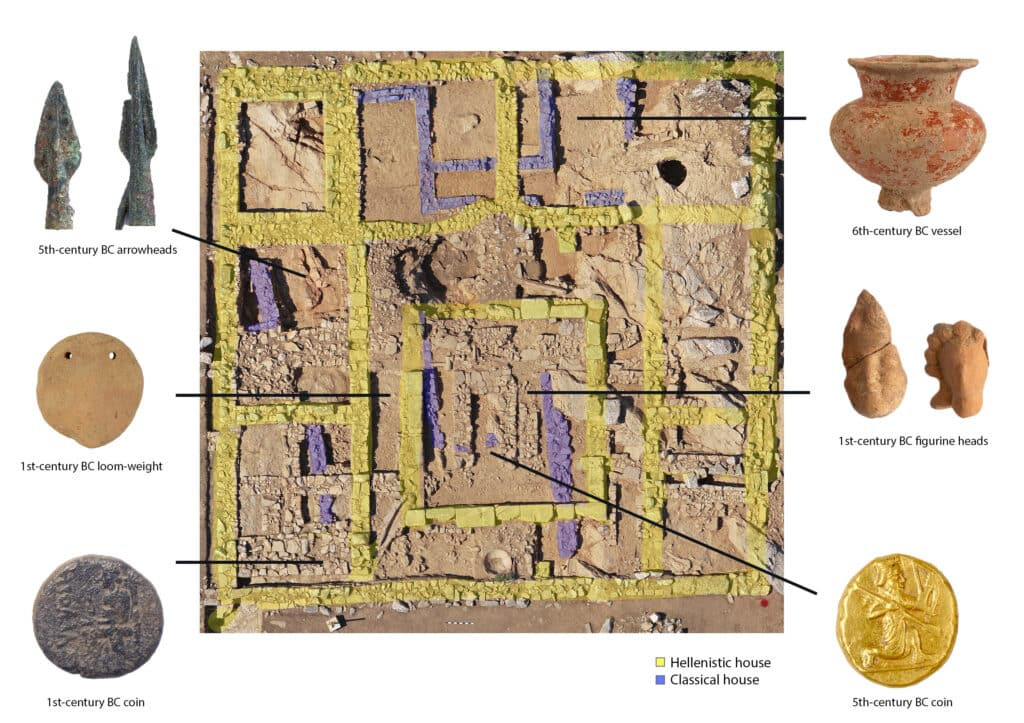
“The hoard was found in the corner of a room in a structure buried beneath the Hellenistic house. Presumably, it was stored there for safekeeping and for some reason never recovered,” he said. “No one ever buries a hoard of coins, especially precious metal coins, without intending to retrieve it. So only the gravest misfortune can explain the preservation of such a treasure.”
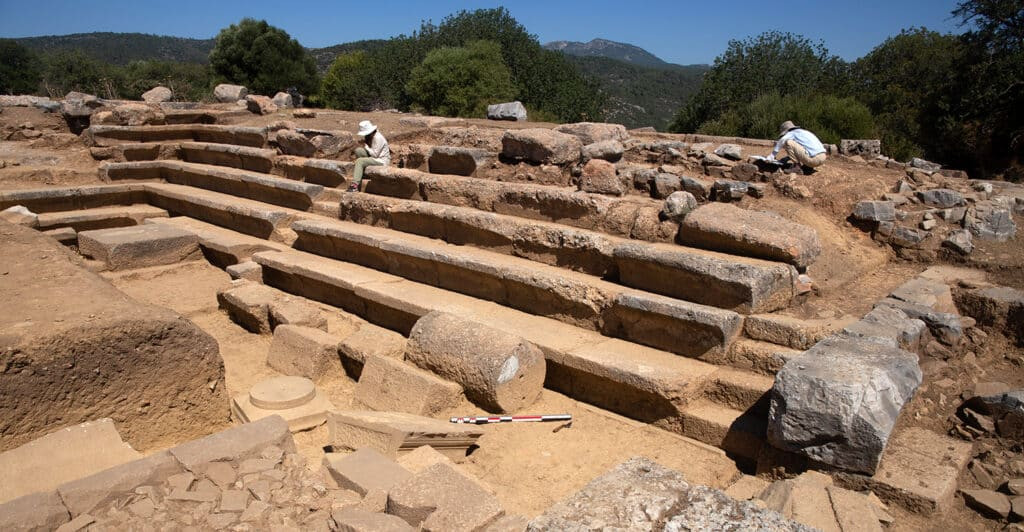
According to the Notion Archaeological Survey, the unfortunate event might have been tied to the wars engulfing Notion. Positioned along Turkey’s western coast, the city was a strategic hotspot contested by Persian and Greek forces.
Originally part of the Persian Empire during the sixth century B.C., Notion later shifted to Greek control before reverting to Persian dominance, only to be overtaken by Alexander the Great in 334 B.C. These political shifts placed the city amid ongoing military confrontations.
Potential Military Payments with Gold
One compelling hypothesis is that these coins served to compensate mercenary soldiers. It was common for ancient armies to employ hired fighters, who depended on consistent remuneration. Historical writings from Xenophon suggest that one daric roughly equaled a mercenary’s monthly wage.
A substantial collection like this might have represented a military payroll for an imminent campaign, though researchers approach this interpretation carefully.
“It is still interesting and important, but the loss of knowledge is incalculable. In the case of this hoard, we know precisely where it was found, and we have a great deal of circumstantial evidence for when it was deposited, probably in the late fifth century B.C.” Ratté noted
Greek historical records describe the use of foreign mercenaries during clashes involving Athenian and Persian armies in the Notion region. A military defeat or an abrupt halt in operations might explain why the coin custodian never returned for the treasure.
Alternatively, the gold may have been allocated for different purposes. Given Notion’s role as a vital military port, the coins could have funded construction projects or harbor upgrades.
Insights from Ancient Persian Currency
The discovery is also shedding new light on the chronology of Persian darics. These coins circulated from the sixth century B.C. until Alexander the Great’s conquest around 330 B.C., altering their design only slightly over centuries. Subtle stylistic variations help experts date each coin, and this recently found assembly includes archaeological context that solidifies its dating, serving as a key reference for future research.
“This hoard will provide a firm date that can serve as an anchor to help fix the chronology of the entire sequence of coins,” Ratté explained.
Andrew Meadows, previously the curator of coins at the British Museum and the American Numismatic Society and now affiliated with Oxford University, emphasized the importance of this find for the study of Persian coinage. As indicated by a University of Michigan press release:
“If it can be established accurately by other means, to allow us to fine-tune the chronology of the Achaemenid gold coinage. This is a spectacular find … of the highest importance.”
- Categories:
- Science













0 comments
Sign in to Comment