
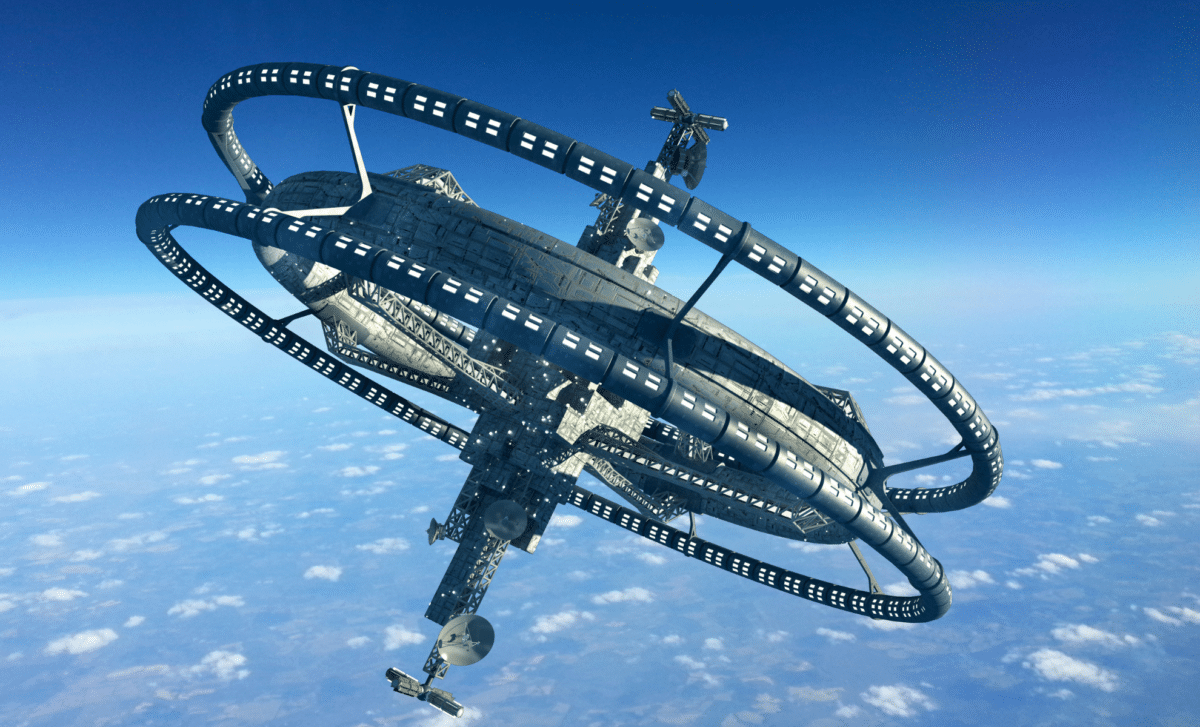
As extended space missions become increasingly attainable, maintaining astronaut health in such environments has gained urgent attention. In response, Russia’s Energia rocket company has recently secured a patent for an innovative space station design capable of producing artificial gravity. According to Space.com, this concept could significantly enhance crew well-being by combating the negative impacts of long-term weightlessness on the human body.
Understanding Artificial Gravity for Deep Space Travel
For many years, space researchers have grappled with the detrimental effects of microgravity on astronauts. Extended stays in microgravity lead to various health hazards, including weakening of muscles, reduction in bone mass, and shifts in bodily fluids. Artificial gravity offers a promising solution by creating forces that imitate Earth’s gravitational pull, enabling astronauts to maintain their health during missions lasting months or even years.
The principle behind artificial gravity involves centrifugal force. Energia’s patented design envisions a rotating habitat where modules spin around a central axis, generating a force amounting to approximately 0.5g, or half the gravity we experience on Earth. This environment would help preserve astronauts’ physical condition by reducing muscle and bone degradation typically caused by prolonged exposure to zero gravity.

Details of Russia’s Rotating Space Station Concept
As detailed by Space.com, the design involves multiple compartments linked through flexible, airtight connections that rotate around a central axis. This rotation produces centrifugal acceleration that simulates gravity by pushing inhabitants outward toward the module walls, offering a more normal gravitational experience for the crew — a potential breakthrough for sustaining health on long journeys.
Despite its promise, this approach poses engineering challenges. A key difficulty highlighted in the patent relates to synchronizing the rotating station with incoming spacecraft. Spacecraft would need to align precisely with the spinning modules to dock safely, adding complexity to mission planning and execution. While surmountable, this factor might constrain the design’s applicability across all mission scenarios.
Health Benefits of Artificial Gravity for Space Travelers
Artificial gravity’s primary advantage lies in mitigating the effects of microgravity-related health decline. Current astronauts aboard the International Space Station (ISS) regularly suffer from muscle weakening and bone density loss due to weightlessness. These symptoms arise because the absence of gravitational stress leads to degradation in musculoskeletal systems.
By employing artificial gravity, astronauts could perform everyday movements such as walking and standing, helping preserve muscle tone and bone strength during extended missions. Additionally, recreating a gravity-like environment could alleviate issues like disorientation, fluid imbalance, and circulatory complications, ultimately enhancing comfort and overall well-being for crew members living in space.
Overcoming Engineering and Operational Hurdles
Although generating artificial gravity is an appealing objective, realizing this technology involves considerable complexity. The station’s rotating mechanism must be robust enough to endure continuous spin stresses while maintaining safety for inhabitants and equipment.
Moreover, operational hurdles such as docking alignment present significant challenges. Since modules are in motion, visiting spacecraft must precisely match the rotation speed and angle to safely connect with the station. Perfecting these maneuvers is essential to ensure mission success and crew safety when using such rotating habitats.
- Categories:
- Space







0 comments
Sign in to Comment