
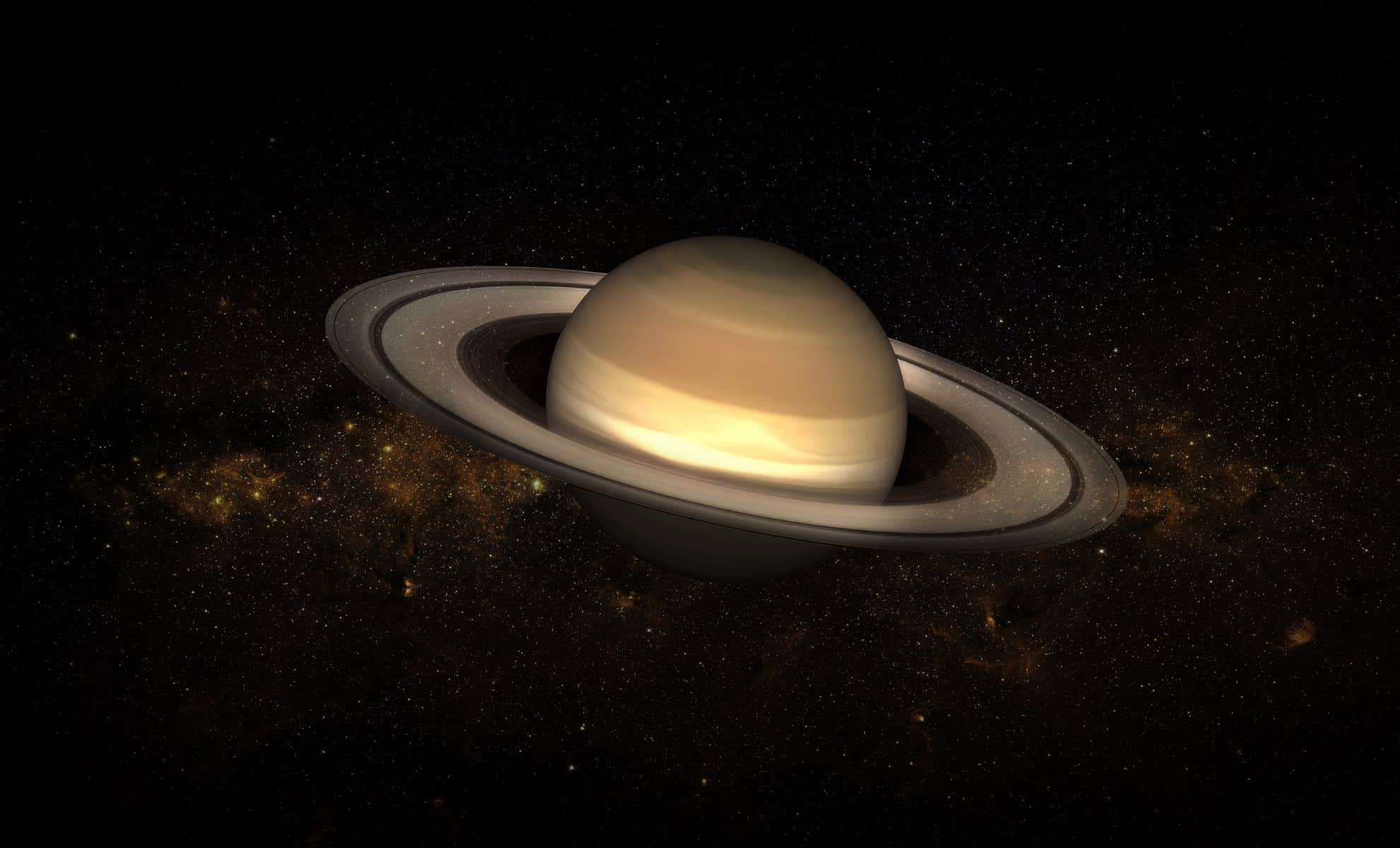
NASA’s updated Orbilander mission is set to advance the search for extraterrestrial life by targeting Saturn’s mysterious moon, Enceladus.
With a planned launch in 2038, this revised mission design positions it as a leading venture in the quest to explore habitable environments beyond Earth.
Investigating Enceladus’s Water Plumes
Enceladus is distinguished by a subsurface ocean concealed beneath its icy exterior, from which intense water vapor plumes erupt into space.

These jets are driven by tidal forces that flex the moon’s interior, a phenomenon known as cryovolcanism, providing a unique opportunity to study the moon's inner ocean.
NASA researchers hope to analyze these plumes to identify organic compounds.
Examining these eruptive streams stands as one of the most promising methods for probing Enceladus’s ocean without penetrating its thick ice shell.
Should the subsurface ocean contain organic molecules, this would hint at potentially habitable conditions beneath the frozen surface.
This positions Enceladus as a prime candidate in NASA’s ongoing investigations into life beyond our planet.
An Innovative Mission Blueprint
Initially designed as a dual orbiter-lander project, the Orbilander mission has been extensively refined to meet its complex objectives.
The mission, scheduled for lift-off aboard a Falcon Heavy rocket in November 2038, will undertake a multifaceted exploration of Saturn’s icy moon.
The Debrief reports that the spacecraft will embark on an extended mission including multiple flybys to collect plume samples.
Subsequently, it will transition into a lower orbit for a year-long survey to pinpoint optimal landing zones.
Following this, a lander will descend to the moon’s surface for a two-year investigation, sampling both the icy crust and refrozen plume deposits.
This thorough approach aims to shed unprecedented light on the mysteries hidden beneath Enceladus’s frozen layers.
Advanced Technologies to Overcome Challenges
Because sunlight is insufficient at Enceladus’s distance, the mission will utilize a Radioisotope Thermoelectric Generator (RTG) for reliable power.
This system, validated by earlier missions including Mars Curiosity and Galileo, ensures sustained energy supply throughout the complex operation.
To optimize efficiency, the Orbilander spacecraft will carry a single RTG, a significant reduction from Cassini’s three.
For precise maneuvering in deep space, cold gas bipropellant thrusters will control the craft's orientation.
The design team has succeeded in trimming the spacecraft’s mass by 1,865 pounds, leading to estimated savings of approximately $900 million in mission costs.
These advancements support the timeline for a 2038 launch, pending no unexpected delays.
Backup Strategies Amid Funding Uncertainties
To mitigate possible budget shortfalls, NASA has outlined a contingency plan involving a reduced-scope flyby mission.
While this “Plan B” would still yield important data, it would operate with fewer instruments and sample at higher velocities, potentially compromising sample integrity.
This trade-off could limit scientific returns, especially regarding the detection of fragile biological markers.
- Categories:
- Space








0 comments
Sign in to Comment